
Insuring Insecurity: A Game-Theoretic Framework for Robust Mobile Crowdsourcing
An Insurance-Based Framework Against Security Threat in Mobile Crowdsourcing Systems
This paper introduces a novel insurance-based incentive framework for Mobile Crowdsourcing Systems (MCS) to mitigate data loss caused by security threats. By modeling the interaction as a Stackelberg game, the authors optimize platform utility and user participation through a third-party insurance mechanism.
TL;DR
Mobile crowdsourcing often fails in hostile environments because data loss leads to reduced user rewards and platform revenue. This paper introduces an Insurance-based Framework that offloads financial risks to a third-party insurer. By designing a compensation function based on a Stackelberg Game, the system successfully attracts high-security users, increasing participants by 88% and platform utility by 48%.
Background: The Hidden Cost of Data Loss
In standard Mobile Crowdsourcing (MCS), we usually assume a "perfect pipe": the user senses data, the platform receives it, and the user gets paid. In reality, malicious nodes and transmission failures create a non-secure environment.
The dilemma is simple:
- If the platform doesn't compensate for lost data, users drop out because their costs exceed their rewards.
- If the platform compensates everyone, it risks bankruptcy by paying for users with poor security defenses.
Methodology: The Insurance-Based Trio
The core insight of this paper is to treat security risk as a financial liability that can be insured. The framework involves three players:
- The Platform (Leader): Sets the compensation coefficient and pays a premium to the insurer.
- The Users (Followers): Decide to participate if the expected reward + compensation exceeds their sensing cost.
- The Insurer: A third party that covers a ratio of the data loss.
The Stackelberg Game and Compensation Function
The platform broadcasts a compensation rate function: . This is genius because it makes the compensation security-aware. Users with higher security levels () are favored, as they contribute more reliable data while costing the system less in actual insurance claims.
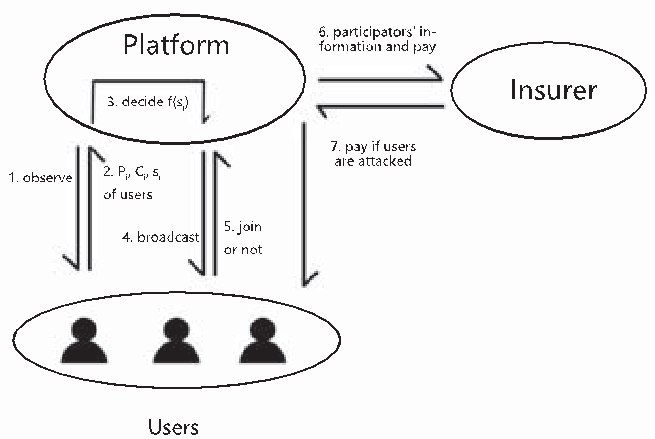 Fig 1: The proposed insurance-based framework workflow.
Mathematical Intuition
Through backward induction, the authors prove a Nash Equilibrium exists. The platform maximizes its utility by solving for the optimal . Interestingly, the derivative analysis shows that as grows, the platform initially gains utility (more participants) but eventually loses it (higher compensation payments).
 Fig 2: Optimization of the compensation coefficient .
Experimental Results
The simulation results are striking. Compared to traditional mechanisms that ignore security-loss compensation:
- Participant Growth: The number of joined users jumped by nearly 88.51%.
- Platform Revenue: Increased by 48.37%.
- Environment Selection: The average security level of participants rose by 7.42%, proving the mechanism naturally filters for "safer" users.
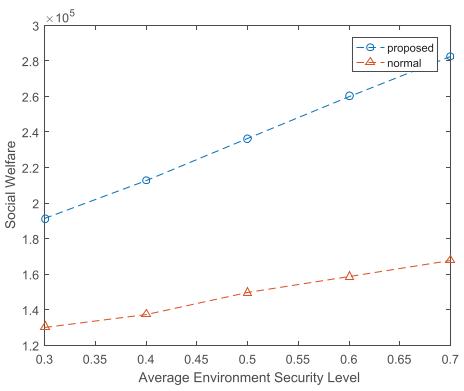 Fig 3: Performance under varying loss rates (k). Our scheme (orange) remains robust even as the environment becomes riskier.
Critical Insight & Conclusion
Most incentive mechanisms focus on "how much to pay." This paper asks "how to protect that payment." By introducing a third-party insurer, the platform can afford to be generous enough to attract users without fearing catastrophic loss.
Takeaway: For any MCS product operating in the real world (like Uber or Waze), ignoring the "security tax" on data is a recipe for failure. Integrating insurance mechanisms is not just a financial hedge; it is a powerful tool to shape the quality of the participant pool.
Limitations: The model assumes users know their own security level objectively. In future work, incorporating reputation systems to estimate when it is hidden would make this framework even more practical for real-world deployment.