
Invisible Scaffolding: Integrating Information Tasks into the DNA of Workflow Models
An Integrated Conceptual Model to Incorporate Information Tasks in Workflow Models
This paper introduces an integrated conceptual modeling technique that bridges the gap between control-flow and information-behavior within "information-rich" environments. It proposes an extension to Petri-net based workflow-nets by overloading existing constructs to explicitly represent information tasks (seeking, sharing, interpreting) alongside traditional operational tasks.
TL;DR
In high-pressure environments like hospitals, the actual "work" isn't just taking action—it's the frantic search for information required to act. This paper introduces an integrated conceptual model that overloads traditional Petri Net constructs to make "information tasks" visible, ensuring that workflow models reflect the cognitive reality of information-rich domains.
The "Magical" Control Flow Problem
Traditional workflow modeling treats the transition from one task to another as a black box. In a standard model, a doctor "Diagnoses" and then "Prescribes." But how did the diagnosis happen? What notes were read? Which lab results were missing?
The authors argue that current models assume information flow happens "magically." In reality, the disconnect between Control Flow (the sequence of actions) and Information Flow (seeking, sharing, and interpreting data) leads to catastrophic failures:
- Repeated Effort: Multiple doctors searching for the same 2-month-old surgery note.
- Incomplete Inferences: A team member orders a CT scan but fails to record the "why," leaving downstream colleagues in the dark.
- Bottlenecks: A task is "enabled" in a model, but stalled in reality because a database is inaccessible.
Methodology: Construct Overloading
Instead of inventing a new, complex language that practitioners would have to relearn, the authors utilize a clever technique called Construct Overloading. By extending the established mathematical foundation of Petri Nets, they introduce:
- Information Tasks (): Specialized nodes for actions like "Search," "Interpret," or "Verify."
- Information Arcs (): Directed dependencies classified into three types:
- Generation: Producing new data or insights.
- Flow: Moving information between tasks.
- Consumption: Using retrieved data to enable a physical action.
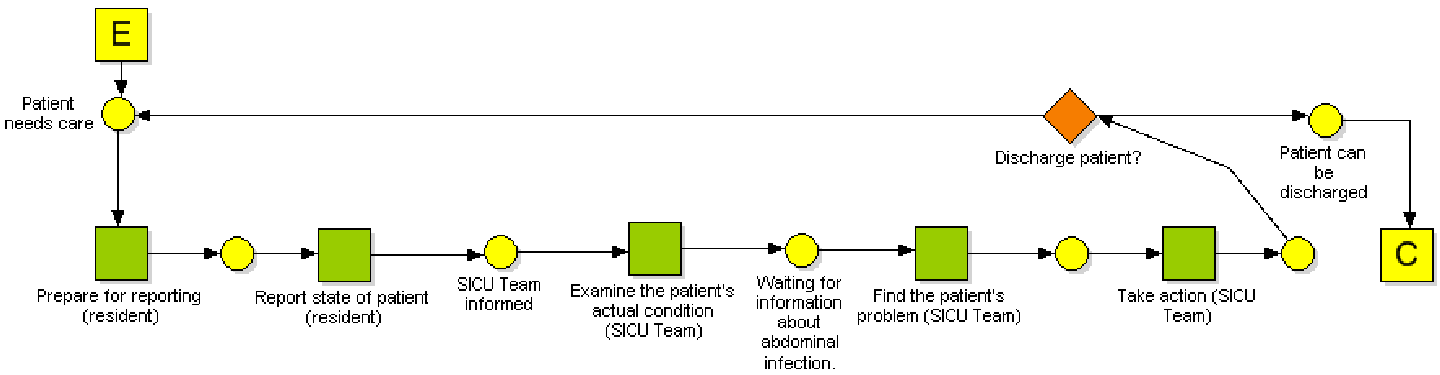 Figure 1: Comparison between a simple Workflow Net and the proposed integrated approach.
By retaining the Firing Rules of Petri Nets (where a task only executes if its "input places" have tokens), this model ensures that a task cannot "magically" occur unless the prerequisite information task has deposited a "token" of data.
Evidence from the ICU
The paper grounds its theory in ethnographic studies of Surgical Intensive Care Units (SICU). In one scenario, a medical team debates a patient's perforation. The "integrated" model perfectly maps how a single clinical decision is actually a web of retrieving electronic records, debating antibiotic rationale, and verifying X-rays.
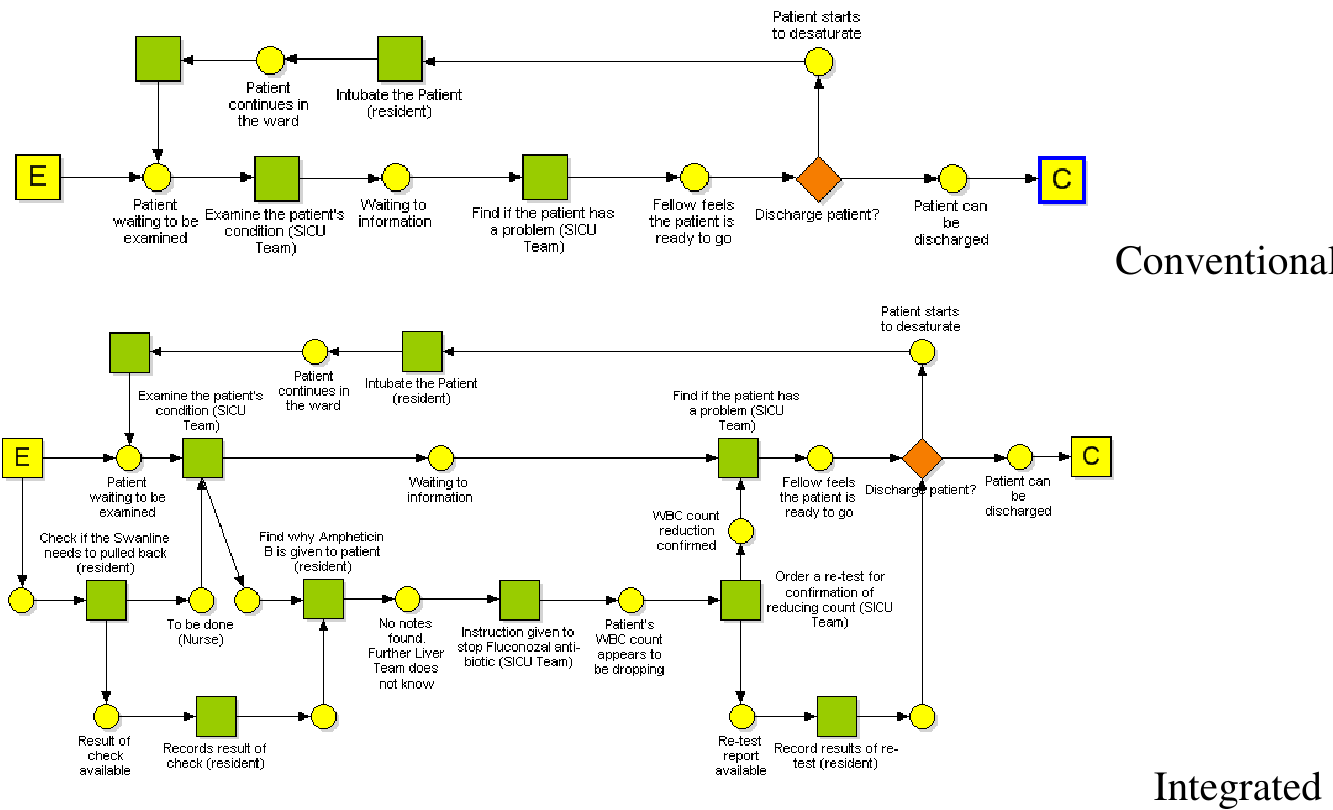 Figure 2: The integrated model reveals the hidden complexity of information-seeking in healthcare.
When applied to education (course registration and textbook ordering), the model proved equally versatile. It highlighted that what appeared to be a 3-step administrative process was actually an 8-step information retrieval marathon.
Critical Analysis & Takeaways
Why this works:
Unlike BPMN, which adds "data objects" as mere annotations, this Petri Net extension makes information a functional requirement for process progression. It transitions the model from a "map of what we do" to a "map of what we need to know."
Limitations:
- Source Diversity: The model doesn't currently distinguish between formal sources (databases) and informal ones (hallway conversations).
- Privacy & Security: As information flows are made explicit, the model needs a way to account for "who" is allowed to see "what."
The Future of Work(flow)
As we move toward AI-augmented workplaces, these models are more relevant than ever. If we are to build AI agents that "assist" professionals, these agents need to understand the Information Tasks that currently slow humans down. This paper provides the mathematical and conceptual language to map those hidden micro-behaviors.
Summary Entry: This integrated model turns information seeking from a "hidden cost" into a "modeled asset," providing a formal bridge between Human Information Behavior and Business Process Management.