
Beyond the Framingham Score: Reimagining Cardiovascular Risk via e-Health and Vascular Age
16447_Integrated e-Health Approach Based on Vascular Ultrasound and Pulse Wave Analysis for Asymptomatic Atherosclerosis Detection and Cardiovascular Risk S
This paper introduces the CUiiDARTE project, a comprehensive e-Health program in Uruguay that integrates noninvasive vascular ultrasound and Pulse Wave Analysis (PWA) to detect asymptomatic atherosclerosis. By utilizing an intelligent database and population-specific modeling, the framework significantly improves individual cardiovascular risk stratification compared to traditional methods like the Framingham score.
TL;DR
Researchers in Uruguay have pioneered the CUiiDARTE project, an e-Health-driven framework that moves cardiovascular screening from hospitals to the community. By combining portable ultrasound (CIMT) and arterial stiffness measurements (PWV) with a novel "vascular age" model, they can detect asymptomatic atherosclerosis in patients who traditional blood-test-based scores mistakenly label as "low risk."
The "Intermediate Risk" Trap: Why Conventional Metrics Fail
For decades, the Framingham Risk Score has been the gold standard for predicting heart attacks. However, it harbors a massive blind spot: it treats the "symptoms" of risk (like high cholesterol or blood pressure) rather than measuring the actual damage to the "target organ"—the arteries.
The authors argue that a paradigm shift is necessary. Most vascular events occur in the "intermediate risk" population where conventional factors have low predictive power. The challenge is identifying the "vulnerable subject" during the long, asymptomatic stage before a stroke or heart attack occurs.
Methodology: The CUiiDARTE Pillar Approach
The CUiiDARTE project (Centro Universitario de Investigación, Innovación y Diagnóstico Arterial) isn't just a clinic; it's a multidisciplinary e-Health ecosystem. The methodology relies on an integrated noninvasive evaluation:
- Structural Assessment: Using B-mode ultrasound to measure Carotid Intima-Media Thickness (CIMT) and detect plaques.
- Functional Assessment: Evaluating arterial stiffness through Pulse Wave Velocity (PWV)—the gold standard for measuring how "old" an artery is.
- e-Health Integration: Data is collected via portable units, transmitted to a centralized server, and processed to compare individual results against a dynamic population-specific database.
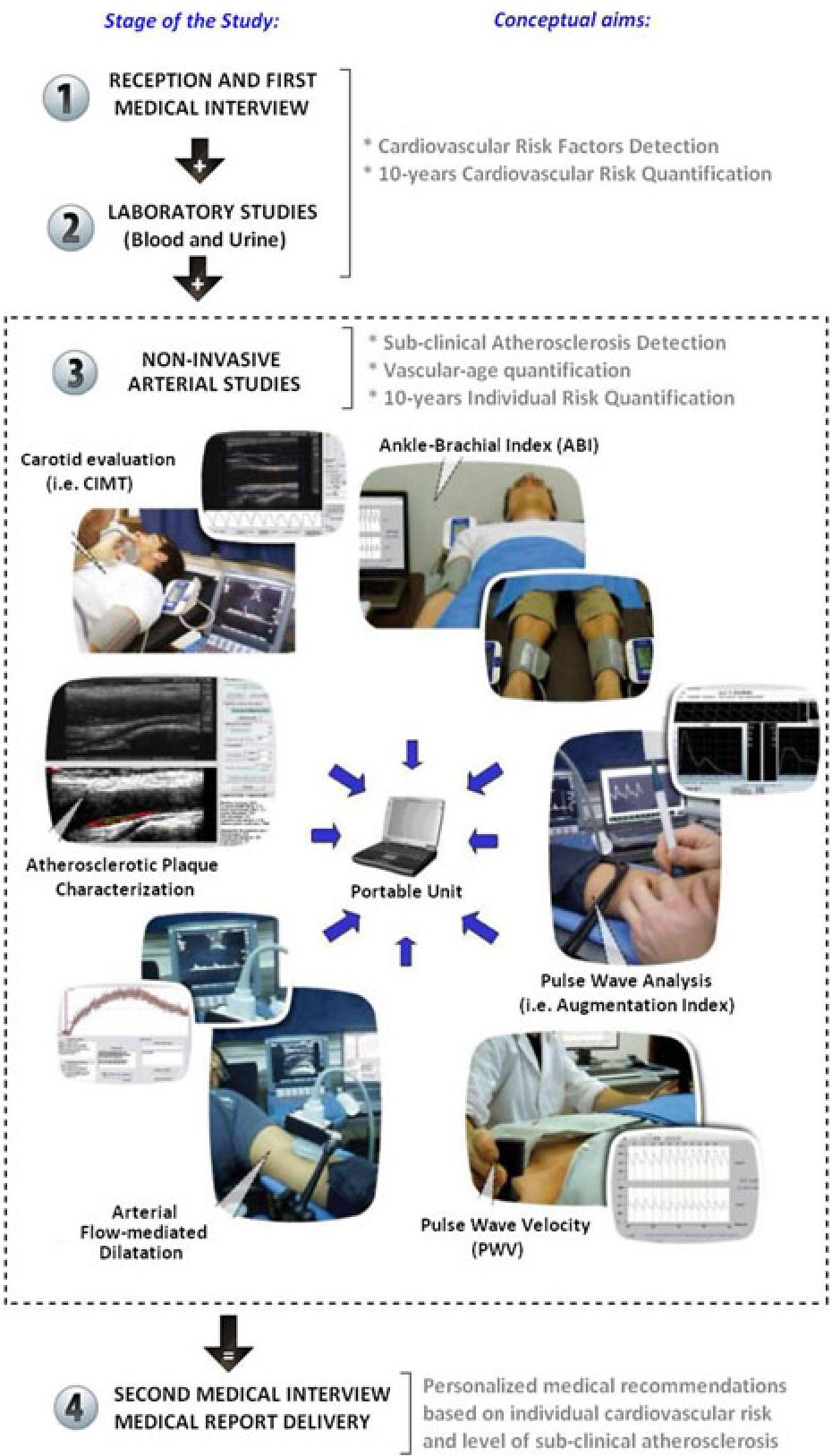 Figure 1: The four-stage biomedical approach: from medical interview to vascular age-adjusted risk reporting.
The "Vascular Age" Model
The most innovative aspect of this work is the calculation of a "Calculated or Theoretical Age." By using linear regression on vascular markers from healthy subjects, the team can determine if a 45-year-old patient actually has the arteries of a 60-year-old. This "vascular age" is then plugged back into the Framingham equation to provide a realistic risk percentage.
Experimental Insights: PWV as an Early Warning System
The study of 451 subjects revealed a critical temporal hierarchy in markers. Pulse Wave Velocity (PWV) showed significant differences in subjects with subclinical disease as early as age 40, whereas other markers like the Augmentation Index (AIx) only showed differences later in life.
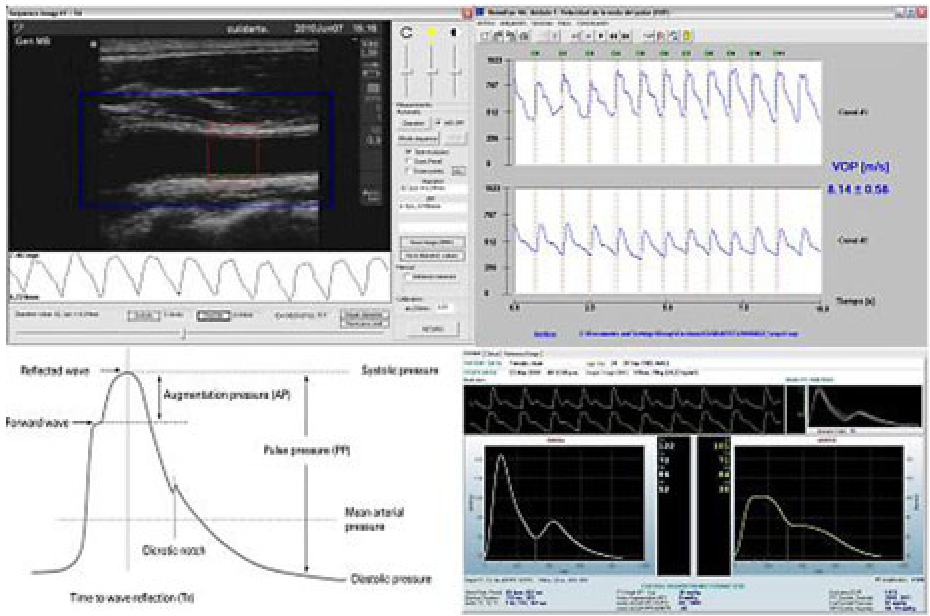 Figure 2: Evolution of PWV and CIMT with age, highlighting the divergence between healthy subjects and those with preclinical ACVD.
Key Result: Risk Reclassification
The research found that subjects with asymptomatic atherosclerosis had a "Calculated Age" significantly higher than their chronological age. When the Framingham score was readjusted using this vascular age, the risk level spiked, moving patients out of the "unrealistic low-risk condition" into categories that warrant clinical intervention.
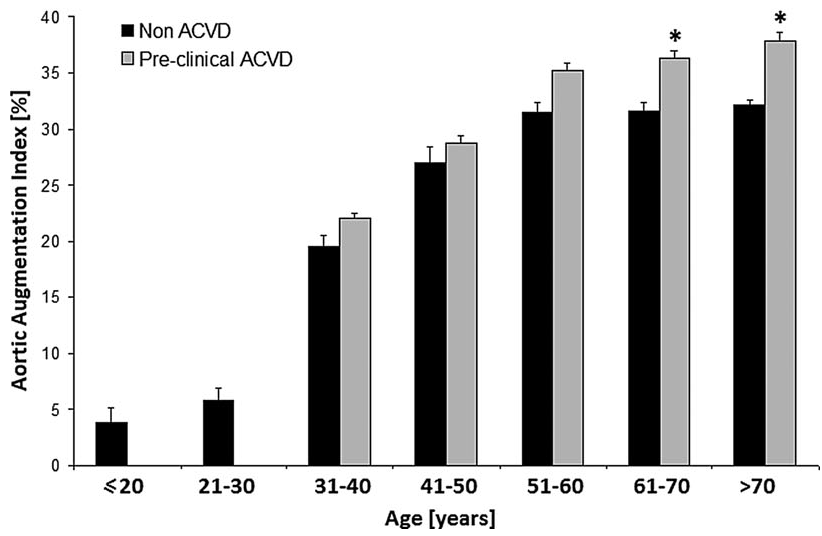 Figure 3: Comparison of real vs. calculated age (Top) and the resulting impact on the Framingham Risk Score (Bottom).
Critical Analysis & Conclusion
The CUiiDARTE project proves that a decentralized, distributed healthcare model is not only possible but superior for early detection in a developing nation context.
Strengths:
- Holistic Integration: Combines structural (ultrasound) and functional (stiffness) data.
- Scalability: Uses low-cost, portable technology suitable for community-wide screening.
- Interoperability: The e-Health backbone allows for a longitudinal medical record that evolves with the patient.
Limitations:
- While the "Vascular Age" concept is intuitive, the authors note that factors like arterial "tethering" can sometimes confound PWV measurements, requiring refined mathematical modeling in future iterations.
Future Outlook: The success of this Uruguay-based model provides a blueprint for other countries. By moving the focus from treating the consequences of ACVD to detecting its asymptomatic precursors, e-Health can fundamentally change the trajectory of public health.