
Intelligent Dental Healthcare: Bridging the Gap with Mobile AI and Automated Follow-ups
An Integrated and Intelligent Dental Healthcare System with Mobile Services
The paper presents an integrated dental healthcare platform comprising a WeChat Official Account, an AI-driven Q&A system, a follow-up Mini Program, and an AI speech assistant. It achieves a professional dental question classification accuracy of 89.09% using a Bi-LSTM with attention mechanism.
TL;DR
Researchers have developed a comprehensive, mobile-centric dental healthcare ecosystem that leverages Bi-LSTM networks and AI speech assistants to automate the complex, long-term nature of dental treatment. By integrating these tools into WeChat, the system achieves nearly 90% classification accuracy for medical queries and ensures persistent patient monitoring without increasing hospital staffing costs.
Context & Motivation: Why Dental Care is a Hard Problem
Unlike a common cold, dental treatment is a marathon, not a sprint. The authors identify three critical pain points in the current landscape:
- Complexity and Duration: Treatments often last weeks and require multiple visits.
- Knowledge Gap: Dental terminology is highly specialized, leading to patient anxiety and poor self-evaluation.
- The Follow-up Failure: Post-operative feedback is essential for success, yet traditional manual follow-ups are too expensive for hospitals to maintain at scale.
Previous Hospital Information Systems (HIS) were largely desktop-bound and "dumb," acting as digital filing cabinets rather than active medical assistants.
Methodology: The Intelligent Core
The system's intelligence is anchored in its ability to parse and understand human natural language across different mediums.
1. Neural Network-based Q&A
The authors implemented a Bi-directional LSTM (Long-Short Term Memory) network. Why Bi-LSTM? Because in medical queries, context matters—the words both before and after a medical term define its meaning.
- Attention Mechanism: To handle short, colloquial queries, an attention layer assigns weights to critical "keywords" while ignoring conversational filler.
- Word2Vec (Skip-gram): Trained on Chinese Wikipedia, this ensures the model understands the semantic relationship between dental terms (e.g., "denture" and "impair").
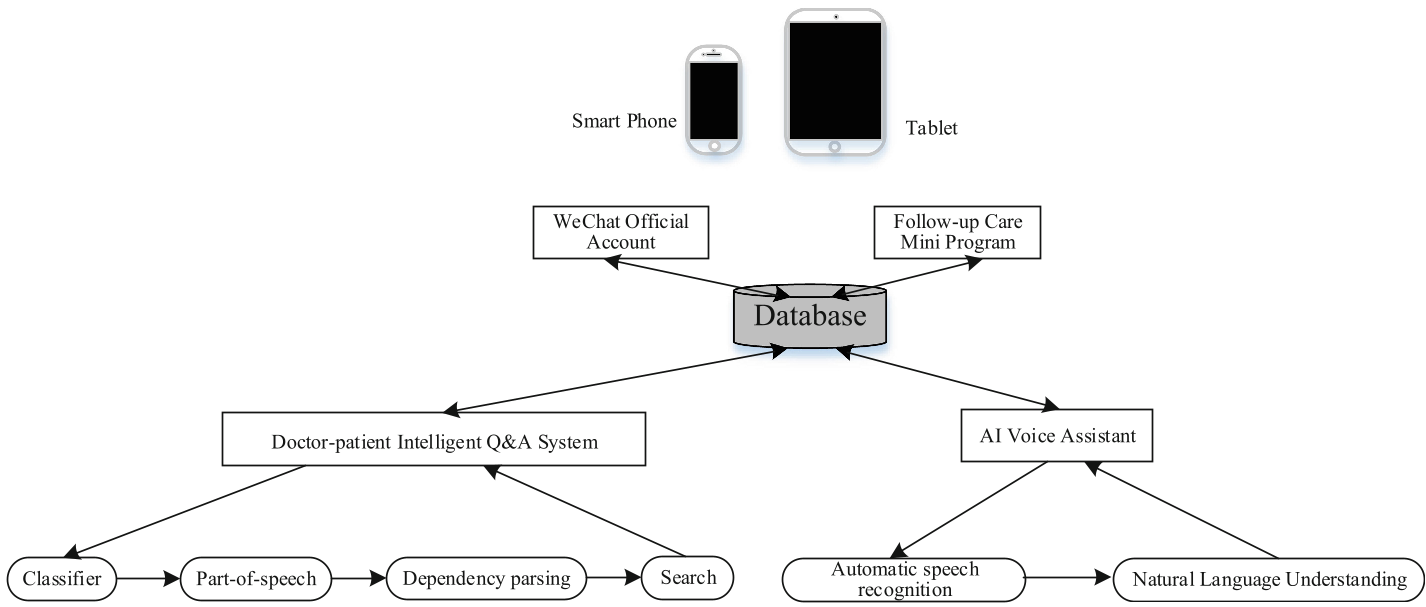 Figure 1: The Integrated Architecture of the Dental Healthcare System.
2. Dependency Parsing for Precision
Instead of simple keyword matching, the system uses dependency parsing to identify the structural relationship between objects. For example, in the query "Will dentures hurt my normal teeth?", the system extracts the dobj (direct object) and nsubj (noun subject) to find the most relevant clinical answer from a verified database.
Implementation: Beyond the App
The system stands out through its omni-channel approach:
- The Mini Program: A B2C interface for tech-savvy patients to receive "post-diagnosis reminders" and log symptoms.
- AI Speech Assistant: Utilizing RASA and speech recognition, the system automatically calls elderly patients who may not use apps, identifies their answers, and records results into a database.
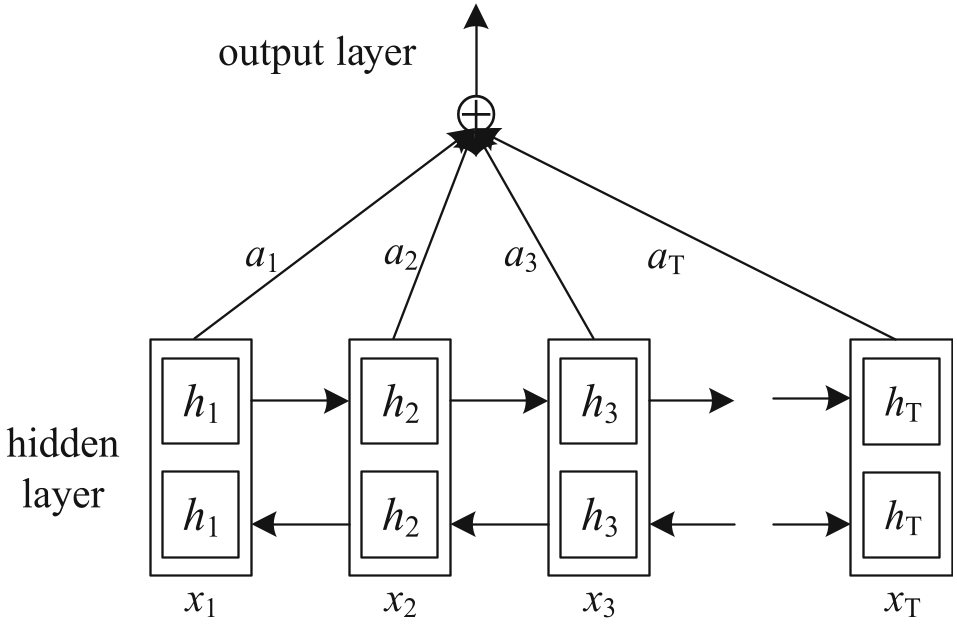 Figure 2: The Bi-directional LSTM network with Attention Mechanism used for query classification.
Experiments and Results
The system was not just a lab experiment; it was deployed at the Stomatological Hospital of Xi’an Jiaotong University.
- Accuracy: The classification engine hit a peak validation accuracy of 89.09%.
- Efficiency: The response time for queries remains linear and smooth, even as sentence length grows (see Figure 7), ensuring a "real-time" feel for the user.
- Real-world Impact: The use of automated templates and AI callers significantly reduced the "manpower and resource usage" typically required for a high-level dental clinic.
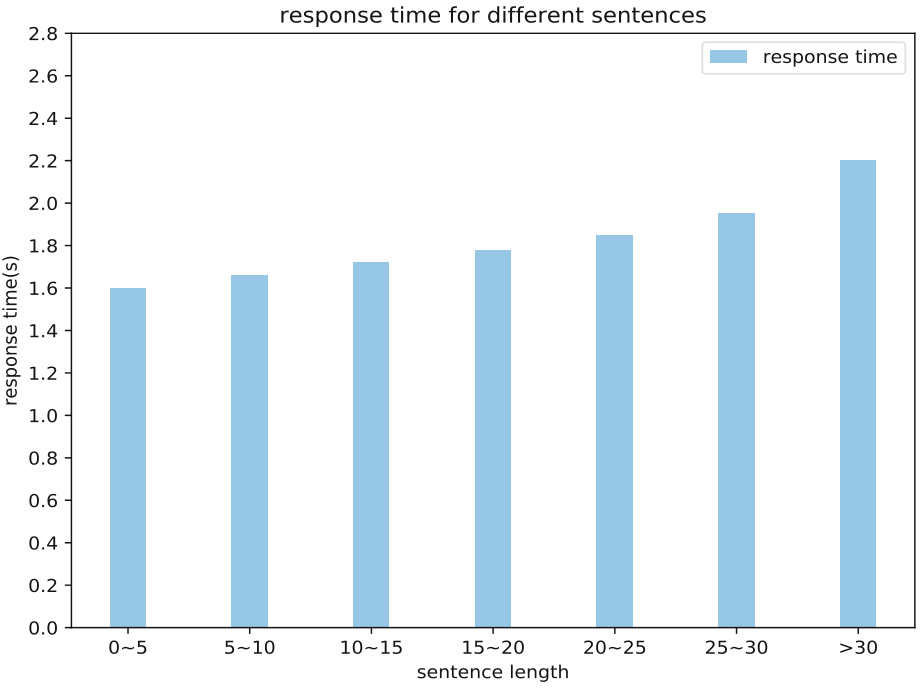 Figure 3: System response time vs. sentence length, showing high scalability.
Critical Insight & Conclusion
The real innovation here isn't just the AI—it's the integrated workflow. By placing the intelligence inside WeChat (where the users already are) and providing a "fallback" AI voice service for the digitally excluded, the system solves the "adoption problem" that plagues most medical apps.
Future Outlook: As LLMs (like GPT-4 derivatives) become more accessible, we expect this system's Q&A module to transition from retrieval-based to generative-based, providing even more nuanced, human-like medical guidance. However, the foundational architecture of mobile-first follow-up established here remains the gold standard for dental informatics.