
The Ghost in the Machine: Integrating Cognitive and Emotional Loops in Socio-Technical Systems
Integrated Modeling of Cognitive Agents in Socio-Technical Systems
This paper introduces a formal, integrated agent-based modeling approach for socio-technical systems, utilizing the LEADSTO language. The core contribution is a generic cognitive architecture that couples belief revision, trust dynamics, and decision-making through an emotion-driven "body loop" mechanism, achieving a more human-like representation of agent behavior in complex environments.
TL;DR
In high-stress environments like subway fires, human decision-making isn't just about logic—it’s about trust and emotion. This paper presents a breakthrough formal model that integrates belief revision, trust, and feelings into a single "body-loop" architecture. By mimicking the neurological feedback between what we think and what we feel, the model provides a more accurate simulation of how agents (both human and AI) behave in complex, socio-technical crises.
Background: The Gap in Agent Modeling
Modern systems are a messy mix of autonomous software, ambient sensors, and unpredictable humans. While we have excellent models for simple "rational" agents, they often fail to capture the reciprocal relations between internal states. For instance, if you don't trust a source (Trust), you won't believe their warning (Belief), even if it's true. Previous SOTA methods often treated these as separate boxes. This paper bridges the gap by arguing that every belief is "emotionally loaded."
Problem & Motivation: Why Rationality Isn't Enough
Existing models usually follow a linear path: Perception → Logic → Action. However, Neuroscience tells us that human cognition is a loop. The author identifies that:
- Trust is dynamic: It builds and breaks based on experience, yet remains an "emotional attitude."
- Beliefs are not static: They are constantly re-evaluated based on the reliability of the source.
- Decisions involve shortcuts: Under pressure (like an evacuation), we don't calculate utility; we follow our "feelings" about a plan.
Methodology: The "As If" Body Loop
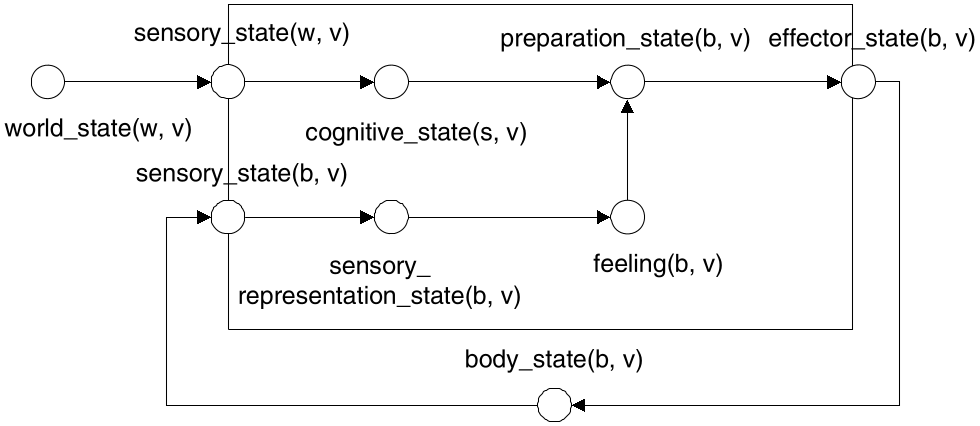
The core of the paper is the formalization of the Body Loop. Instead of a simple variable update, the model uses a positive feedback cycle:
- Cognitive State: An agent perceives smoke.
- Bodily Response: The system prepares an internal "state" (e.g., anxiety/alertness).
- Sensing & Feeling: The agent "senses" this preparation, resulting in a Feeling.
- Belief Update: This feeling then feeds back into the belief system, modulating the confidence level of the original perception.
The Mathematics of Trust
Trust is modeled as a feeling value . The paper uses a sophisticated update function where:
- (Gamma): Determines the speed of belief updates.
- (Beta): Represents the agent’s "disposition"—essentially, are they an optimist or a pessimist? This allows the model to simulate diverse personalities, from agents who forgive mistakes quickly to those who lose trust permanently after one error.
Experiments: Surviving a Subway Explosion
The author tested this model in a subway evacuation simulation. Unlike standard pathfinding simulations, these agents had to navigate based on conflicting information:
- The Driver: High initial trust, but might give wrong directions.
- Stranger Agents: Low initial trust, but might have the "golden" exit route.
- Ambient Devices: Electronic sensors that provide data but can be hacked or malfunction.
Key Findings:
- Trust Re-evaluation: Agents were able to mathematically "backtrack" their trust. If they found a door locked, they didn't just update their map; they lowered their trust in the source that told them it was open and re-weighted all other info from that source.
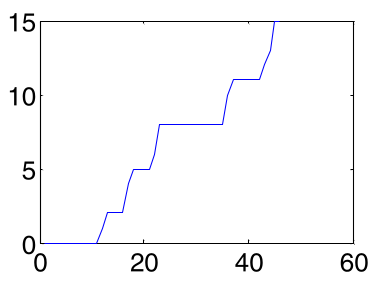
- Ambient Efficiency: The simulation (Variation 3) showed that even if a few devices spread "wrong" info, a group of agents with integrated emotional models could filter the noise more efficiently than purely "logical" agents who might get stuck in loops of misinformation.
Critical Analysis & Conclusion
Takeaway
This research is a significant step toward "Human-centric AI." By acknowledging that cognition is a recursive loop of thought and feeling, we can build social-technical systems that are more resilient to misinformation.
Limitations
The model is highly complex. As the number of agents and internal states grows, the computational overhead of calculating these recursive body loops for every belief update becomes immense. The paper admits that "model abstraction mechanisms" are needed for larger-scale applications.
Future Outlook
The next frontier is applying this to Multi-modal AI. Imagine a self-driving car that doesn't just calculate "probability of a crash" but maintains a "trust feeling" for its diverse sensors (Lidar vs. Camera), adjusting its "belief" in real-time as weather conditions degrade. This paper provides the formal logic to make that possible.