
Crowdsourcing the Future of Education: Lessons from William & Mary’s "Tomorrow’s MBA"
Integrating the Crowd Through Social Media: How Higher Education Can Profit from Viral Mechanisms
This paper explores the integration of Open Innovation (OI) and crowdsourcing mechanisms within the higher education sector through the "Tomorrow’s MBA" case study at the College of William & Mary. It details the setup of a social media-driven idea contest that successfully gathered 200 innovative concepts for the future of business education from a global audience.
TL;DR
Higher education is often perceived as an ivory tower, yet the "Tomorrow’s MBA" project demonstrates how universities can break their boundaries. By using a specialized Open Innovation platform, the Mason School of Business at the College of William & Mary successfully engaged a global crowd to co-create a new curriculum strategy, proving that viral social media mechanisms can yield high-quality academic innovation.
The "Outside-In" Gap in Academia
For years, companies like BMW and McDonald’s have used Open Innovation to co-create products with customers. Even governments have embraced "eGovernment" to involve citizens in policy. However, universities—hubs of knowledge—have been surprisingly slow to apply these crowdsourcing techniques to their own strategic evolution.
The authors argue that the pain point isn't a lack of ideas, but a lack of mechanisms to capture them. Traditional academic planning is top-down; this paper investigates if a bottom-up, social-media-driven approach can actually redefine a product as complex as an MBA program.
Methodology: The Architecture of an Idea Contest
The researchers didn't just build a website; they designed a social ecosystem. The project, titled "Tomorrow’s MBA," was structured around five core pillars:
- Courses & Skills: What should be taught vs. what is obsolete?
- Formats: Online, offline, or hybrid/blended models?
- Financing: New models for scholarships and funding.
- Lifelong Learning: Building a 40-year relationship with graduates.
- Marketing & Branding: How to reach the next generation of students.
The Technical Hub
The platform was designed with gamification and user experience in mind. It featured a simplified registration (Facebook Connect), an idea pool for transparent voting, and a Five-star Likert scale for peer evaluation.
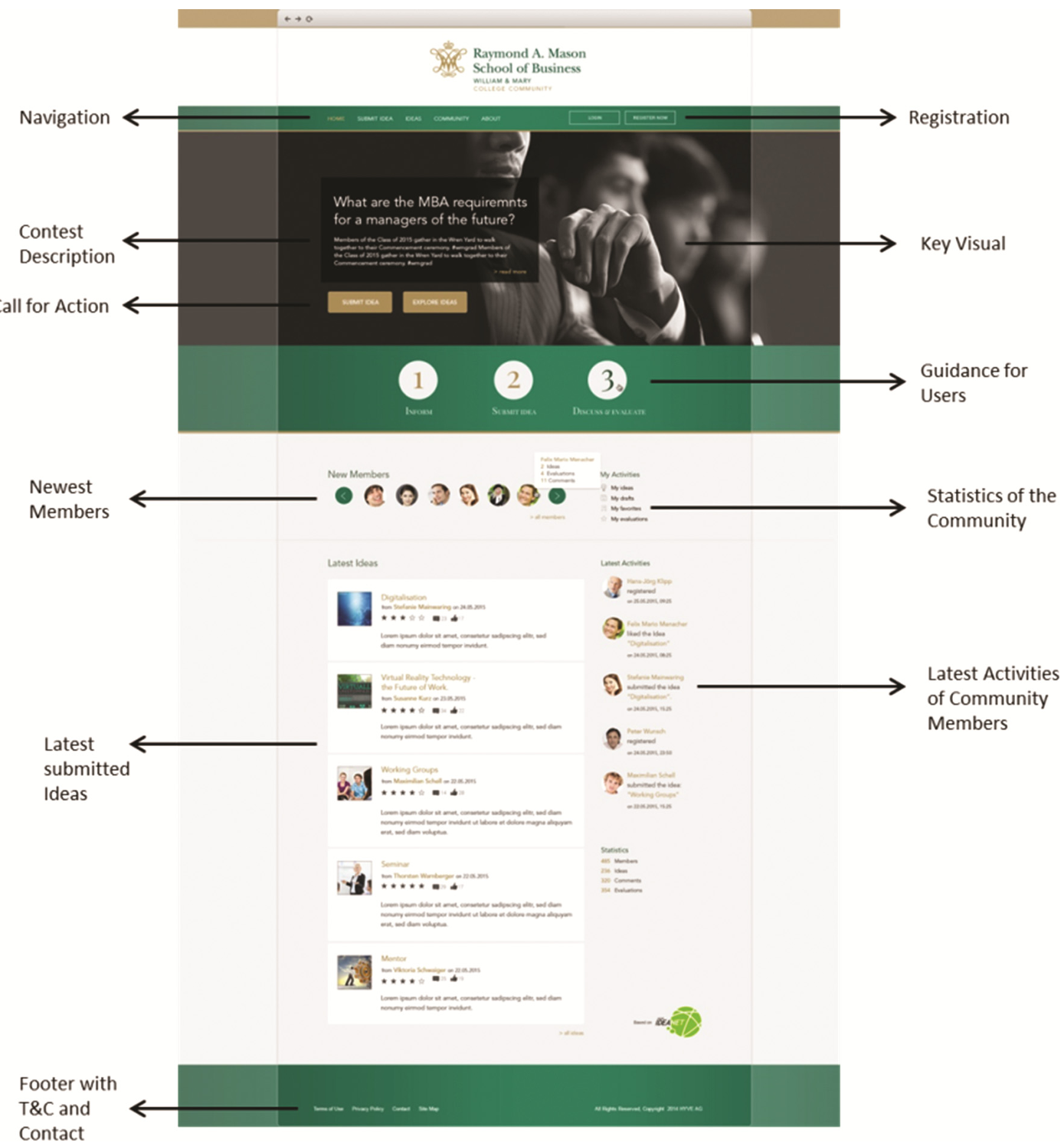 Figure 1: The visual layout of the "Tomorrow's MBA" online community platform.
The Hybrid Communication Strategy
One of the paper’s most vital insights is that digital reach is not enough. To attract high-level "Lead Users" (academics, business professionals, and former students), the team had to use a dual-track strategy:
- Online Viral Mechanisms: Leveraging influencers (e.g., Poets & Quants blog), LinkedIn groups, and automated community management.
- Offline Qualitative Depth: The research team conducted face-to-face interviews and round-table discussions in locations like Munich and Williamsburg.
Results & Impact
The impact was global. In just eight weeks, the project achieved:
- 5,000+ unique visitors from 78 countries.
- 200 distinct, high-quality ideas (including "Tinder-style" apps for business networking and specific MBA modules for military units).
- Remarkable Viral Buzz: The initiative was named one of the top 10 most innovative university projects by major industry blogs.
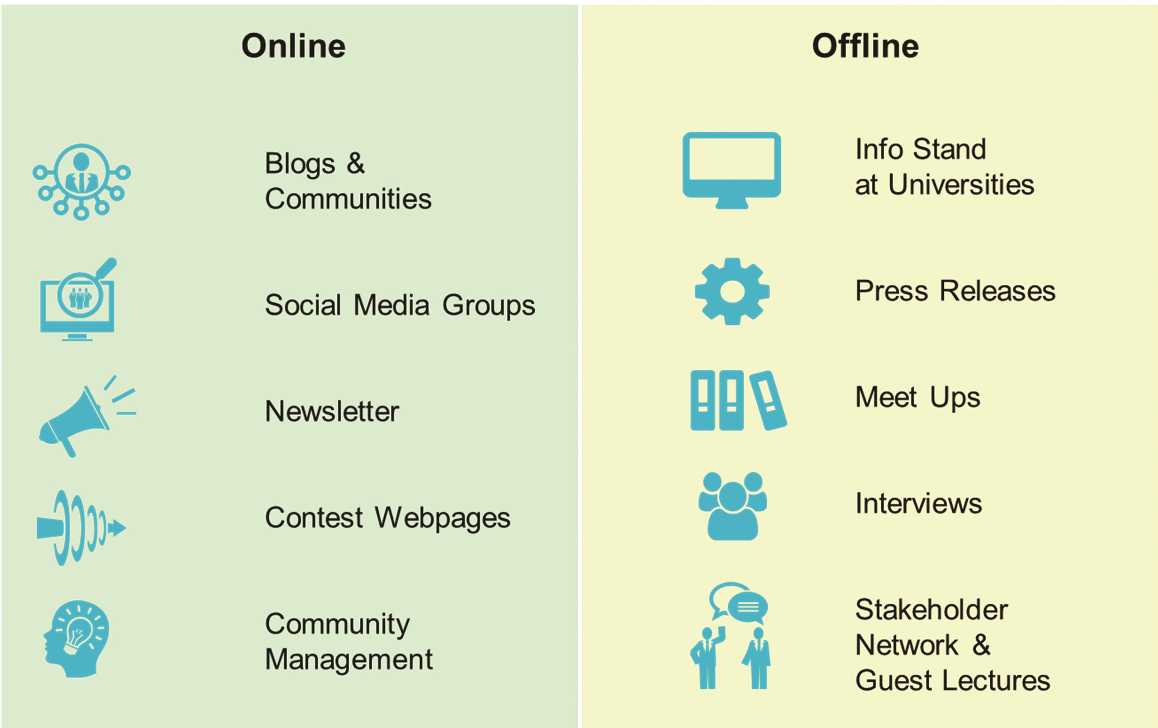 Figure 2: Summary of community engagement and the conversion from visitors to actionable ideas.
Critical Insight: The Offline Paradox
The most surprising finding? 51% of the ideas came from offline channels. While social media provided the massive traffic and "viral buzz" (quantitative success), the most substantive, well-fleshed-out ideas (qualitative success) were born from the personal touch of interviews and guest lectures. For universities looking to replicate this, the takeaway is clear: Social media brings the crowd, but personal engagement brings the quality.
Conclusion
"Tomorrow’s MBA" serves as a blueprint for the "Open University." It validates that when academic institutions lower their boundaries and invite the crowd, they don't just get noise; they get a roadmap for the future. The challenge for the future lies in the internal "absorptive capacity"—the ability of faculty to actually implement these "outside-in" ideas without institutional friction.