
Temperature-Driven Epidemics: Integrating Climate Dynamics into Vector-Borne SIR Models
Integrating Environmental Temperature Conditions into the SIR Model for Vector-Borne Diseases
The paper introduces a modified SIR (Susceptible-Infected-Recovered) model that incorporates environmental temperature dynamics to predict the spread of vector-borne diseases like Dengue and Malaria. By mathematical modeling and network simulation, it establishes that the epidemic threshold is proportional to the square of the temperature-dependent vector biting rate.
TL;DR
Vector-borne diseases (VBDs) such as Malaria and Dengue threaten over 60% of the world's population. Unlike the common cold, these diseases rely on biological "middlemen"—vectors like mosquitoes—whose activity is strictly governed by the environment. This paper redefines the classical SIR model by making the biting rate a function of temperature, demonstrating that the epidemic's strength () is proportional to the square of this temperature-driven rate within a human contact network.
The Motivation: Why Biology Needs Network Science
Traditional epidemiology often treats disease spread as a simple interaction between humans. However, in VBDs, the "engine" of the epidemic is the vector population.
The authors identified two major gaps in existing research:
- Clinical models focus on human interaction but ignore that mosquitoes die or stop biting in extreme cold or heat.
- Environmental models predict mosquito populations but ignore how human social structures (contact networks) actually distribute the virus.
By observing real-world data from New Delhi (2018), the authors noted a clear Gaussian-like peak in hospitalizations for Typhoid, Malaria, and Dengue during specific temperature windows, prompting a more integrated mathematical approach.
Methodology: Coupling Climate and Contact
The researchers proposed a dual-population model where humans follow an SIR (Susceptible-Infected-Recovered) path and vectors follow an SI (Susceptible-Infected) path (due to their short lifespan, they rarely "recover").
The Core Innovation: The Biting Rate
The key contribution is the mathematical formulation of the biting rate as a Gaussian function: Where is the optimal temperature () for vector activity.
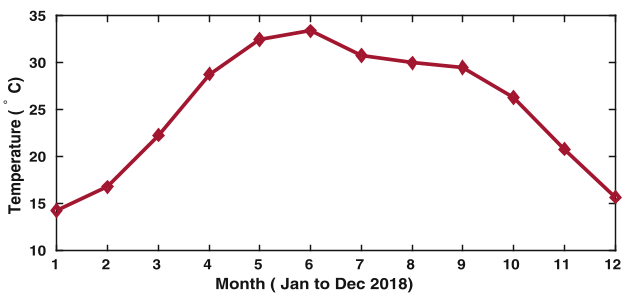 Figure 1: Real-world infection data showing the seasonal surge in New Delhi, motivating the temperature-dependent model.
The Network Structure
The authors utilized a Watts-Strogatz homogeneous network to represent human interactions. This allowed them to calculate the rate at which a healthy host becomes infected not just by other humans (), but via the "temperature-filtered" biting of infected vectors.
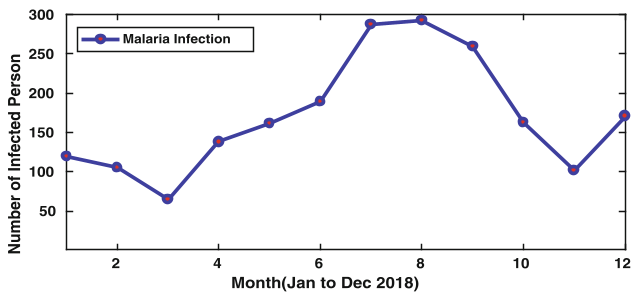 Figure 2: The interaction loop between Host and Vector populations.
Key Insights from Sub-Threshold Analysis
Through mean-field rate equations, the authors derived the Basic Reproduction Number for the Host ():
Why is squared? It represents the dual-step requirements of VBDs: a mosquito must first bite an infected host to acquire the virus, and then bite a susceptible host to transmit it. This makes the epidemic's intensity exponentially sensitive to temperature changes near the optimal mark.
Experimental Results
The simulation, using a network of 2,000 nodes and a vector population of 100,000, yielded several critical findings:
- Temperature Thresholds: Below and above , the biting rate drops to zero, effectively killing the epidemic regardless of human density.
- Critical Threshold Evolution: The infection threshold shifted from 0.8 to over 0.9 as the temperature moved toward the optimum.
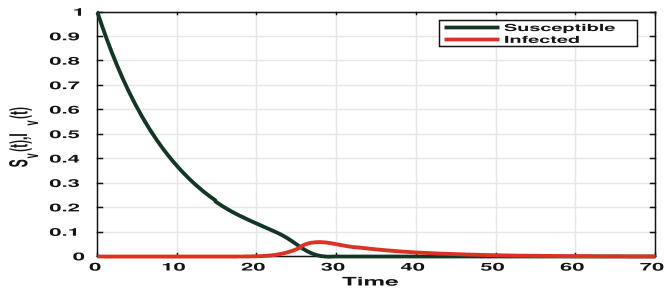 Figure 3: Infection evolution in human vs. vector populations over time.
Critical Analysis & Future Directions
The paper successfully bridges the gap between environmental biology and network science. However, as an Academic Editor, I note a few areas for further exploration:
- Network Topology: The current study uses a homogeneous network. In reality, human contact is often scale-free (long-tail distributions where few "super-spreaders" have many contacts) or modular (community-based).
- Humidity: Temperature is only half the story. As the authors admit, rainfall and humidity are critical for mosquito breeding sites, which would add another layer of complexity to the biting rate.
Takeaway: This work provides a rigorous foundation for "Climate-Informed Epidemiology," proving that our models of disease must be as dynamic as the weather itself.