
WEA: Bridging Weather Analytics and Patient Engagement in Mobile Healthcare
Integrating Mobile Devices with Cohort Analysis into Personalised Weather-Based Healthcare
This paper introduces a personalized weather-based healthcare application (WEA) designed for asthma and eczema patients, utilizing a machine learning-driven cohort analysis to monitor and improve user engagement. The study integrates OpenWeather and Air Quality Index (AQI) data to provide real-time health self-monitoring tools.
TL;DR
Mobile health apps are only effective if patients actually use them. This research tackles the "uninstall epidemic" in healthcare apps by developing WEA (Weather Eczema Asthma)—a personalized monitoring tool—and using Cohort Analysis to scientifically map out why and when users stop engaging. The study proves that while weather-based triggers are high-value, proactive interventions (notifications) are mandatory to sustain the user lifecycle.
The Motivation: Why Chronic Health Apps Fail
Chronic conditions like asthma and eczema are highly sensitive to environmental stressors—humidity, UV index, and air quality. While mHealth apps should be the perfect solution for self-care, they face a brutal reality: the "few-second decision." If a user doesn't find immediate value or a reason to return within the first few days, the app is deleted.
The authors identified that most mHealth developers focus on what features to build but ignore how to keep users coming back. This gap leads to a breakdown in long-term treatment adherence, which is vital for managing weather-sensitive triggers.
Methodology: Tracking the Pulse of User Behavior
The researchers built the WEA application using a patient-centric approach. The system architecture utilizes machine learning to correlate weather forecasts with patient-reported symptoms.
1. System Architecture
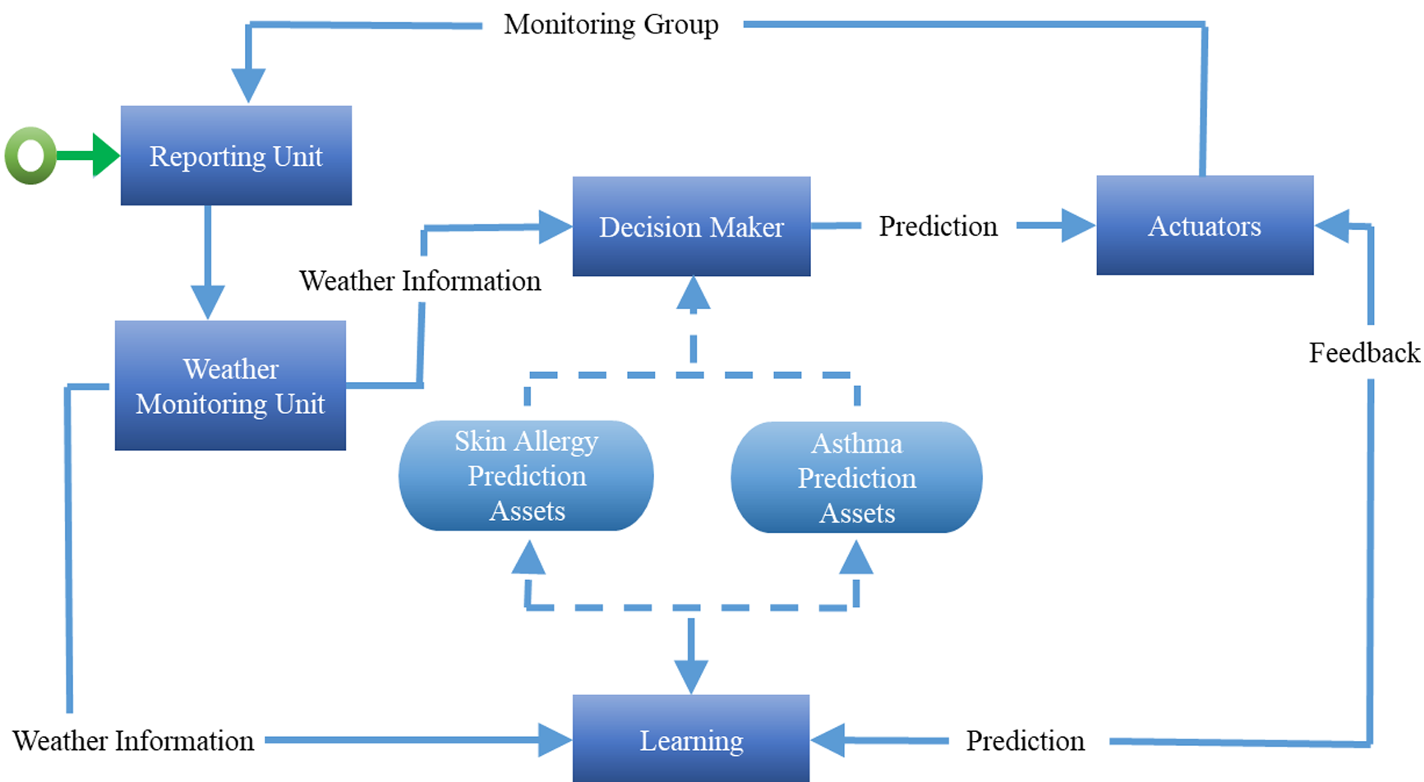 Figure 1: Conceptual representation of the recommendation engine using weather and patient data.
2. The Analytical Engine: Cohort Analysis
To measure success beyond simple "active user" counts, the team employed Cohort Analysis. This technique clusters users based on their start date and tracks their return rate over a 10-day pilot. They used two primary metrics:
- Classic Retention: The percentage of users returning on a specific day .
- Engagement Time: Tracking which specific activities (screens) held the user's attention longest.
3. F-Shaped Design Logic
The UI was strategically designed following the "F-shaped pattern" commonly used in web reading, placing critical weather data and location info on the left to maximize the psychological "first impression."
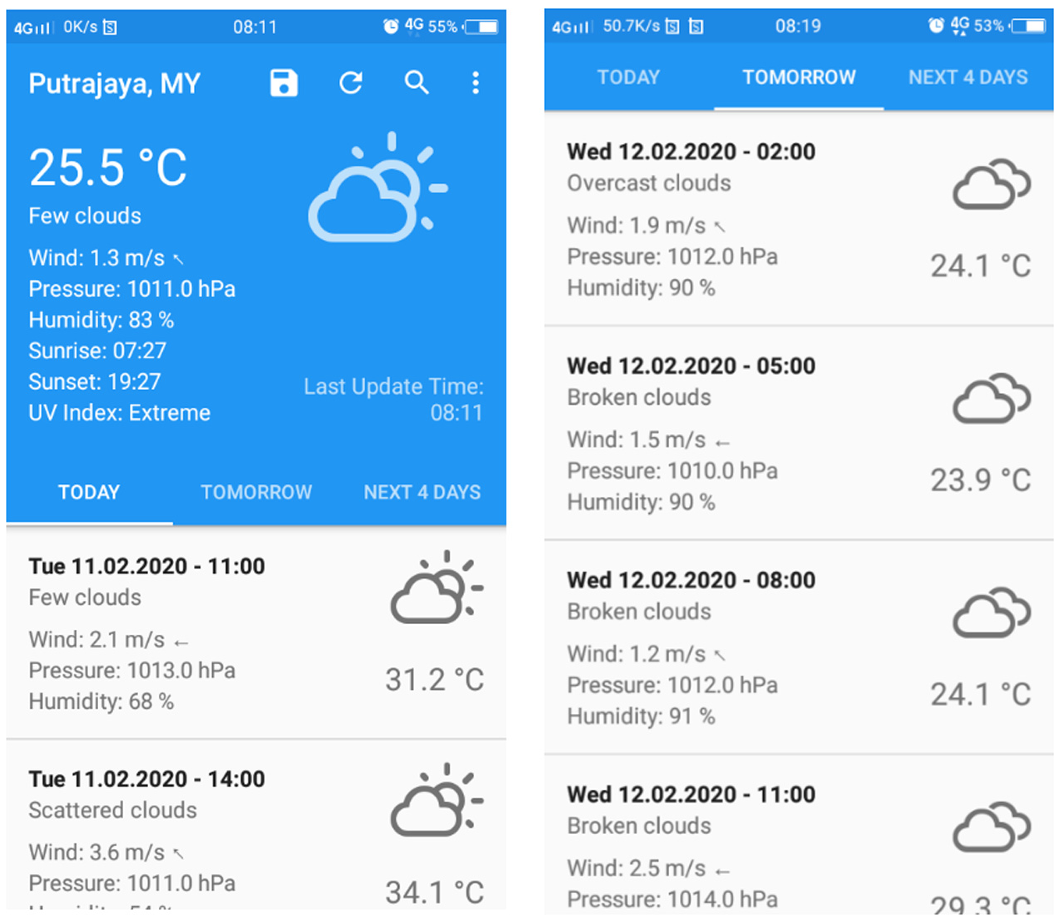 Figure 2: The WEA app interface displaying localized weather and risk factors.
Experimental Results: The Notification "Rescue"
The data collection through UX Cam and Firebase revealed a stark engagement curve:
- Day 1 to 3: Drastic drop in users (60% churn).
- Day 4 Intervention: Applying a Push Notification via Firebase Cloud Messaging successfully spiked the return rate back to 3 users.
- Day 6 Intervention: Similar gains were seen, highlighting that users don't necessarily hate the app—they simply forget it exists.
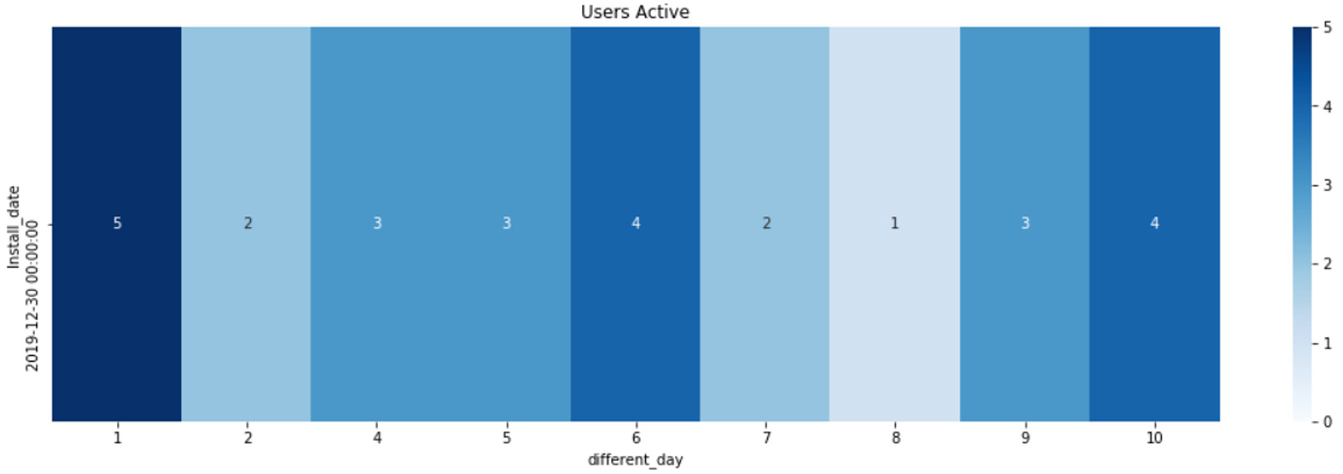 Figure 3: Cohort Analysis showing the fluctuating retention rate based on interventions.
Key Insight: The Dominance of the Main Screen
Ablation of engagement time per screen (Fig 10 in the paper) showed that Activity A1001 (Weather Forecast) had the highest total engagement time. This confirms that for personalized healthcare, users prioritize immediate situational awareness over secondary features like graphs or profile settings.
Critical Analysis & Conclusion
The Takeaway
The study confirms three critical hypotheses:
- Selection Bias: Users spend significantly less time on return days than on Day 1.
- Notification Equality: Push notifications and emails are equally effective; the timing and content matter more than the medium.
- Core Value First: The first screen must deliver the app’s primary value immediately to anchor the user's perception of "utility."
Limitations & Future Work
The study was limited by a small sample size () and a short 10-day duration. Furthermore, the "Selection Bias" of users participating in a pilot may skew results. The authors intend to integrate Automated Predictive Churn Modeling in future iterations, allowing the AI to automatically detect when a user is about to leave and send a personalized incentive to stay.
In the landscape of "Intelligent Management Information Systems," this work serves as a blueprint for moving from passive data display to active user retention in digital health.