
KPI-Oriented E-Learning: Bridging the Gap Between Web 2.0 Socializing and Workplace Performance
Integrating organizational, social, and individual perspectives in Web 2.0-based workplace e-learning
This paper proposes a Key Performance Indicator (KPI)-oriented approach to Web 2.0-based workplace e-learning. It integrates organizational goals, social interaction, and individual needs into a unified systemic framework to solve the disconnect between technology-oriented e-learning and actual business performance.
TL;DR
The transition from traditional e-learning to Web 2.0 hasn't always yielded better results; in many cases, it has created "social noise" without professional growth. This paper introduces a KPI-oriented approach that uses organizational performance metrics as a "north star" to guide individual learning and social knowledge sharing, ensuring that every wiki edit or forum discussion translates into tangible work competence.
Background: The Crisis of Technology-Oriented E-Learning
Modern organizations have rushed to adopt Web 2.0 tools (blogs, wikis, social networks) for training. However, the author identifies a critical failure: these systems are often technology-oriented rather than goal-oriented.
- The Problem: Employees participate in social learning, but the knowledge acquired doesn't improve their specific job performance.
- The Disconnect: Organizational goals remain abstract, while individual learning remains fragmented and unguided.
The Core Insight: KPIs as the Semantic Bridge
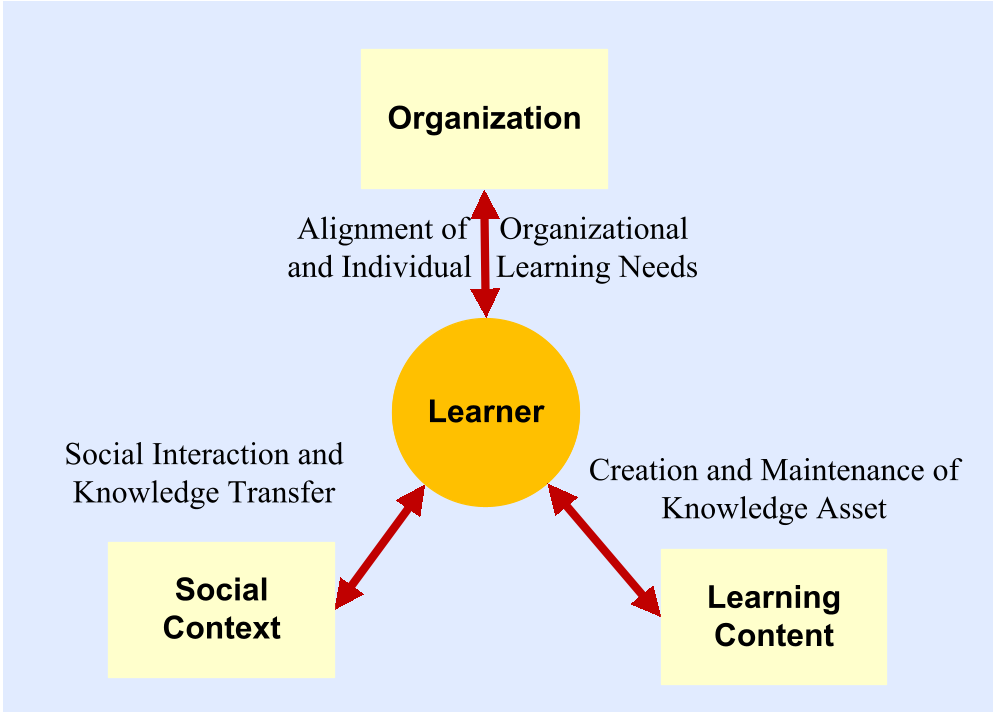
The author's fundamental "How" is the use of Key Performance Indicators (KPIs) not just as a measurement tool, but as a structural framework for the entire learning environment. By mapping KPIs to a "Capability Ontology," the system can align three distinct perspectives:
- Organizational: Translating missions into required position-level competencies.
- Individual: Identifying knowledge gaps through 360-degree feedback and targeted assessments.
- Social: Indexing user-generated content (Web 2.0) with KPI tags so social interaction is context-aware.
Methodology: The KPI-Oriented Framework
The architecture moves beyond simple content delivery. It employs Ontology technology to define the relationship between capabilities (e.g., "Bug Reporting" as a prerequisite for "Test Execution").
- Ontology-based Pathing: The system uses a JESS reasoning engine to suggest learning paths based on the learner’s specific KPI deficiencies.
- Contextual Socializing: When a user shares a resource, they annotate it with a KPI. Peers can then find experts or relevant discussions based on targeted performance needs rather than generic keywords.
Experiments & Results
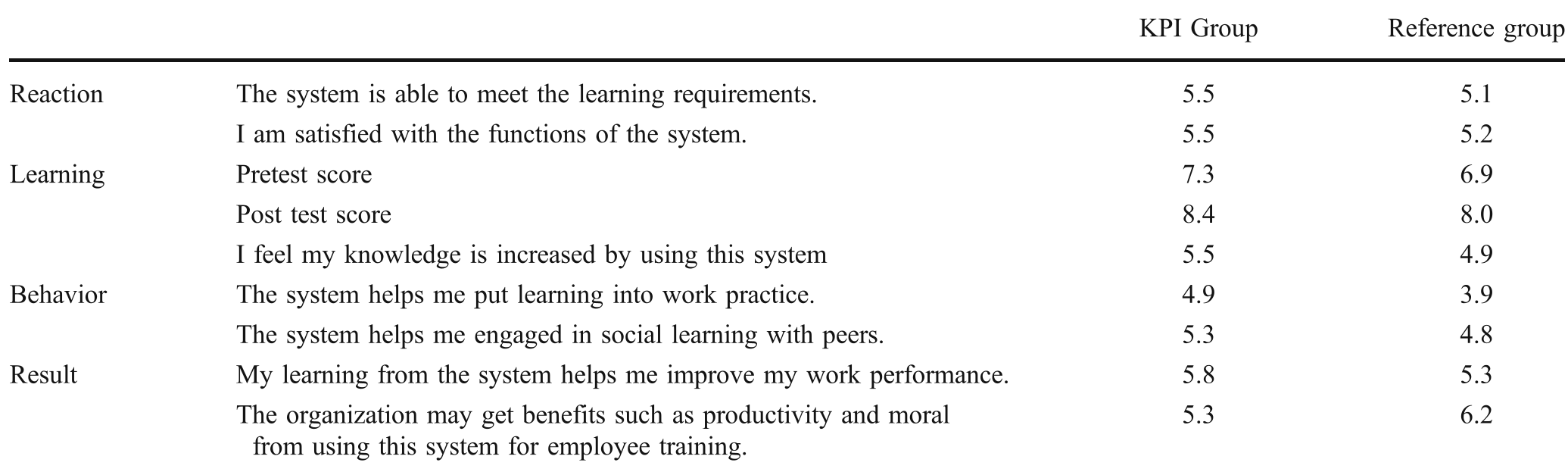
The author developed a prototype for a software company's "Testing Unit." They compared a KPI-oriented group against a reference group using a traditional system.
Key findings included:
- Application to Practice: The KPI group felt much more capable of applying knowledge to their jobs (Group Mean: 4.9 vs. 3.9).
- Social Engagement: Engagement was more purposeful; users reported that social networking was "effective and consistent with the business model."
- Preference: An overwhelming 90% of participants favored the KPI-oriented system, despite a steeper initial learning curve.
Critical Insight & Future Outlook
The brilliance of this work lies in solving the "voluntariness" problem of Web 2.0. In a workplace, people share knowledge when they see it impacts their reputation and performance. By making expertise "visible" through KPI profiles, the system creates a high-trust environment where experts are easily located and contributions are recognized.
Limitations: The study primarily focuses on short-term job performance. Future research must address how this KPI structure can support long-term career development without becoming too rigid or stifling the "serendipitous" learning that Web 2.0 is famous for.
Conclusion
This paper serves as a blueprint for the "Connectivist" era of workplace training. It proves that for Web 2.0 to thrive in a corporate setting, it needs more than just social tools—it needs an organizational compass.