
SERM: Integrating Recommender Information in Social Ecosystems Decisions
Integrating recommender information in social ecosystems decisions
The paper introduces the Social Ecosystem Recommender Model (SERM), an integrated framework that combines predictive recommenders, social network analysis, and interpersonal interactions. It utilizes time-decay algorithms and homophily-based weighting to provide contextual and temporal-aware social status predictions and search strategies.
TL;DR
The paper proposes the Social Ecosystem Recommender Model (SERM), a framework designed to navigate the complexities of online communities where members interact and recommend each other. Unlike traditional systems that suggest products, SERM uses a combination of Time-Decay algorithms, Collaborative Filtering, and Homophily adjustments to quantify the "Social Closeness" between individuals, enabling more intelligent social search and discovery.
Context & Motivation: Why People Recommenders are Different
Conventional recommender systems (think Amazon or Netflix) are built on item-to-user utility. However, in "Social Ecosystems"—such as professional medical forums or legal advice communities—the "item" being recommended is a person.
The authors argue that existing methodologies fall short because:
- Temporal Relevance: A recommendation from five years ago shouldn't carry the same weight as one from yesterday.
- Contextual Variance: An expert in "Diagnosis" might not be an expert in "Business."
- The Homophily Effect: Human interaction is naturally biased toward similar others (age, education, interests), which significantly impacts social "closeness."
Methodology: The Three Pillars of SERM
The framework operates through a sophisticated 5-step calculation process to determine Social Closeness.
1. Time History and Decay
The model recognizes that social status is dynamic. Using a linear decay function, older statements of recommendation are penalized.
For example, within a 4-year horizon, the most recent recommendation retains 100% weight, while one from four years ago is reduced to 25%.
2. Predictive Aggregation & Collaborative Filtering
Social networks are notoriously sparse—most people haven't rated most others. The framework solves this using Collaborative Filtering (CF). It employs a Member-Centric or Context-Centric approach to aggregate ratings across different discussion themes and uses Pearson’s Correlation to predict missing "Social Status" values.
3. Homophily-Adjusted Social Distance
This is the framework's most unique contribution. It adjusts the mathematical distance between two nodes based on their Reciprocal Interaction and Attribute Similarity. If two members share the same role or specialty, the "Social Distance" between them is mathematically shortened.
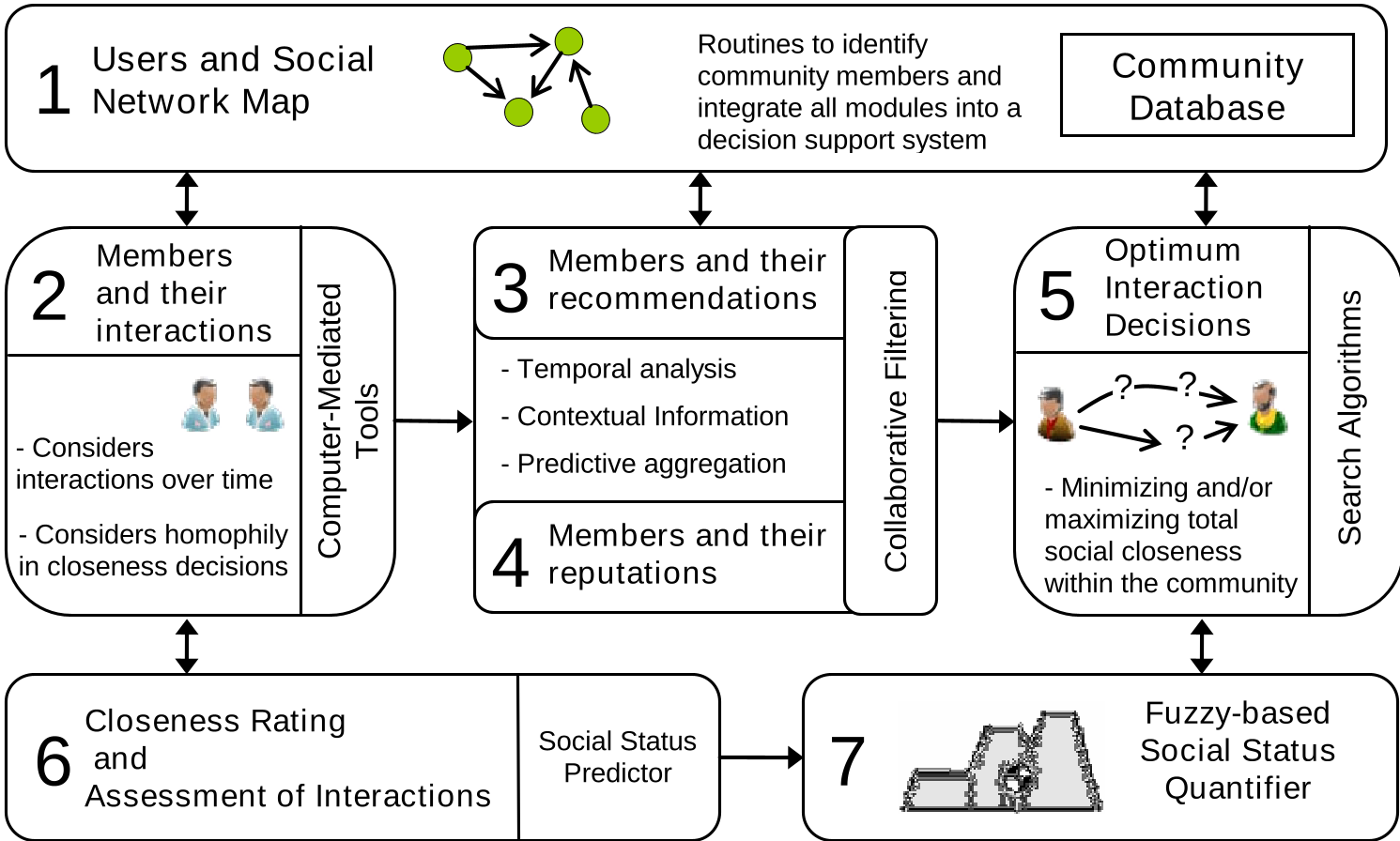 Figure 1: The core components of the Social Ecosystem Recommender Model.
Experiments: Recommender Search in Action
The authors validated the model using a case study from Eyeknowledge.net, a virtual community for eye care professionals. By applying a modified Dijkstra’s algorithm, the system allows users to search for the "closest" (most recommended and similar) path to a target expert.
User-Defined Search Parameters:
- Social Contexts: Filter by topics like "Diagnosis" or "Treatment."
- Homophily Weights: Prioritize matching "Role" or "Specialty."
- Time Horizon: Decide how much historical data to trust.
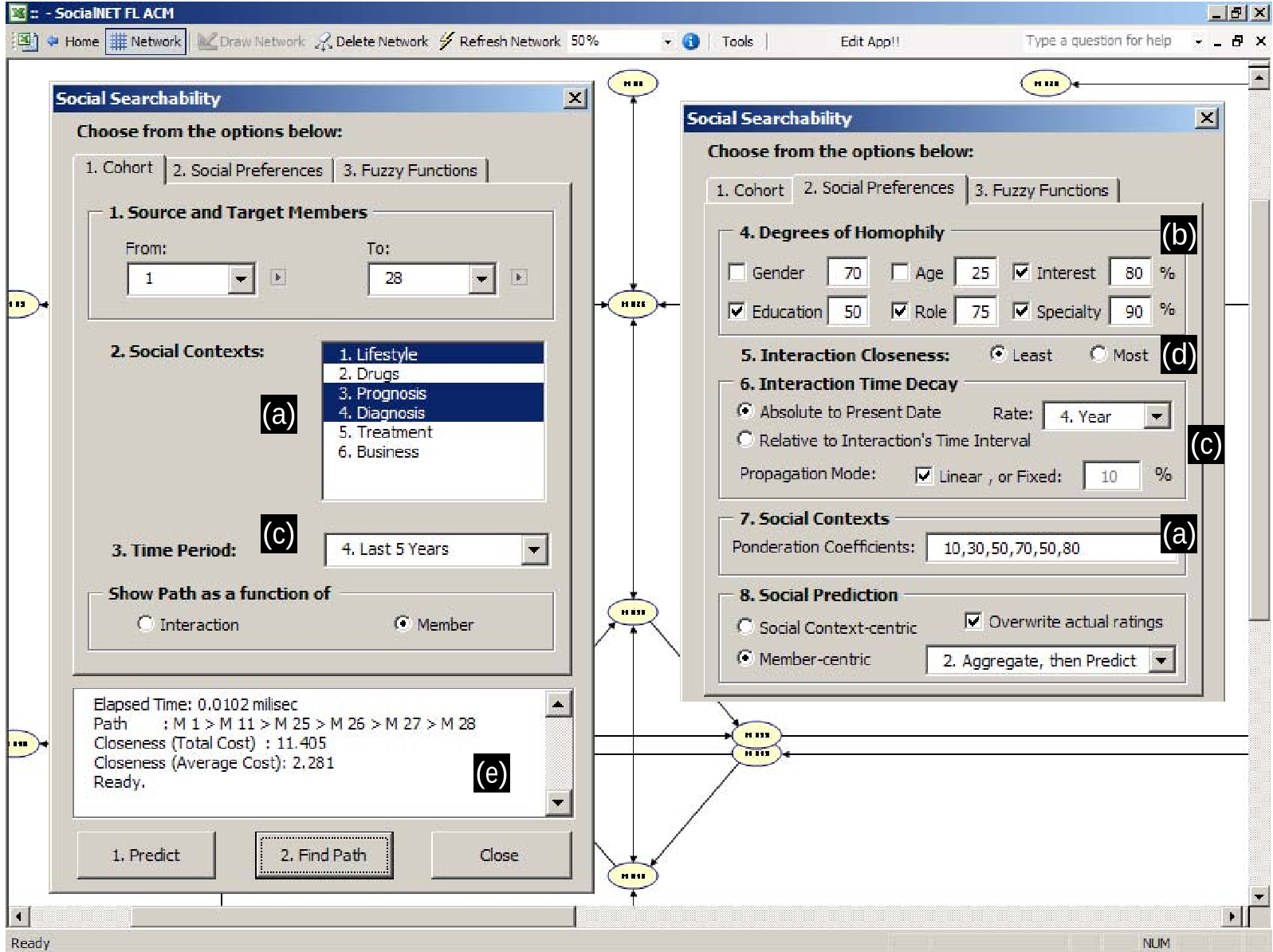 Figure 2: The prototype interface allowing users to define search strategies based on closeness and homophily.
Critical Insight & Future Work
The social-aware nature of this model represents a shift from "finding things" to "connecting people." However, the authors acknowledge several limitations:
- Cold-Start Problem: New members with no recommendations remain difficult to place.
- Linear Decay: Modern social dynamics might require more complex exponential decay functions.
- Fuzzy Logic: The authors hint at a future integration of Fuzzy-set theory to handle the inherent vagueness of human reputation (e.g., defining what "Highly Recommended" means in a mathematical sense).
Conclusion
By integrating sociometry with classic collaborative filtering, the SERM framework provides a more nuanced way to explore social spaces. It transforms a simple graph of connections into a weighted, context-sensitive ecosystem that mirrors real-world human judgment.