
MyVLE: Bridging the Gap Between Social Interaction and Virtual Learning
Integrating Social Network Services into Virtual Learning Environment
This paper introduces MyVLE, a Virtual Learning Environment (VLE) 2.0 that integrates core Social Network Services (SNS) like Facebook, YouTube, and Google Calendar. By leveraging Web 2.0 principles, it transforms traditional online education into a collaborative, real-time social experience for university students.
TL;DR
MyVLE represents a shift from static online learning to a dynamic VLE 2.0 ecosystem. By integrating Facebook's social feed, YouTube's vast video repository, and Google Calendar's scheduling into a single portal, the researchers have created a platform where "learning as a social process" is the default, not an afterthought.
Background & Positioning
In the landscape of Educational Technology, we have moved past the era of mere digitizing of textbooks. However, many current platforms still function as "filing cabinets" for PDFs. This work positions itself as a SOTA integration study, proving that the "Social" in Social Networking can be the missing link for engagement in Virtual Learning Environments.
The "Isolation" Problem in Online Education
The authors identify a critical pain point: The Silo Effect. Traditional VLEs lack real-time communication. Students often have to jump between a learning portal, WhatsApp for discussion, and YouTube for tutorials, leading to fragmented attention and low interaction. The core insight here is that by bringing the social tools into the VLE, we can leverage the "Community of Practice" theory—where learning happens through participation and social constructivism.
Methodology: The Architecture of MyVLE
The "secret sauce" of MyVLE lies in its service-oriented architecture, utilizing APIs to create a seamless user experience.
1. Facebook Integration (The Social Glue)
Using the Facebook Graph API and FQL, the system pulls social interactions into the academic domain. This allows for a "Facebook-like" news feed where students can share opinions and lecturers can "Like" or "Recommend" content, effectively gamifying the validation of knowledge.
2. YouTube & Google Calendar (Content & Coordination)
- YouTube Data API: Lecturers can search for relevant educational videos within the VLE interface and "Add to VLE" instantly.
- GData API: Solves the scheduling conflict problem by synchronizing university events directly with students' personal Google Calendars.
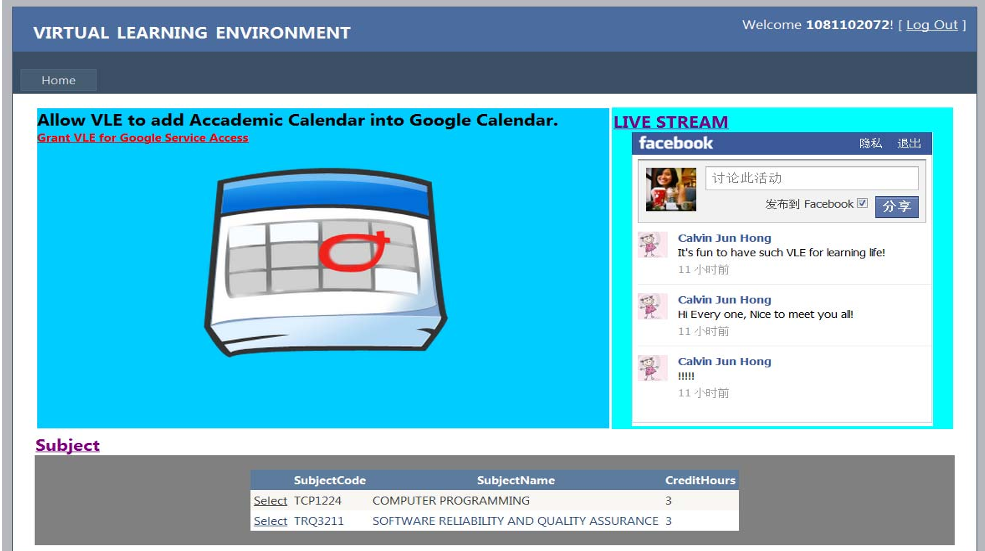 Figure 3: The unified User Default Page featuring consolidated social and academic streams.
Experimental Analysis & Comparisons
The authors conducted a feature-gap analysis against major industry players like Schoology and TOPYX.
| Feature | MyVLE | Jotter Lab | Schoology |
|---|---|---|---|
| Facebook Integration | YES | YES | NO |
| Google Calendar | YES | NO | NO |
| YouTube Integration | YES | NO | NO |
| Deployment Fees | FREE | FREE | YES |
The comparison highlights that MyVLE is significantly more "resource-integrated" than its commercial counterparts, which often focus on administrative tasks (grading, attendance) rather than social resource sharing.
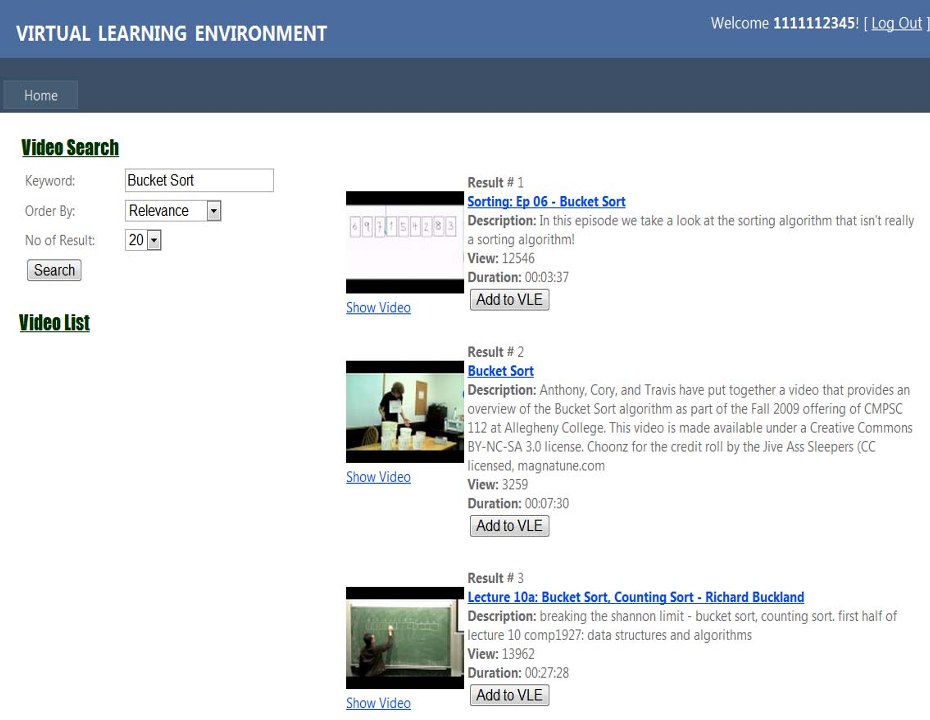 Figure 6: The Manage Video Page allowing lecturers to curate YouTube content without leaving the platform.
Critical Insight & Future Outlook
While the integration of 2012-era APIs (Facebook FQL, etc.) is the foundation of this paper, the logic remains timeless: Friction is the enemy of learning. By reducing the "clicks-to-content" and "clicks-to-collaboration," MyVLE increases the likelihood of spontaneous peer learning.
Limitations & Challenges:
- Privacy & Security: Integrating personal social accounts with academic platforms requires a delicate balance of data permissions.
- Scalability: As the number of social interactions grows, the "News Feed" requires advanced filtering algorithms (similar to modern AI-driven feeds) to prevent information overload.
Conclusion
MyVLE proves that a VLE is no longer just a place to store files; it is a collaborative hub. The success of this model suggests that future educational platforms must prioritize social interoperability to keep students engaged in an increasingly distracted digital world.