
Unmasking Criminal Gangs: A Temporal-Directed Graph Approach to Anti-Money Laundering
Intelligent Anti-Money Laundering Solution Based upon Novel Community Detection in Massive Transaction Networks on Spark
The paper introduces a systematic Anti-Money Laundering (AML) solution featuring a Temporal-Directed Louvain (TD Louvain) algorithm implemented on Spark GraphX. It identifies suspicious money laundering gangs by integrating temporal flow and edge direction into community detection, achieving significant modularity improvements on massive transaction networks.
TL;DR
Money laundering is no longer a solo sport; it is a highly organized team activity designed to hide illicit origins through complex transaction webs. This paper presents an intelligent AML solution that moves beyond isolated account rules. By introducing the Temporal-Directed Louvain algorithm on Spark GraphX, researchers can now detect suspicious "communities" based on the timing and direction of fund flows, successfully identifying real-world criminal networks within millions of UnionPay transactions.
Problem & Motivation: The "Rule-Based" Blind Spot
Most commercial AML systems today rely on static rules (e.g., "Flag if total transfers > $10,000"). Criminals easily bypass these by splitting large sums into smaller "smurfed" transactions across multiple accounts.
While machine learning has helped, it often focuses on individual anomalies. However, money laundering is inherently a graph problem. Existing graph algorithms like Louvain are great for finding groups, but they treat transactions as "static connections," ignoring two critical factors:
- Direction: Money flows from source to destination; the roles of "intermediary" accounts are distinct.
- Time: Laundering usually happens in a burst or a specific sequence (e.g., rapid out-transfer after a series of small in-transfers).
Methodology: The TD Louvain Innovation
The authors didn't just apply Louvain; they re-engineered it for the financial domain.
1. Filtering Noise with Maximal Connected Subgraphs (MCS)
Processing 10 million transactions is computationally expensive. The system first filters out "isolated" edges and focuses on Maximal Connected Subgraphs. By setting scale thresholds (e.g., ), the system ignores trivial peer-to-peer transfers and massive legitimate merchant clusters, isolating the "suspicious middle."
2. Physical Intuition in Weighting
The algorithm refines edge weights () based on AML logic:
- Node Correction: Inspired by PageRank, if a node is already "important" (high volume/degree), its connections are given higher weights.
- Temporal Matching: It rewards patterns like "Centralized out after multi-transfer in." If a transfer happens quickly after money arrives, the edge weight is boosted to signal higher suspicion.
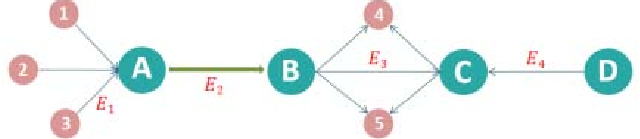 Fig 1: Illustrating how temporal patterns influence edge weighting.
3. Redefining Modularity ()
The standard Louvain algorithm maximizes modularity to find clusters. The authors modified the modularity formula to include a direction-revised factor (), ensuring that structural asymmetry (e.g., an account acting as an "intermediary channel") contributes more to the community structure.
Experiments & Results: Real-World Impact
The system was tested on a 100-node Spark cluster using real UnionPay data.
- Performance: The TD Louvain algorithm achieved a Modularity of 0.572, significantly higher than the original Louvain’s 0.385, proving it finds much "tighter" and more meaningful criminal clusters.
- Precision: Out of 13 identified high-risk clusters, 9 were verified as money laundering activities by professional risk investigators.
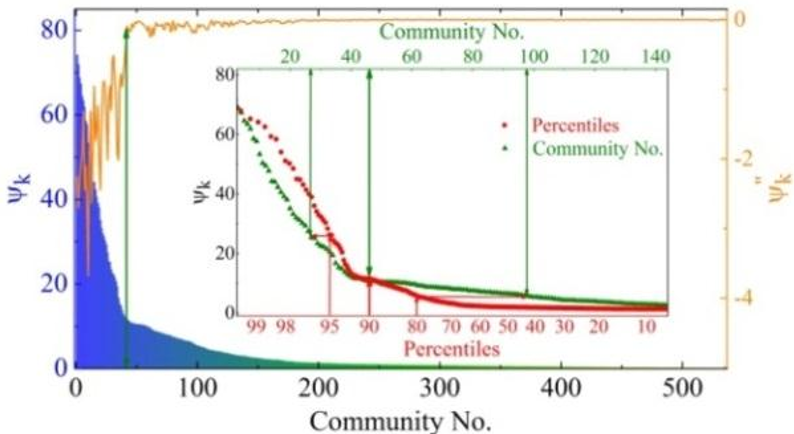 Fig 2: Determination of optimal thresholds for graph filtering.
Visualizing Success
The paper shows how TD Louvain fixes "disorganized" clusters. In the original Louvain, nodes were often grouped together regardless of when the money moved. TD Louvain correctly separated or grouped nodes based on their evolutionary timeline, making the detected gangs easier for human investigators to understand.
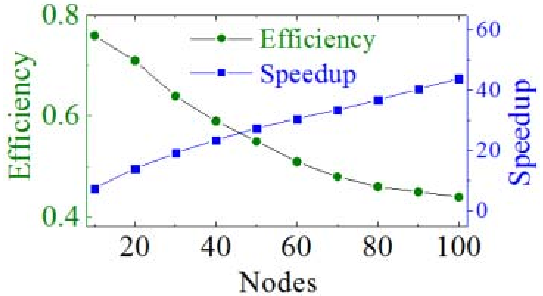 Fig 3: TD Louvain (right) creates more structured, time-consistent communities compared to original Louvain (left).
Critical Insight & Conclusion
By integrating temporal entropy and directional asymmetry into community detection, this research provides a scalable blueprint for financial institutions to fight gang-style laundering.
Limitations: The system still relies on threshold selection (like and ) which might need frequent tuning as criminal tactics evolve. However, its implementation on Spark proves that graph mining is no longer just a theoretical tool, but a high-performance necessity in modern fintech.
Future Outlook: Transitioning from unsupervised community detection to Graph Neural Networks (GNNs) could further automate the feature extraction process, potentially identifying even more subtle laundering patterns.