Context-Aware Ontology: Connecting the Cultural Pulse in Intelligent Tourism
An Intelligent and Context-Aware Touring System Based on Ontology
This paper introduces an intelligent and context-aware touring system that leverages Ontology to structure temporal, spatial, and causal relationships between attractions. It achieves a personalized guidance experience by integrating context-sensing with an active recommendation mechanism.
TL;DR
The explosive growth of travel apps has led to an information paradox: users have too much data but too little context. This paper proposes an Intelligent Touring System that uses Ontology to bridge the gap between physical locations and their historical/cultural lineages. By moving from simple lists to a structured "semantic net," the system actively pushes recommendations that respect the temporal and spatial relationships of historical sites.
1. The Information Overload in Mobile Tourism
Most modern travel apps treat tourist attractions as isolated dots on a map. However, cultural sites are rarely independent; for example, many temples in Taiwan are branches of a single "root" temple, linked by lineage and causality.
The Pain Point: Current systems often ignore these "cultural pulses." When a user stands in front of a monument, they see the what but lose the why and the how it connects to the site they visited an hour ago. There is a critical need for an architecture that understands Temporal, Spatial, and Causality relationships.
2. Methodology: Using Ontology as a Semantic Brain
To solve this, the author shifts from flat data to a structured Ontology Architecture. Ontology isn't just a database; it’s a conceptualization of a domain where entities are defined by their classes, attributes, and constraints.
The Recommendation Workflow
The system operates in five distinct stages:
- Profiling: Capturing user browsing history and real-time environmental sensors.
- Ontology Construction: Defining the lexical areas and hierarchy of the scenic spots.
- Content-Mining: Using web mining to refine user profiles.
- Collaborative Filtering: Integrating social evaluation from other users.
- Active Push: Matching the user’s context with the ontology to "push" the most relevant story to their device.

3. The Core Engine: Structural Similarity Matching
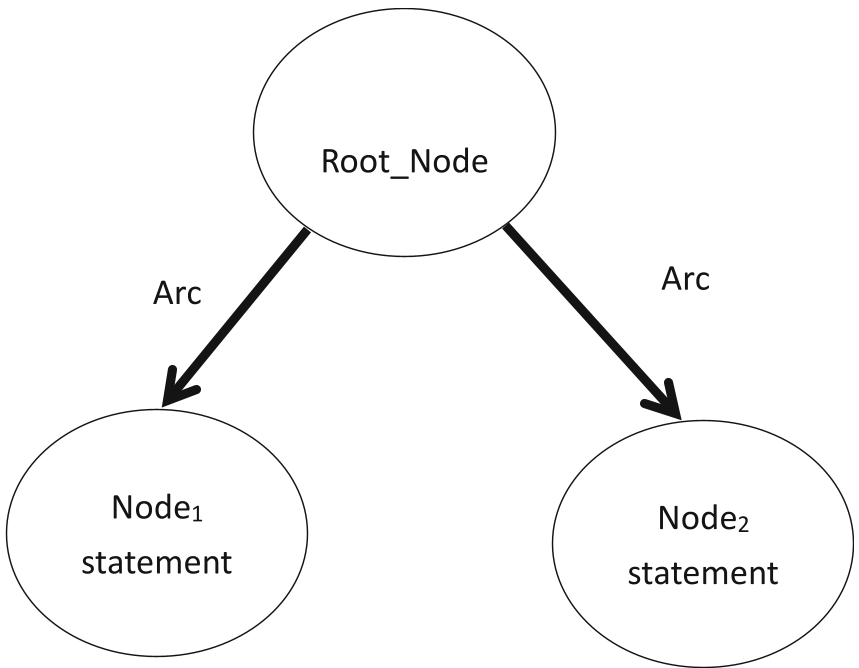
The heart of the paper lies in its Structural Similarity Formula. Instead of simple keyword matching, the system evaluates how "close" two entities are within the RDF (Resource Description Framework) tree.
The formula calculates similarity by weighting three components:
- Element Similarity: Direct comparison of the entities.
- Feature Similarity (): Comparison of the attributes (e.g., historical era, architectural style).
- Structure Similarity (): Comparison of the child nodes and their hierarchical positions.
This mathematical approach ensures that if a user expresses interest in a specific "branch temple," the system can intelligently suggest the "root temple" based on their ontological link, even if they are geographically distant.
4. Analysis and Conclusion
The primary advantage of this method is its ability to find semantic potential. By decomposing RDF into semantic sets, the system avoids the "keyword trap"—where a user might miss a relevant site simply because they searched for a slightly different term.
Key Takeaways:
- Proactive vs. Reactive: The system "pushes" information based on context (location + history) rather than waiting for a user to search.
- Holistic Learning: By emphasizing the "pulse of literature and history," it turns a simple visit into a comprehensive learning experience.
Future Outlook
While the paper establishes a robust framework for structural matching, the next frontier would be integrating Deep Learning (LLMs) to generate the natural language descriptions of these ontological links, making the "intelligent guide" sound more human and less like a database.