
Maternal Health in the Cloud: Bridging the Resource Gap with WBAN and Intelligent Systems
An Intelligent Information System for Maternal and Child Health Care
The paper presents an Intelligent Information System for Maternal and Child Health Care, integrating Body Area Networks (BAN) and Cloud Computing to monitor pregnant women. It leverages wearable sensors for real-time sign detection and a tiered cloud architecture to manage massive healthcare datasets and perform data mining for medical model optimization.
TL;DR
This paper introduces a robust, cloud-based intelligent information system designed to solve the chronic shortage of maternal healthcare resources in China. By combining Wireless Body Area Networks (WBAN) for continuous data collection with Cloud Computing for massive-scale data mining, the system enables real-time health alerts and remote medical guidance for pregnant women outside traditional hospital settings.
Background: The Crisis of Maternal Care
China faces a dual challenge: skyrocketing birth rates in urban centers and a total dearth of medical resources in rural pockets. The traditional "go-to-hospital" model is cracking under the pressure of rapid urbanization. This paper positions itself as a technological bridge, moving the site of care from the clinic to the home.
The Core Problem: Why Data is Both the Cure and the Barrier
Prior maternal health systems relied on periodic hospital visits, leaving long "blind spots" in a patient's health record. While wearable sensors (BAN) emerged to fill these gaps, they created a secondary problem: Massive Raw Data.
- Doctors cannot manually process thousands of hours of ECG or fetal heart rate data.
- Infrastructure lacks the concurrency to handle data flooding in from millions of terminals simultaneously.
Methodology: A Scalable Five-Layer Architecture
The researchers propose a logical separation of duties using a cloud-native approach. The design insight here is the use of Virtualization to balance different workload types—treating data collection (communication-intensive) differently from data mining (compute-intensive).
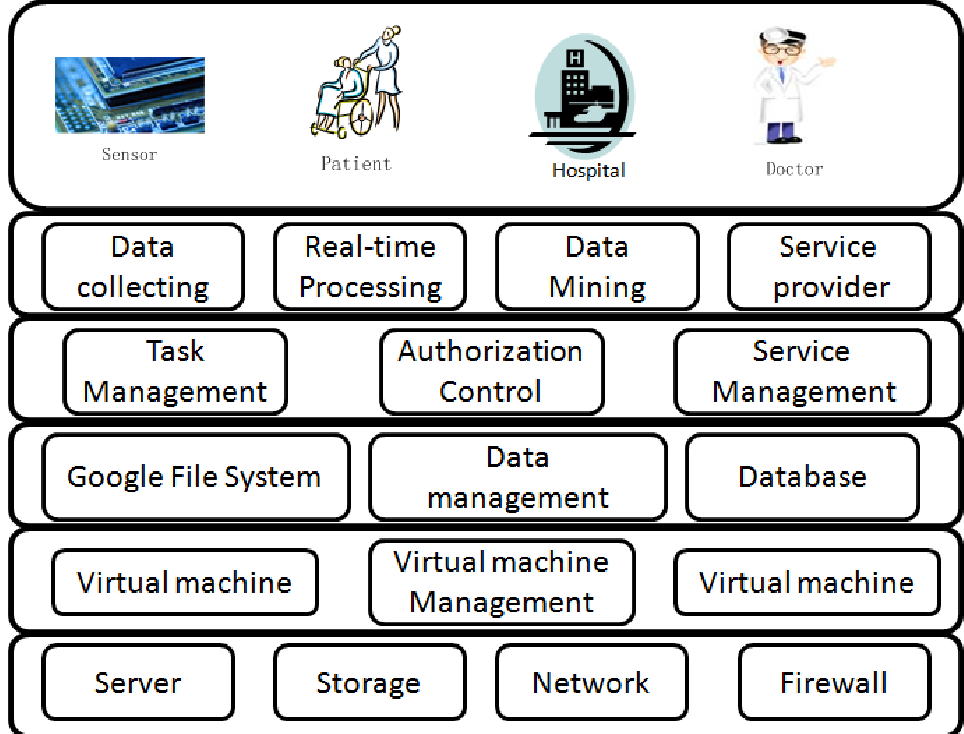
The Workflow of Intelligence
The system operates through four distinct functions:
- Data Collecting: Sensors transmit physical signs to smart devices via Bluetooth, which then relay data to the cloud.
- Data Processing: Real-time logic for Alarming (emergency), Forecasting (acute disease), and Classifying (chronic disease).
- Data Mining: The "Brain" of the system, which uses historical data to refine the medical models used in the processing stage.
- Health Services: The output layer—delivering first-aid alerts or medication reminders to the user.
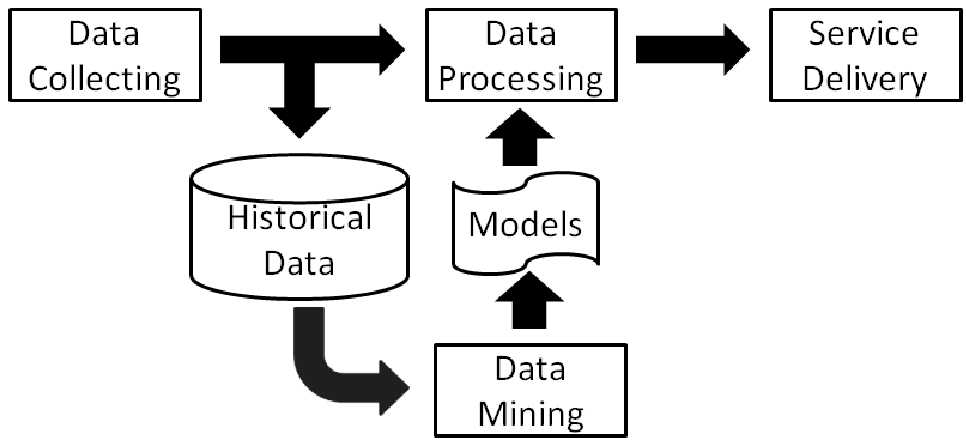
Experiments and Real-World Application
The application was tested using the Nova cloud computing platform. By utilizing the Google File System (GFS) as a backend, the system achieved high fault tolerance.
- Real-time Response: In one "First-aid case" study, abnormal signs were detected and processed via the medical model, triggering an immediate alert to a First-aid center.
- Model Evolution: Unlike static systems, the inclusion of a data mining layer allows medical experts to adjust models based on cumulative insights, essentially creating an "evolving doctor" in the cloud.
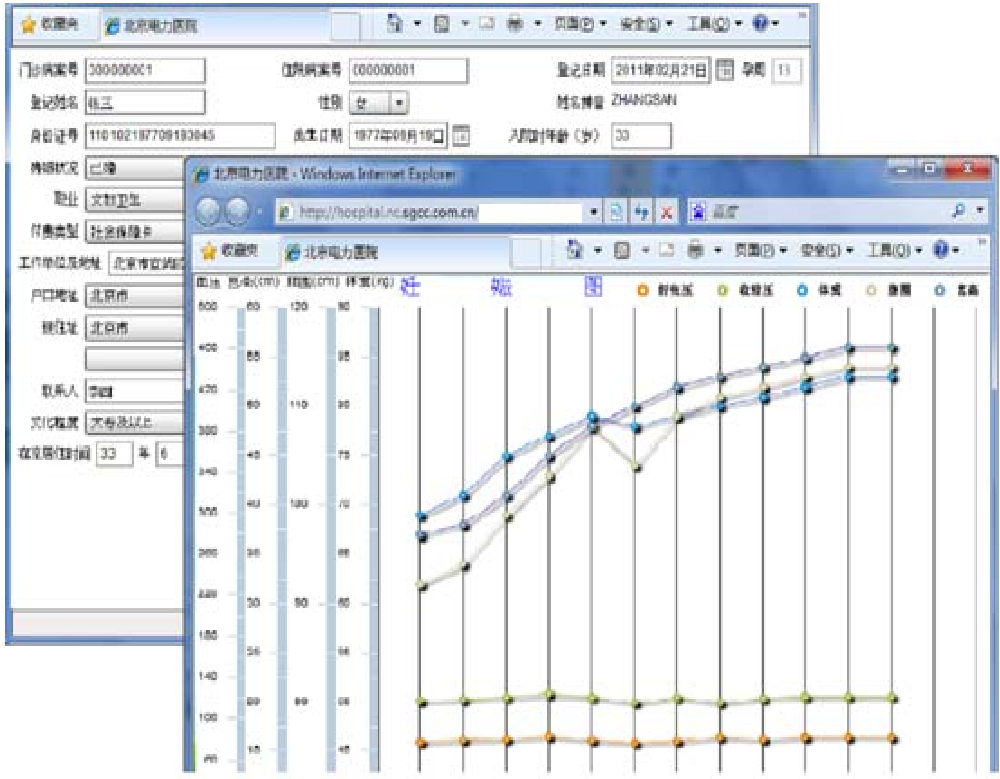
Critical Analysis & Deep Insight
The true value of this work lies in its Inductive Bias toward a service-oriented architecture (SOA). By decoupling the sensor hardware from the medical logic, the system is future-proof; as sensors improve, the backend logic remains the same.
Limitations: However, as the authors note, the "elephant in the room" is Privacy. Collecting continuous physiological data for an entire pregnancy creates a massive honeypot for data breaches. While the architecture solves the efficiency problem, the security problem remains a critical frontier for future research.
Conclusion
This Tusinghua University research provides a blueprint for modernizing maternal care. By shifting the focus from physical hospital beds to virtualized monitoring and cloud-scale analytics, it offers a scalable solution to medical resource scarcity, fundamentally changing how we protect mothers and newborns in the digital age.