
Intelligent Logistics: Bridging the Gap Between Pandemics and Pharmacies
Intelligent Mobile Application to Determine the Existence of Medicines Associated with COVID-19 in a Social Network of Medical Dispensaries in a Smart City
The paper introduces a hybrid intelligent system for humanitarian logistics in smart cities, specifically targeting the distribution of COVID-19 medications. It combines K-Means clustering for identifying high-risk infection zones with Cultural Algorithms to optimize delivery routes across a network of medical dispensaries.
TL;DR
During the peak of COVID-19, the challenge wasn't just medicine production—it was location and distribution. This paper presents a hybrid intelligent framework that uses Data Mining (K-Means) to identify infection hotspots and Cultural Algorithms to solve the complex routing problem of delivering drugs to these areas in a Smart City context. By shifting from random distribution to a data-driven "Virtual Patient" model, the system optimizes humanitarian logistics in as few as six iterations.
The Motivation: Logistics Overload in Smart Cities
When a pandemic hits, the sheer volume of demand for public services exceeds the institutional capacity of city governments. In cities like León, Mexico, the lack of a synchronized inventory protocol means that finding a specific medication becomes a survival race. Most healthcare organizations suffer from reactive logistics, where distribution is based on immediate (and often chaotic) demand rather than historical patterns or predictive modeling.
The authors identify a critical insight: Social Data Mining can reveal hidden structures in medical dispensary inventories, which can then be fed into an evolutionary algorithm to find the most efficient way to navigate the city's complex colony network.
Methodology: The Hybrid Intelligence Framework
The system operates in three distinct phases:
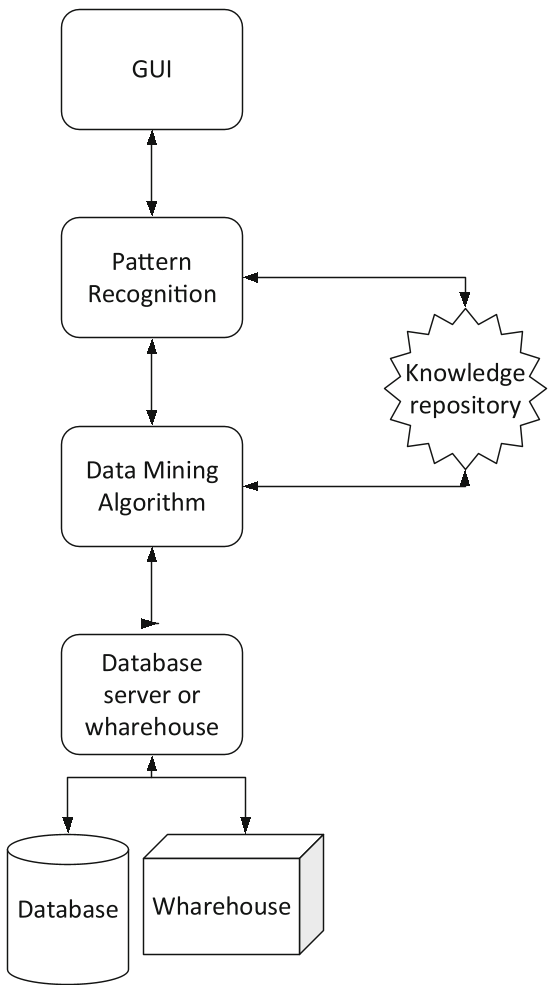
1. Data Warehousing & Pattern Extraction
The researchers built a Data Warehouse (DWH) containing fields such as colony location, time, and type of medical emergency. Using K-Means clustering, the system groups this high-dimensional data to identify "colonies representing potential focus areas" for infection.
2. The Cultural Algorithm (CA) Engine
Unlike standard Genetic Algorithms, Cultural Algorithms use a dual-inheritance system:
- Population Space: Individual agents (proposed routes) at the micro-evolutionary level.
- Belief Space: A shared knowledge repository that stores the best "cultural" traits (routes) found so far.
The innovation lies in using five forms of knowledge—Normative, Circumstantial, Domain, Historical, and Topographic—to guide the agents. Instead of wandering blindly, agents "negotiate" based on what the city has learned about its own traffic and logistics history.
Experiments and SOTA Comparison
The prototype, developed in Java, was tested against a database of 1,000 records. The goal was to generate optimal tours for a varying number of vehicles (up to 20).
Key Findings:
- Rapid Convergence: The algorithm identified optimal routes within 6 epochs.
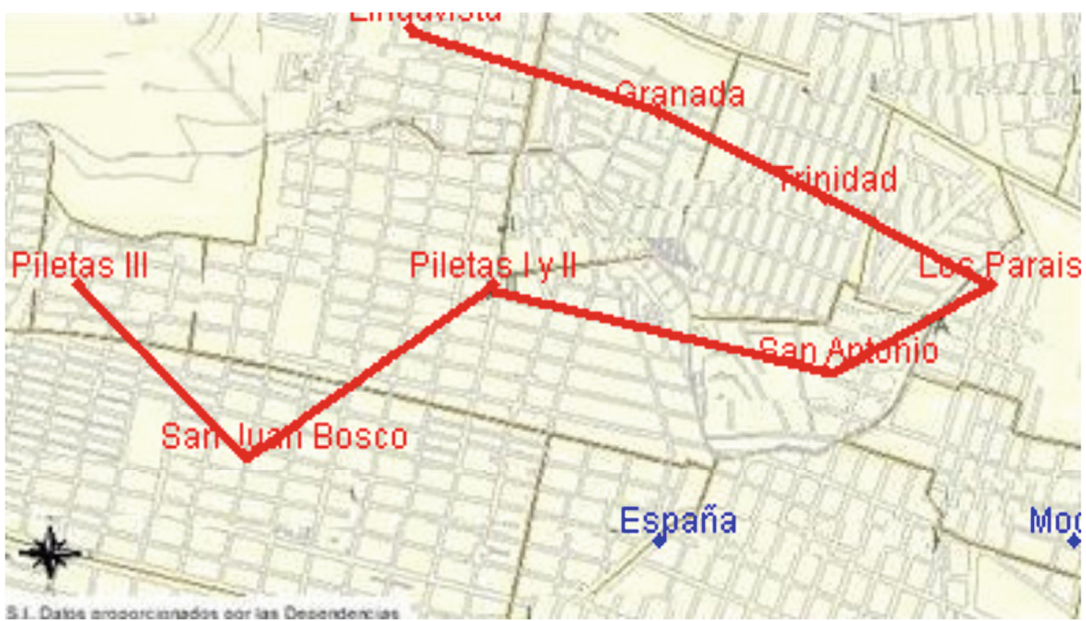
- Dynamic Scaling: Whether managing 1 vehicle or 20, the K-Means/CA hybrid successfully partitioned the map into clusters and assigned optimal paths that minimized intra-group variance and total travel distance.
- Distance Reduction: As seen in the results, the distance of the route decreases monotonically as the "Belief Space" is updated with better proposals from the agent population.
Critical Analysis & Future Outlook
The strength of this work lies in its holistic view of the problem: it doesn't just treat logistics as a Traveling Salesman Problem (TSP); it treats it as a sociocultural evolution problem. However, there are limitations:
- Data Source: The results were validated on a randomly generated database; real-world efficacy would depend on the availability of high-quality, real-time POS (Point of Sale) data from dispensaries.
- Static vs. Dynamic: While the routes are optimized, real-world traffic is dynamic and requires real-time sensing.
Future Work: The authors point toward integrating Deep Learning for X-ray-based diagnosis and Fuzzy Logic for drug depletion forecasting. The ultimate goal is an "orchestrated stack" of algorithms providing a real-time dashboard for city officials—a true realization of Industry 4.0 in public health.
Conclusion
This paper serves as a blueprint for transforming humanitarian logistics. By treating a city's medical dispensaries as a social network and applying evolutionary metaheuristics, we can ensure that during the next crisis, the right medicine reaches the right patient via the most efficient path.