
GB-BP Network: Solving the Multi-Layer Morphological Puzzle in Metal LDED
Intelligent Parameter Decision-Making and Multi-objective Prediction for Multi-layer and Multi-pass LDED Process
The paper introduces an intelligent framework for optimizing and predicting morphological quality in multi-layer and multi-pass Laser-Directed Energy Deposition (LDED). By integrating Taguchi-Grey Relational Analysis with a Genetic Bayesian-Back Propagation (GB-BP) neural network, it achieves SOTA-level predictive accuracy for surface roughness and height error.
TL;DR
Achieving precision in multi-layer metal 3D printing is notoriously difficult due to cumulative thermal effects. This study presents a hybrid intelligent approach: using Grey Relational Analysis to find "sweet spot" process parameters and a Genetic Bayesian-BP (GB-BP) Network to predict outcomes. The result? A staggering 71.43% improvement in surface roughness prediction accuracy.
The Problem: The "Cumulative Heat" Trap
In Laser-Directed Energy Deposition (LDED), most research focuses on single-pass cladding. However, as layers stack up, heat builds up. This leads to a mismatch between the theoretical model height and the actual printed height (ΔH), and increased surface roughness (). Traditional trial-and-error is prohibitively expensive, and standard Back-Propagation (BP) networks often fail (getting stuck in local minima) when data samples are limited to small experimental batches.
Methodology: Synergy of Statistics and AI
The authors tackled this via a two-stage intelligent framework:
1. Taguchi-Grey Multi-Objective Optimization
By using a orthogonal array, the researchers analyzed four key factors: Laser Power (LP), Powder Feeding Rate (PR), Step Distance (SD), and Scanning Speed (SS).
- Finding: Scanning speed is the dominant factor for height error, while Step Distance (overlap ratio) dictates surface roughness.
- The Hybrid Metric: Grey Relational Analysis (GRA) converted these two conflicting objectives into a single "Grey Relational Grade" (GRG) to find the global optimal parameter set.
2. The GB-BP Architecture
To move from optimization to prediction, they built a specialized neural network:
- Bayesian Optimization (BO): Automatically tuned the network's hyperparameters (nodes, learning rate) to ensure the structure was mathematically sound.
- Genetic Algorithm (GA): Instead of starting with random weights, GA evolved the network's internal weights to start from a global optimum, preventing the "local minima" trap common in standard BP.
 Figure 1: The experimental workflow integrating visual inspection and the GB-BP model.
Experiments & Breakthrough Results
Using 316L stainless steel powder, the team validated that their GB-BP model is significantly more stable than vanilla BP.
- Morphological Stability: The optimal parameter combination (800W LP, 1.6mm SD, 20mm/s SS) produced parts with minimal deviation.
- Prediction Precision:
- Height Error (ΔH): Accuracy increased by 43.14%.
- Roughness (): Accuracy increased by 71.43%.
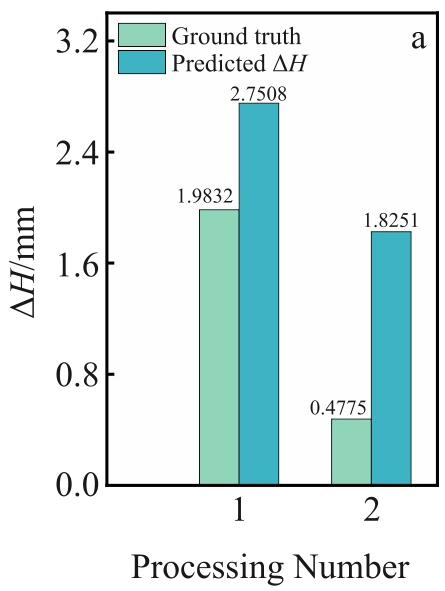 Figure 2: Comparison between BP (top) and GB-BP (bottom) predictions. GB-BP shows a much tighter fit to the ground truth.
Critical Insight: Why GA-BP Wins
In additive manufacturing, datasets are often "small-data" problems. Standard Deep Learning thrives on millions of points, but here we only have 16 experimental runs. The Genetic Algorithm provides a "gradient-free" exploration of the weight space, which is far more robust against noise in small datasets than standard back-propagation. By the time the gradient descent starts fine-tuning, the GA has already moved the model into the "correct neighborhood."
Conclusion & Future Outlook
This work provides a blueprint for "Smart Manufacturing." By bridging the gap between statistical experimental design (Taguchi) and global optimization algorithms (GA/Bayesian), the authors have created a tool that can drastically reduce the cost of R&D for high-precision aerospace and medical components. The next frontier? Real-time adjustment of these parameters during the printing process.
Keywords: LDED, Multi-layer Cladding, Grey Relational Analysis, GB-BP Network, 316L Stainless Steel.