
Weaving the Social Fabric: Enhancing Cultural Algorithms for Dynamic Landscapes
An Intelligent Social Fabric Influence Component in Cultural Algorithms for Knowledge Learning in Dynamic Environments
This paper introduces an Intelligent Social Fabric (SF) Influence Component for Cultural Algorithms (CA) to optimize knowledge learning in dynamic environments. By integrating social network topologies (e.g., lBest, Square) into the CA framework, the authors demonstrate how swarming behaviors in the population and belief spaces lead to emergent problem-solving phases that effectively track moving optima in non-stationary landscapes.
TL;DR
This research advances the Cultural Algorithm (CA) framework by introducing a "Social Fabric" influence function. By connecting individuals through structured social topologies like rings or grids, the system facilitates a faster exchange of knowledge. This allows the algorithm to track moving targets in dynamic environments—such as "smart surfaces"—far more effectively than previous models that lacked social connectivity.
Background: The Dual Inheritance of Culture
Cultural Algorithms are unique in evolutionary computation because they utilize dual inheritance: a population space (individuals) and a belief space (knowledge). While individuals evolve through traditional operators, the belief space acts as a "collective brain," storing five types of knowledge:
- Normative: Acceptable ranges for variables.
- Situational: Specific high-performing examples.
- Domain: Rules about the problem landscape.
- History: Records of past environmental shifts.
- Topographical: Spatial structures of the landscape.
The Problem: The "Silent" Multi-Agent System
Prior work utilized a Marginal Value Theorem (MVT) approach where knowledge influenced individuals in isolation. The authors identified that without a Social Fabric, the propagation of a "good idea" (a successful knowledge source) was too slow to handle dynamic changes, such as a peak moving across a surface.
Methodology: Engineering the Social Fabric
The core innovation is the Social Fabric Influence Function. Instead of the Belief Space simply broadcasting to individuals, it "seeds" the network.
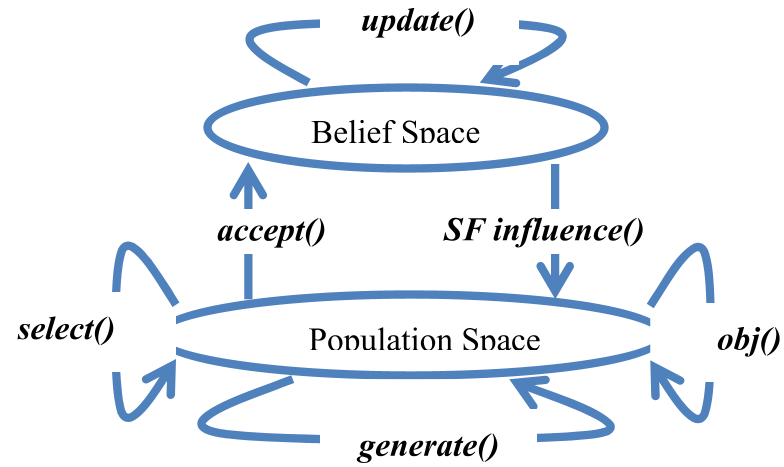 Figure 1: The dual-space interaction in Cultural Algorithms.
The Weaving Process:
- Topology Selection: The population is arranged in a structure (e.g., lBest where each agent talks to two neighbors).
- Signal Propagation: Knowledge sources (KS) influence specific nodes. These nodes then "pass the signal" to their neighbors.
- Conflict Resolution: Each agent receives multiple "votes" from its neighbors on which KS to follow. Using rules like "Most Frequently Used" (MFU), the agent selects the dominant influence.
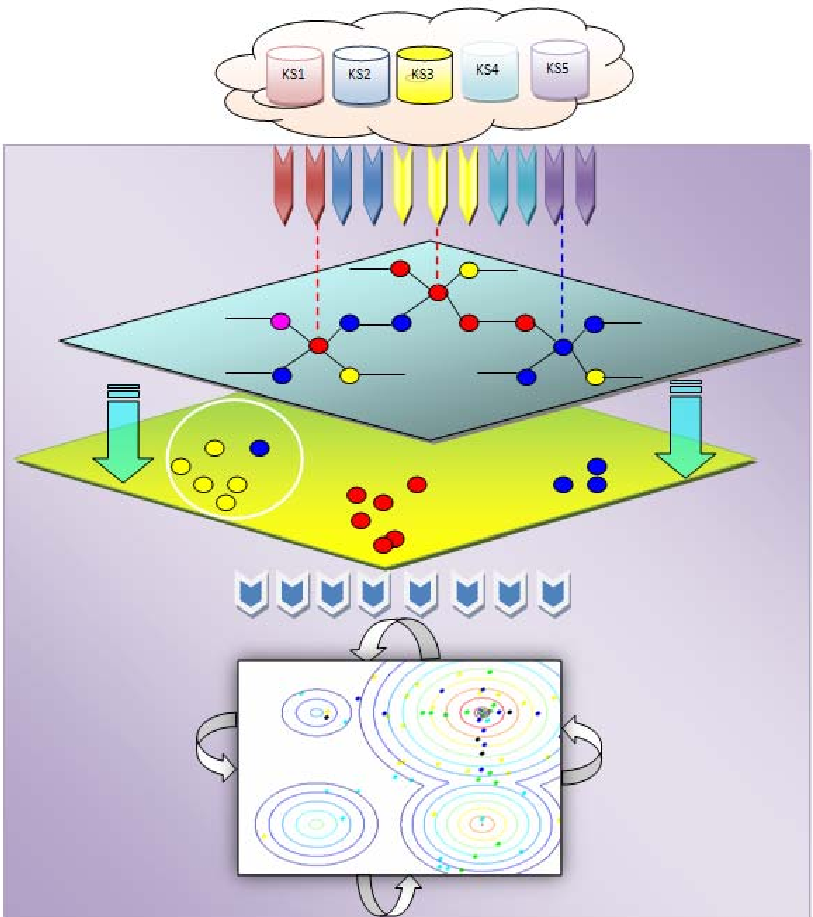 Figure 2: The Social Fabric component integrated within the CAT (Cultural Algorithms Toolkit).
Experimental Insights: Tracking the Cones World
The authors tested the system on a landscape of shifting "cones." Every 200 generations, the global optimum rotated.
Key Observations:
- Emergent Specialization: Situational and Normative knowledge sources quickly took control of individuals near the peak to "fine-tune" the solution.
- Predictive Swarming: As the cycle repeated, the system "learned" the pattern of movement. The History knowledge source began to anticipate where the peak would move next, reducing the "re-learning" time.
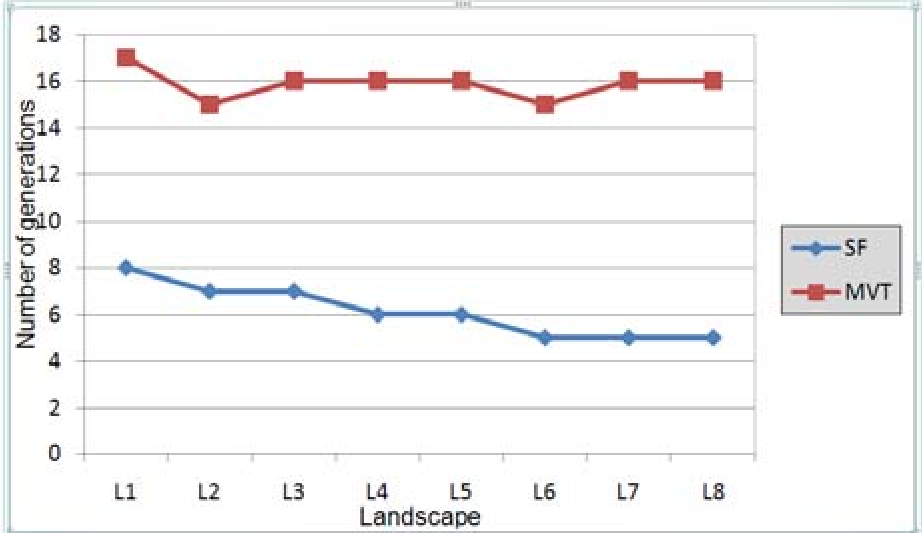 Figure 3: Comparative results showing the SF approach detects shifted optima significantly faster than the MVT approach.
Critical Analysis & Conclusion
The Social Fabric approach transforms the Cultural Algorithm from a top-down broadcast system into a bottom-up collaborative network. The results prove that social connectivity is not just a secondary feature but a primary driver of algorithmic agility.
Takeaways:
- Topological Impact: The choice of social structure (e.g., ring vs. fully connected) significantly affects the trade-off between exploration and exploitation.
- Knowledge Swarms: The "nesting" of bounding boxes (the area of influence of each KS) provides a visual metric for how "certain" the algorithm is about its solution.
Limitations: The current study assumes a static social topology. Future research could explore Dynamic Social Fabrics, where the connections between agents evolve in response to the environment's complexity, mirroring real-world social adaptability.