
Pervasive Social Networking: Bridging the Gap Between Smart Spaces and Social Graphs
Intelligent Systems that Combine Pervasive Computing and Social Networking
This paper introduces the concept of Pervasive Social Networking (PSN) by integrating Pervasive Computing with Social Networking Systems. It extends the Personal Smart Space (PSS) model into Cooperating Smart Spaces (CSS) and Community Interaction Spaces (CIS) within the European "Societies" project to enhance user connectivity and automated service discovery.
Executive Summary
TL;DR: This paper tackles the stagnation of pervasive computing by merging it with the viral success of social networking. By evolving the Personal Smart Space (PSS) into the Cooperating Smart Space (CSS), the authors create a framework where "smart buildings" and "social apps" interact seamlessly, enabling proactive features like automated introductions and community-driven resource sharing.
Positioning: This work represents a strategic pivot in the pervasive computing roadmap, moving from a device-centric view to a social-community-centric view within the SOCIETIES project framework.
Problem & Motivation: The "Pervasive" Adoption Gap
For decades, researchers have promised a world where our environments anticipate our needs. Yet, while Social Networking Systems (SNS) like Facebook and LinkedIn exploded, pervasive computing stayed trapped in labs.
The authors identify a critical missing link: Social Context.
- Current Pervasive Systems: Focus on location and device connectivity but lack the "who" and "why" provided by social graphs.
- The Insight: If a system knows you are a "Computer Science Student" (Community Identity) and that a "Friend/Peer" is nearby (Social Link), it can offer far more relevant assistance than simple location-tracking ever could.
Methodology: From PSS to CSS and CIS
The authors redefine the architectural units of pervasive interaction into two core entities:
1. Cooperating Smart Space (CSS)
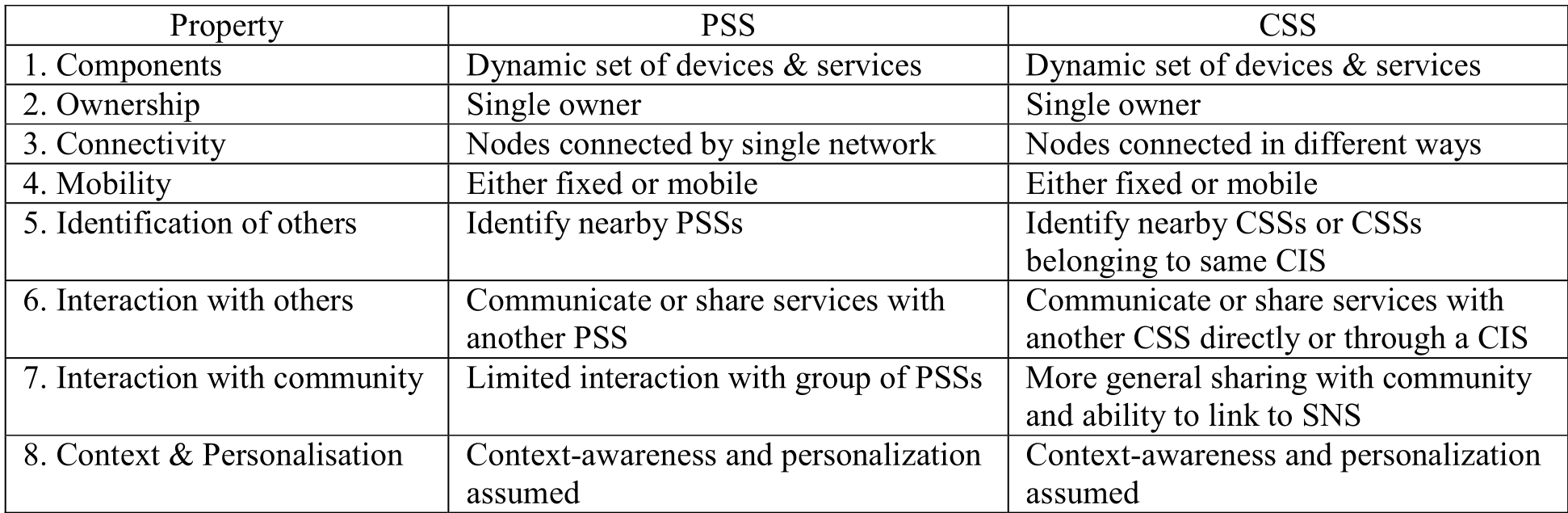
Unlike its predecessor (the PSS), a CSS is not limited to a single network. It is an owner-centric "bubble" of devices that recognizes other bubbles through two routes: Proximity (physical closeness) and Community Membership (logical grouping).
2. Community Interaction Space (CIS)
This is the virtual tissue connecting individual CSSs. It manages membership criteria, shared services, and Collective Preferences. For example, a CIS can aggregate the music tastes of everyone in a room to automatically generate a "Proactive Disco" playlist.
Real-World Scenarios: The "Societies" Vision
The paper illustrates the power of this PSN (Pervasive Social Networking) through student-centric scenarios:
- Proactive Introductions: If two students in the "Freshers" community with shared interests cross paths, their CSSs suggest an introduction.
- Community Resource Sharing: The "Student Cooking" service matches members based on their available raw ingredients and culinary skills, incentivizing social interaction via gamification.
Experiments & User Feedback
The methodology was stress-tested using Immersive Environment Trials. In these trials:
- Students interacted with wall screens that changed content based on their proximity and group preferences.
- Storyboard Feedback: Initial results showed that while users loved the convenience of proactive introductions, they were highly sensitive to Privacy and Trust Management—necessitating a complex identity-negotiation layer in the platform.
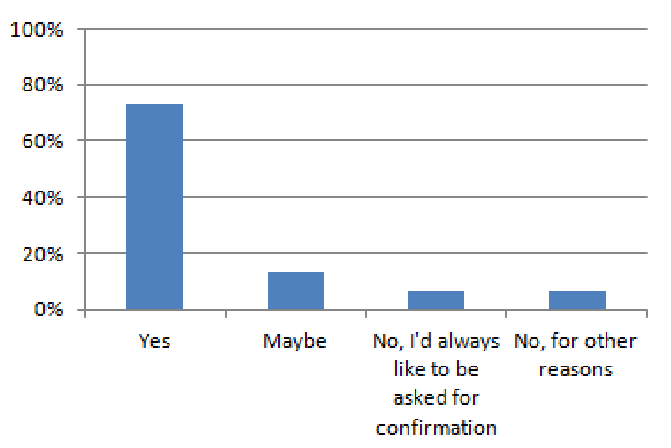 Figure 1: Visual feedback from user trials regarding proactive system behavior.
Critical Analysis & Future Outlook
Takeaway
The shift from "location-aware" to "socially-aware" computing is the key to mass adoption. By treating social groups as "Community Interaction Spaces," developers can build apps that solve the "cold start" problem of pervasive services.
Limitations
- Scalability: Handling tens of thousands of dynamic community preferences in real-time remains a major architectural challenge.
- Privacy Fatigue: The system requires users to manage "Multiple Identities," which might lead to cognitive overhead.
Future Work
The SOCIETIES project aims to deploy this platform in Disaster Management and Enterprise Environments, testing if social-networking logic can save lives by facilitating faster expert-to-device connections in high-pressure scenarios.
Author Note: This work was supported by the European Union under the FP7 programme.