
Choiceboxing: Elevating Legal AI from Rule-Follower to Decision-Support Partner
Intelligent tools for managing legal choices
The paper introduces "Choiceboxing," an intelligent multi-criteria decision support framework designed to manage complex legal choices through weighted factor analysis. Published at ICAIL '11, it presents the "All About Choice" (AAC) system, which leverages interactive 3D visualization and collective intelligence to transcend traditional rule-based legal AI.
TL;DR
While most legal technology focuses on finding the "right answer" through rules and precedents, Marc Lauritsen’s Intelligent Tools for Managing Legal Choices argues that the heart of law is actually choosing among options. By introducing a methodology called Choiceboxing, the paper provides a framework for balancing competing considerations through structured 3D visualization and collaborative intelligence, moving legal AI from simple automation to sophisticated "Intelligence Augmentation."
The Missing Piece in AI and Law: Choice
For decades, the AI and Law community has been obsessed with argumentation and deductive logic. However, legal professionals spend the majority of their mental energy on choices that don't have a single "logical" answer:
- Should we settle this case or go to trial?
- Which version of an indemnification clause is best for this client?
- Is this worker an employee or a contractor based on 20+ fuzzy factors?
The author points out a stark reality: human beings are notoriously bad at these decisions due to cognitive biases like anchoring (clinging to the first number mentioned) and framing (reacting differently to losses vs. gains). Existing tech—spreadsheets or yellow pads—fails to capture the multi-dimensional nature of these trade-offs.
Methodology: The Geometry of a Choice
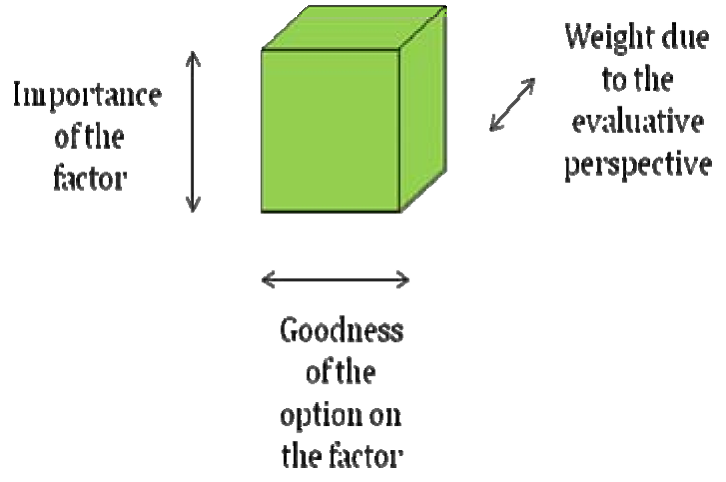
The core innovation presented is the Choicebox. Instead of a flat list, Lauritsen treats a decision as a three-dimensional space:
- X-Axis (Options): The different paths available (e.g., Acme vs. Apex).
- Y-Axis (Factors): The criteria we care about (e.g., Cost, Risk, Duration).
- Z-Axis (Perspectives): The viewpoints of different stakeholders (e.g., Client, Counsel, Regulator).
Visualizing "Cubic Betterness"
The methodology moves beyond numbers by utilizing interactive visualization. By representing evaluations as "blocks of goodness," users can see the "volumetric" weight of a decision, making the rationale transparent and debatable.
The paper also introduces the All About Choice (AAC) startup vision—a Wikipedia-like repository where the community contributes factors and weights, allowing a system to "learn" the correlations between decision contexts and considerations over time.
Real-World Applications
The paper doesn't just stay in the realm of theory; it applies Choiceboxing to high-stakes legal scenarios:
- Position Analysis: Deciding tax status (Employee vs. Contractor). The system allows a lawyer to look at the same set of facts from both the Company’s perspective and the IRS Agent’s perspective, adjusting factor weights to see where the risks lie.
- Document Drafting: Moving document assembly from "Logic-based" (If X, then Y) to "Choice-based," where the software helps a lawyer balance the likelihood of counterparty antagonism against the business value of a specific clause.
Performance Evidence
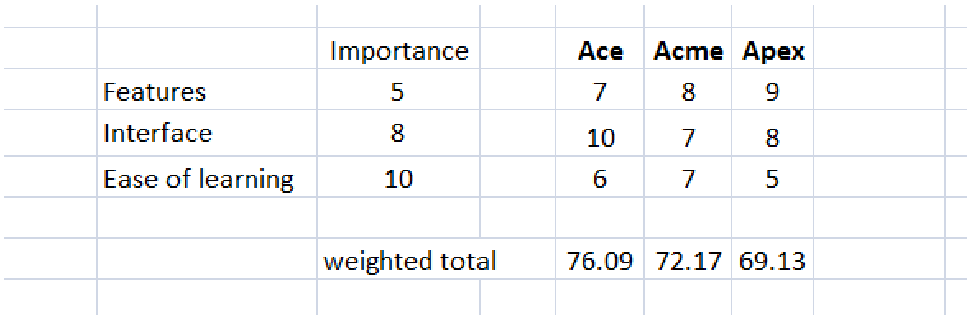
The following table illustrates how Choiceboxing simplifies complex weighted factor analysis into a rankable outcome:
Deep Insight: Beyond the Rules
The most profound takeaway is that "when the rules run out," choice begins. Lauritsen acknowledges that legal judgment is often subconscious or metaphorical. By forcing these choices into a structured Choicebox, we achieve:
- Accountability: You cannot hide inconsistent values in a transparent matrix.
- Collective Wisdom: Future choosers can benefit from a "legacy of guidance" left by experts.
- Bias Mitigation: Structured deliberation forces users to consider "availability" and "diagnostic biases" that usually go unchecked in gut-feeling decisions.
Conclusion and Future Outlook
While the 2011 "All About Choice" project was an early foray, its principles are more relevant than ever in the age of Generative AI. We are currently seeing a shift where AI can generate the factors and options, but the Choicebox framework remains the essential human-centric tool for final deliberation.
Limitations: The author admits the success of such tools depends heavily on user interface (UI) and a "critical mass" of contributors, which remains a hurdle for many specialized legal domains.
The Takeaway: Intelligent tools shouldn't just replace the lawyer; they should provide the "scaffolding" for better professional judgment. As the paper concludes: "Choosing well is a hallmark of responsibility."