
Intelligent Safety at the Edge: Enhancing Power Grid Operations with Wearable SVM Systems
Intelligent Wearable Occupational Health Safety Assurance System of Power Operation.
The paper proposes an intelligent wearable safety assurance system for power grid operations, integrating a vital signs monitoring watch and a portable information gateway. It utilizes a Directed Acyclic Graph Support Vector Machine (DAG-SVM) to classify operator health and fatigue status in real-time, specifically targeting high-risk environments like high-altitude substations.
TL;DR
To mitigate the extreme risks faced by power grid operators in harsh environments (such as high-altitude substations), this paper introduces a comprehensive wearable safety framework. By combining specialized hardware with a Support Vector Machine (SVM) classification model, the system monitors vital signs and environmental hazards in real-time, transforming subjective safety checks into objective, data-driven protection.
Problem & Motivation: The "Blind Spot" in High-Risk Operations
Power operation is inherently dangerous, involving high-voltage equipment, high-altitude climbing, and exposure to extreme weather. Historically, safety has been a "surface-level" evaluation—supervisors watch from a distance, but they cannot see if an operator is suffering from silent fatigue, cardiac stress, or the early stages of altitude sickness.
The authors identify a critical gap: while wearable tech exists, there is a lack of integrated application frameworks that combine physiological monitoring with environmental awareness and unified communication gateways specifically for the power industry.
Methodology: A Multi-Tiered Intelligent Framework
The system's core "intelligence" lies in its hierarchical architecture, which offloads processing from simple sensors to a local gateway.
1. The Hardware Synergy
- Wearable Monitoring Watch: An Ingenic M200-powered device that captures high-fidelity ECG and PPG signals, body temperature, and blood pressure.
- Information Processing Gateway: Acting as a "single-man hub," this unit aggregates sensor data via Bluetooth/ZIGBEE and handles 4G communication, GPS positioning, and environmental sensing (UV, pressure, humidity).
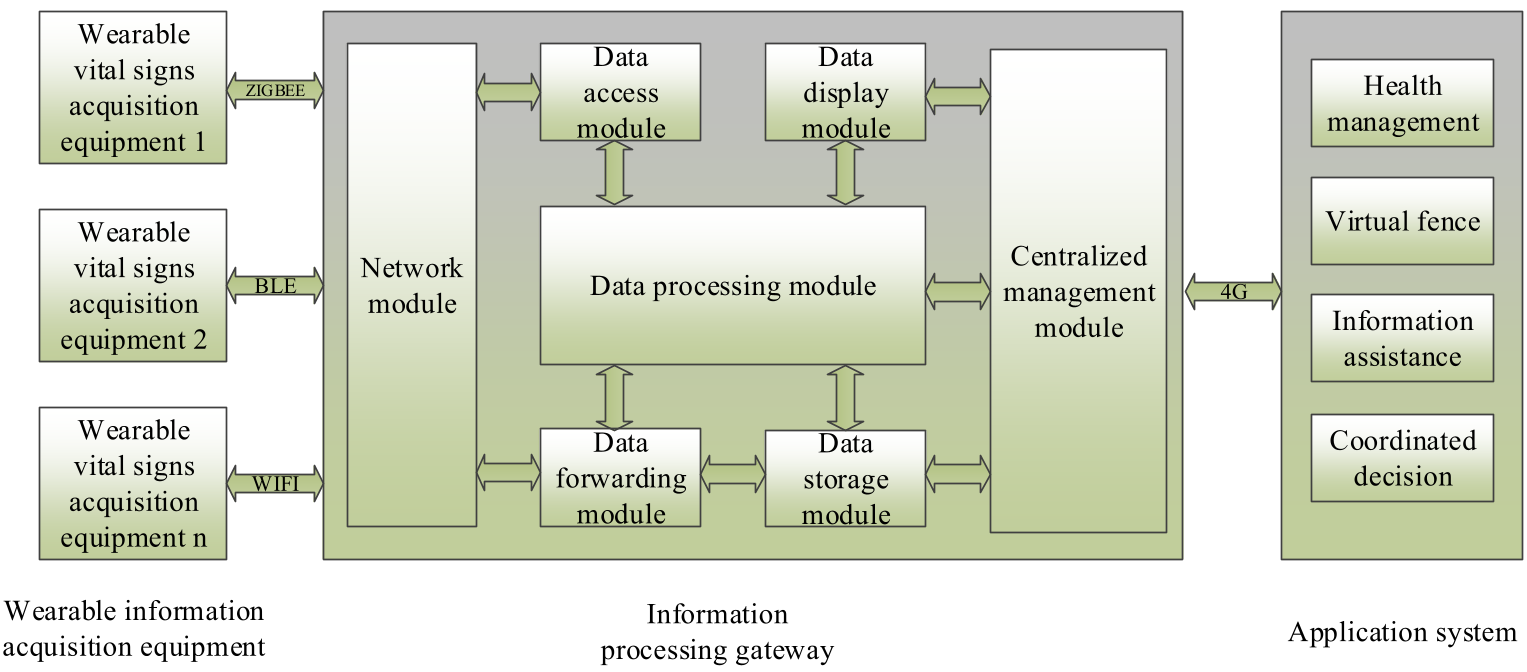 Figure: The framework connecting acquisition equipment, processing gateways, and back-end applications.
2. SVM-Based Life Status Assessment
The system doesn't just report numbers; it interprets them. By extracting Characteristic Factors such as the standard deviation of RR intervals (SDNN) for heart rate variability and heart rate (HR), it inputs these into a Directed Acyclic Graph SVM (DAG-SVM). This multi-classifier maps complex physiological signals into five discrete states:
- Good Status
- Slightly Fatigue
- Fatigue
- Relatively Fatigue
- Very Fatigue
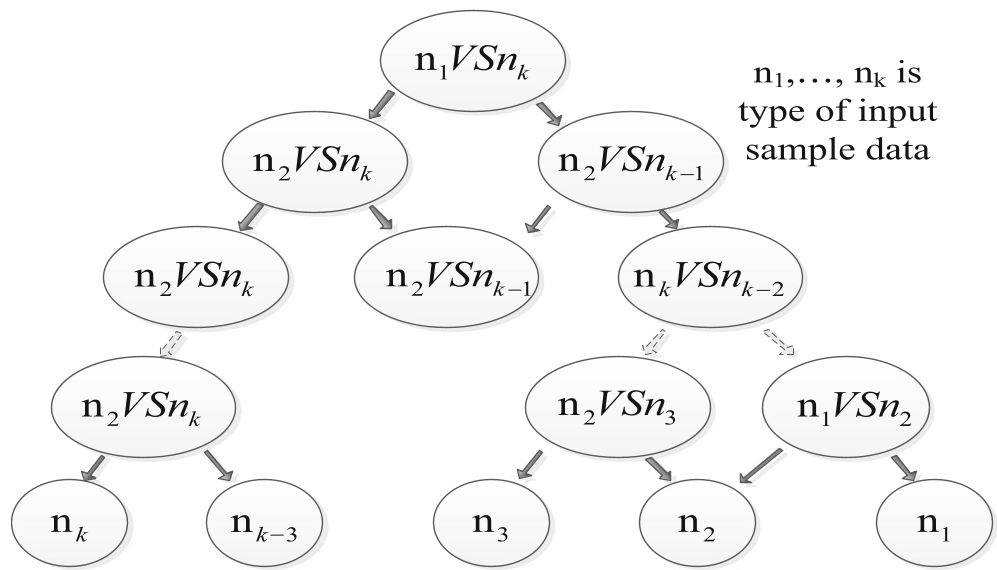 Figure: The DAG-SVMS analysis workflow for classifying operator fatigue.
Experiments & Results: Real-World Deployment
The system was tested in the Sichuan Electric Power Research Institute’s plateau substations (4000m+ altitude). This is a "worst-case" scenario for human health and wireless communication.
Key Technical Benchmarks:
- Sensing Precision: PPG peak catching rate of 99.6% and heart rate accuracy within 0.2°C.
- Communication & Endurance: Supports 3km voice talkback and 48-hour continuous operation, sufficient for a full day-night shift cycle.
- Spatial Awareness: 3-meter GPS accuracy allows the system to trigger "virtual fence" alarms if an operator drifts into a high-voltage hazardous zone.
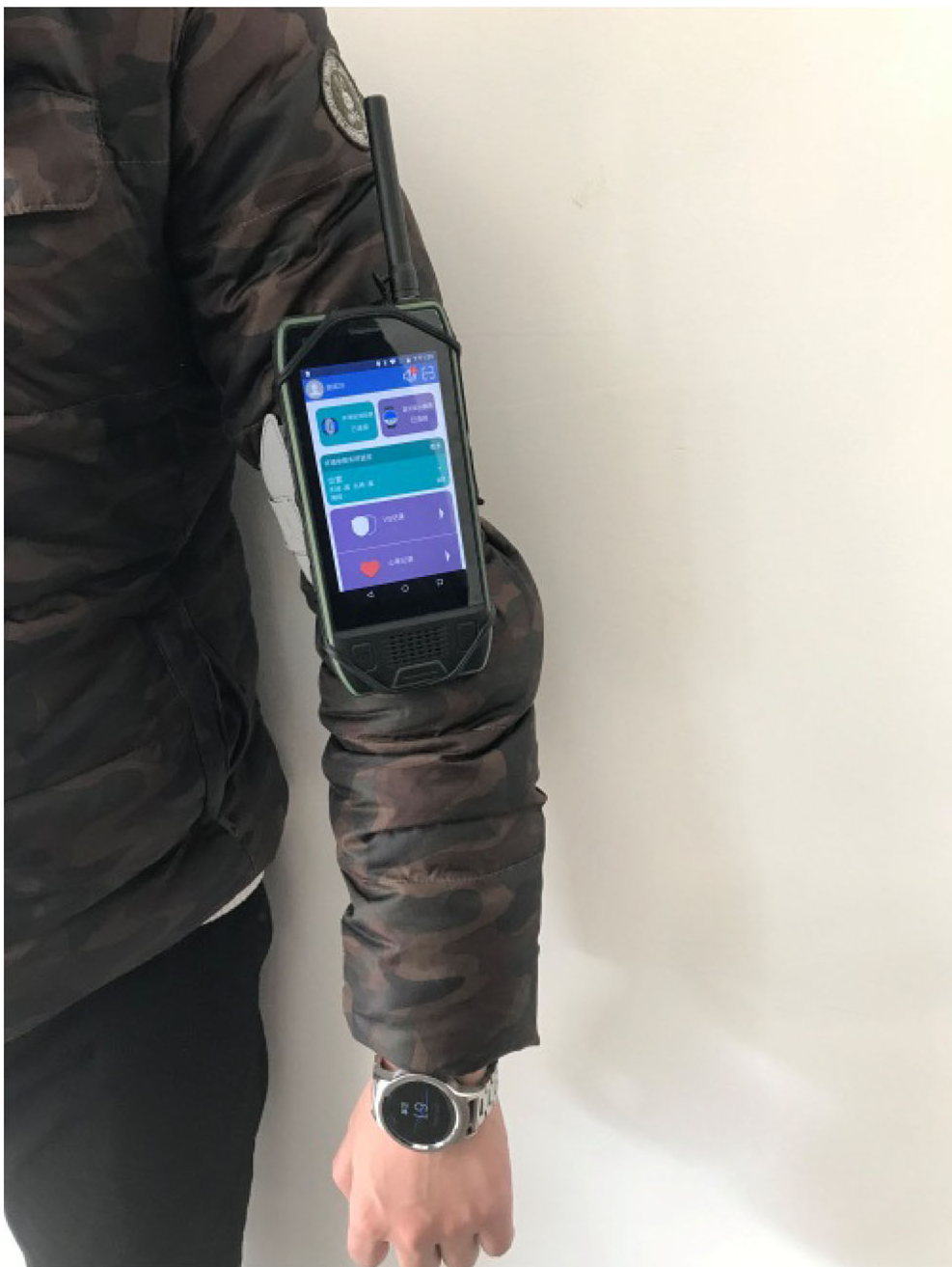 Figure: Real-world application of the system in high-altitude power substations.
Critical Analysis & Conclusion
The true value of this work is the Standardization of the gateway. By providing a standard SDK for ZIGBEE, Bluetooth, and Wi-Fi, the framework is "future-proofed"—new sensors (like AR glasses or advanced pulse oximeters) can be added without redesigning the entire stack.
Limitations & Future Work
While the SVM model is robust, it is a "classical" machine learning approach. Future iterations could leverage Deep Temporal Networks to predict health crises before they occur based on historical trends rather than current windows. Additionally, integrating the system with AR (Augmented Reality) could provide operators with real-time visual safety overlays directly on their visor.
Takeaway: This work demonstrates that for industrial IoT, a centralized wearable gateway is the most effective way to manage the data deluge of modern health monitoring, ensuring that safety is no longer a matter of luck, but a matter of logic.