
The Pulse of Viral Sharing: Understanding Why Young Adults Re-Post on Social Media
The Intention to Share and Re-Shared among the Young Adults towards a Posting at Social Networking Sites
This study investigates the behavioral intent behind information sharing and re-sharing among young adults on Online Social Networks (OSNs). By analyzing popular case studies through a survey of active university users, the paper identifies "announcing news" as the primary driver for content dissemination and highlights Facebook's dominance in social interaction.
TL;DR
Why does a single negative review of a café go viral in hours? This research explores the "action-reaction" mechanism of young adults on social media. It finds that most users share content not just to express an opinion, but to serve as "reporters" for their social circles, creating a powerful feedback loop that bridges digital posts and real-life conversations.
Background: The Double-Edged Sword of Connectivity
Online Social Networks (OSNs) have evolved from simple interaction tools into powerful engines of social influence. While they facilitate job hunting and brand building, they also harbor a "dark side." Information spreads with unprecedented speed, often leading to irreversible damage to business reputations and individual psychological well-being. This paper situates itself at the intersection of Social Network Analysis (SNA) and behavioral psychology, focusing specifically on the generation that lives most of its life online: young adults.
The "Reporter" Motivation: Why We Click 'Share'
The authors identify a critical gap in our understanding of social media: what is the actual intention behind a re-share? Is it a protest? A cry for attention? A genuine recommendation?
According to the study's survey of university students, the motivations are surprisingly functional:
- The Reporter Effect (69%): The vast majority of users share content simply to announce news to their network.
- Influence and Protest (7%): A small subset uses sharing as a tool for social change or political protest.
- Relationship Building (5%): Sharing is used as "social currency" to maintain ties with friends.
Methodology: Analyzing Real-World Damage
To study these intentions, the researchers selected four high-profile cases from 2013 involving business and national reputation damage. They tracked users who interacted with these posts and surveyed them to map the "Action-Reaction" mechanism.
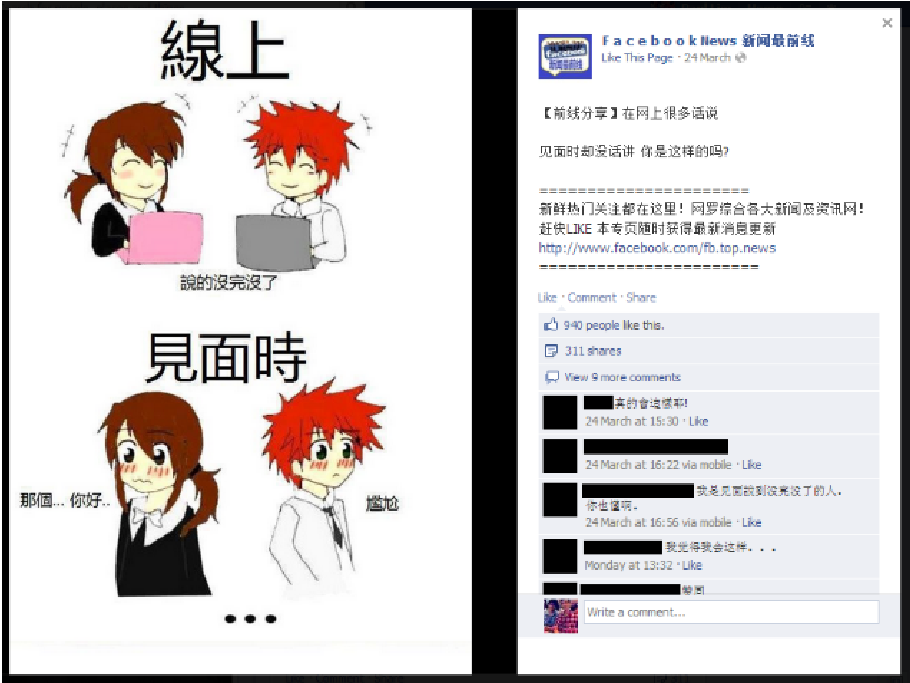 Figure: The four categories of cases used to stimulate respondent reactions, ranging from business complaints to public concerns.
Key Results: From Digital Clicks to Real Conversations
The study reveals a fascinating continuity between the digital and physical worlds.
- Platform Dominance: Facebook remains the undisputed king of interaction for this demographic (98% usage), followed by YouTube.
- The Interaction Hierarchy: Users are most likely to read comments (the highest response), followed by re-sharing. Interestingly, leaving a personal opinion is less common than simply supporting a post via a "Like."
- Real-World Extensions: 91% of respondents discuss the topics they shared online with their friends in person. This suggests that social media posts serve as "conversation starters" for real-life social activities.
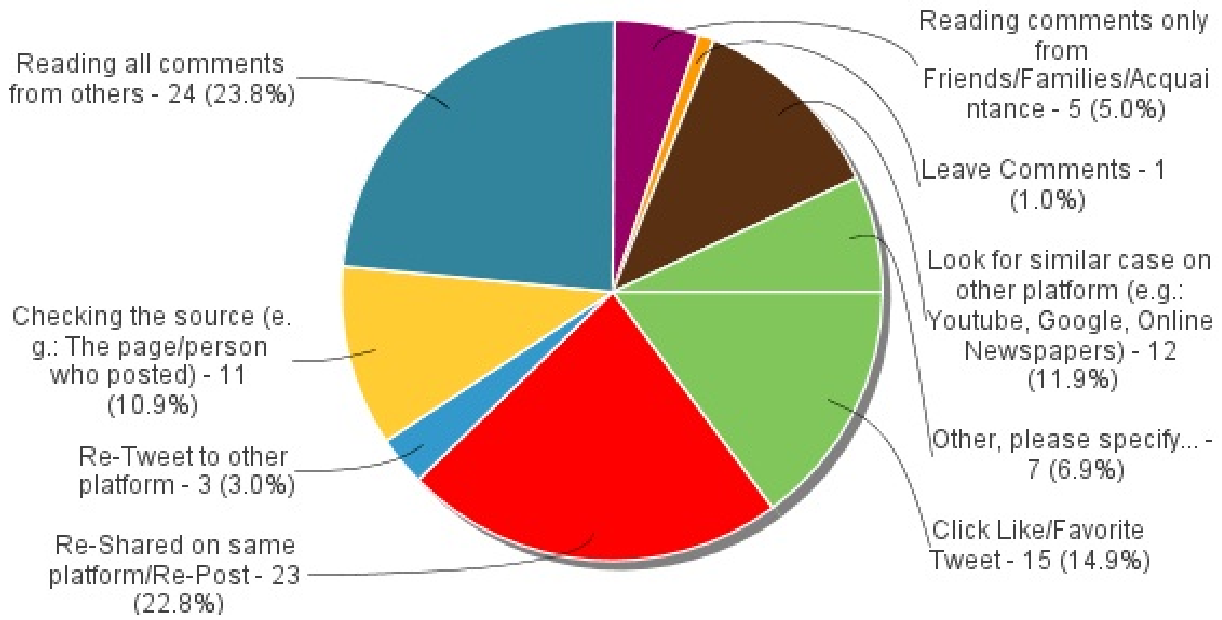 Figure: Analysis of user behavior shows that reading others' thoughts and re-sharing are more common than providing original commentary.
Critical Insight: The Strength of Ties
One of the paper's most salient points is that young adults prefer sharing with friends who influence them rather than relatives or siblings. This underscores the power of "Social Influence" within peer groups over traditional family structures in the digital age. The intention to share is a manifestation of the "Social Tie"—the stronger the perceived relevance to the peer group, the faster the "re-share" trigger is pulled.
Conclusion and Future Outlook
The study concludes that the "Action-Reaction" mechanism is the engine of social influence. While this paper provides a preliminary look, it sets the stage for future work on how these mechanisms can be ethically harnessed for marketing or how they might be mitigated to prevent cyberbullying and reputation trauma.
Limitations: The sample size (101) and geographic focus (Malaysia) provide a snapshot rather than a global rule. However, the core finding—that we share to inform rather than just to talk—remains a vital lesson for anyone managing a digital presence today.