
Beyond Information Dumping: How Real Support Emerges in Student-Led Digital Networks
Interactional and structural characteristics of communication and social interactions during computer-mediated communication
This study investigates the interactional and structural characteristics of Computer-Mediated Communication (CMC) within student-governed peer-mentoring conferences. Using Social Network Theory and Transcript Analysis Tool (TAT), the researchers identified that while discussions begin with information-heavy "expository" forms, they evolve into supportive "epistolary" dialogue as connections form.
TL;DR
In the world of online education, we often assume that "more activity equals more learning." However, this study by Gibbs and Bernas reveals a more nuanced reality: students left to their own devices often start by "information dumping" (expository discourse). It is only through the structural evolution of a conversation—moving deeper into message threads—that true interpersonal support and alignment (epistolary discourse) actually emerge.
Background: The Social Network Perspective
Higher education has become increasingly reliant on Computer-Mediated Communication (CMC). Yet, the transition from face-to-face mentoring to digital forums isn't just a change of medium; it’s a change of social structure. This paper uses Social Network Theory to look past the content of what is said and instead focus on the architecture of the conversation.
The "Expository" Wall: Why Online Forums Feel Static
The researchers identified a common hurdle in student-governed conferences: the Non-Referential Statement.
- The Problem: 39% of all analyzed sentences were statements intended solely to impart facts, without inviting dialogue.
- The Insight: When students post initial threads, they are often in "presentation mode." They share their teaching experiences (e.g., struggles with classroom discipline) as a broadcast to the network rather than an invitation to a specific person.
Performance Framework: The TAT Schema
The study utilized the Transcript Analysis Tool (TAT) to categorize communication into five types:
- Questions (Vertical/Horizontal)
- Statements (Referential/Non-referential)
- Reflections (Personal revelations)
- Scaffolding (Encouragement/Greeting)
- Quotations/Citations
Methodology: Mapping the Digital Social Bio-system
The study followed 46 undergraduate students through a 6-week teaching practicum. They participated in 12 asynchronous discussion conferences on topics ranging from "Class Conduct" to "Teaching Fears."
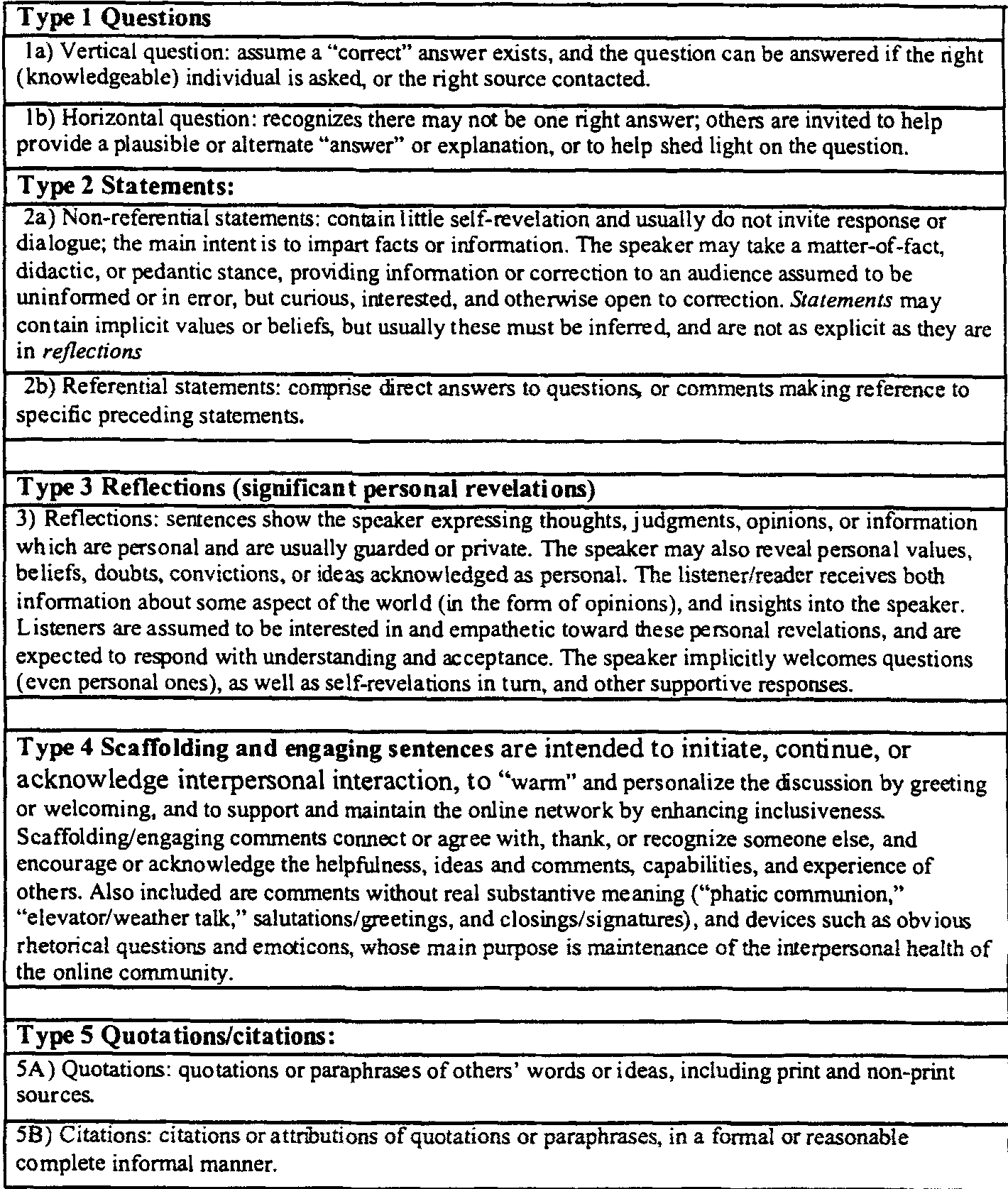 Figure 1: The TAT coding categories used to distinguish between different pedagogical and social intents.
Key Results: Where the Magic Happens
The most striking finding is the Structural Evolution of Discourse.
- Level 1 (The Initial Post): High in information, low in social warmth. 24.3% were non-referential statements.
- Level 2 (The First Reply): A dramatic shift occurs. Non-referential statements drop to 8.4%, while Referential Statements (direct answers) and Scaffolding (supportive talk) surge to 6.1% and 7.4% respectively.
- The "Star" Effect: Centrally located messages (those receiving many replies) became the anchors of the community, though overall network density remained low at 28%.
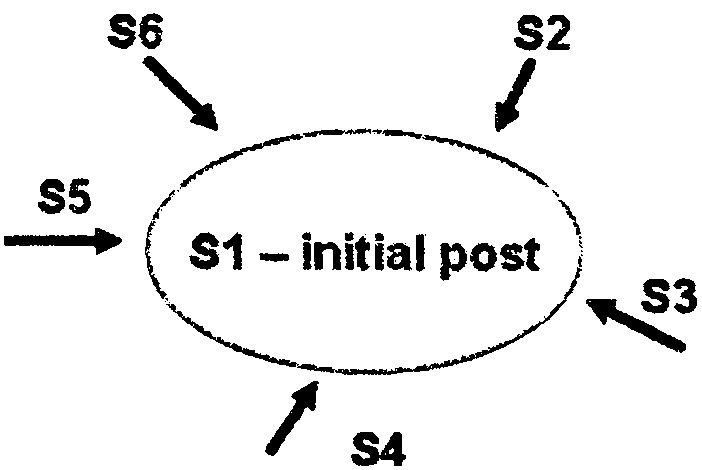 Figure 2: A visual representation of Centrality. Messages in the center (Initial Posts) dictate the flow of the sub-network.
The Paradox of Attention Scarcity
A critical takeaway is the relationship between volume and silence. The study found that as the number of posts increased, the likelihood of isolated messages (those with zero replies) also increased. This is "Attention Scarcity"—as the network becomes louder, the probability of any individual being heard diminishes.
Critical Insights & Future Directions
The value of this paper lies in its objective look at student autonomy. While self-governance is empowering, it is structurally inefficient.
- Limitation: The low density (28%) suggests that many students were essentially shouting into a void or remaining "lurkers" who consume information without contributing to the social fabric.
- Future Practice: The authors suggest that for CMC to be truly effective in a peer-mentoring context, a moderator—or perhaps an AI routing system—is needed to link isolated students with relevant discussions, effectively acting as "a second pair of eyes" to bridge the gap between information and connection.
Conclusion
True digital community isn't built in the first few posts; it’s built in the replies. To move from a "broadcast" environment to a "supportive" one, we must design systems that encourage students to move past Level 1 information-sharing into the Level 2 and Level 3 depths of referential dialogue.