
Ties That Bind: How Our Functional Interactions Shape Our Social World
Interactions Around Social Networks Matter: Predicting the social network from associated interaction networks
This paper explores the structural correlation between voluntary social networks (SN) and semi-controllable interaction networks (Gi). It proposes a supervised machine learning framework using topological features like Jaccard Index and Adamic-Adar to predict the entire structure of a social network solely based on associated interaction data across diverse datasets, including GitHub and terrorist networks.
TL;DR
Is your best friend actually your choice, or just a byproduct of your coworkers and shared repositories? This paper argues the latter. Researchers have demonstrated that the structure of a voluntary Social Network (SN) can be accurately predicted by analyzing Interaction Networks—the "semi-controllable" environments like GitHub commits, shared offices, or law firm advice-seeking. Using machine learning and topological features, they show that where we interact dictates who we befriend.
Context: Beyond Internal Homophily
In network science, we often talk about Homophily—the "birds of a feather flock together" phenomenon. Usually, we think of this as internal: you choose friends who share your politics or hobbies. However, this paper pivots to External Homophily. It suggests that external constraints—being assigned to the same project team or working in the same law firm—are powerful enough to reconstruct a social network without ever looking at the social data itself.
Methodology: The "Interactions-to-Social" Pipeline
The authors move away from the traditional link prediction problem (predicting future links from past social data) to a cross-network prediction problem.
1. The Features Data Model (FDM)
For every pair of nodes in an interaction network , the system calculates five core proximity measures:
- Adamic-Adar Coefficient: Weighted common neighbors.
- Jaccard Index: The overlap of "neighborhoods."
- Resource Allocation: The efficiency of information flow between nodes.
- Preferential Attachment: The "rich-get-richer" product of node degrees.
2. The Workflow
By treating these metrics as features, a Logistic Regression classifier learns the "fingerprint" of a social tie. If two developers on GitHub interact via Pull Requests in a specific structural pattern, the model can predict if they follow each other.
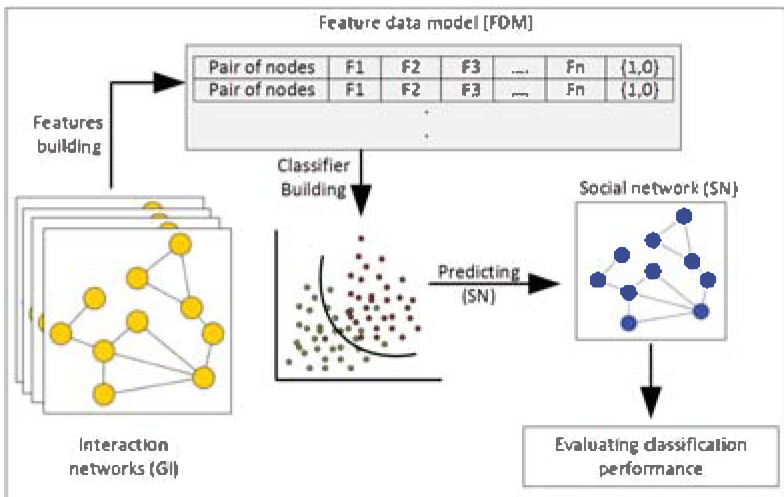 Figure 1: The abstract workflow of predicting SN structure from associated interaction layers.
Experiments: From GitHub to Terrorist Cells
The researchers tested their hypothesis across a massive variety of datasets:
- GitHub: Social followers vs. commits/pull requests.
- Law Firms: Friendship vs. seeking advice.
- Terrorist Networks: Personal friendship vs. financial/training ties.
Key Results
The findings were striking. In the Law Firm dataset, the machine learning model achieved an F-measure of 0.76 based on co-working interactions. In the Terrorist Network, financial ties were a massive predictor of social ties (F-measure 0.76).
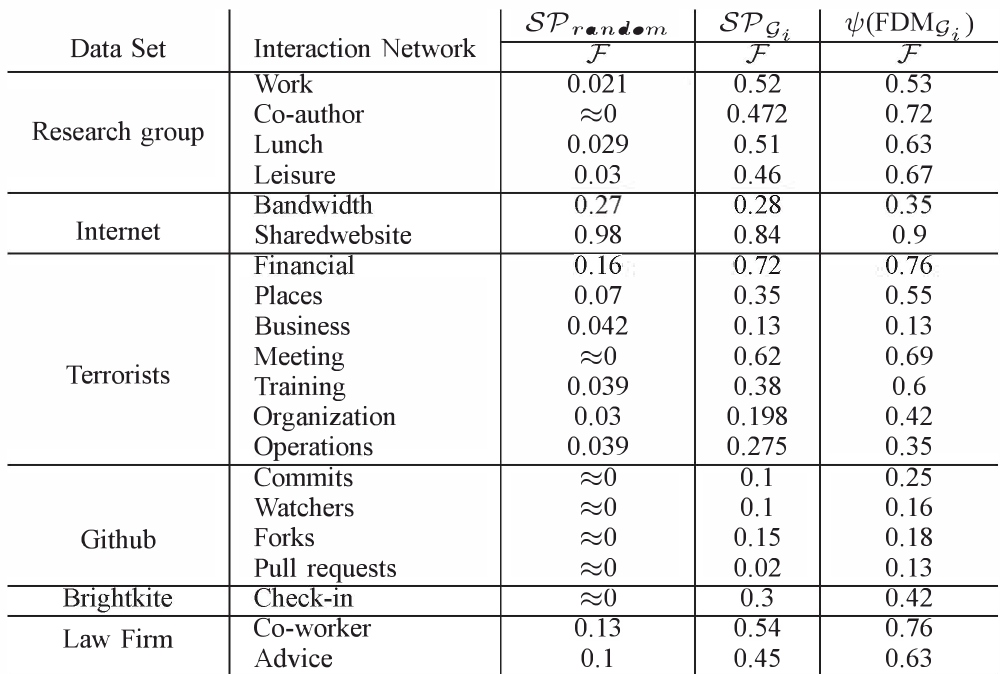 Table II: Comparison of Simplistic Prediction (SP) vs. Machine Learning (ψ) across datasets.
Deep Insight: Causality and Constraints
The most profound takeaway is the concept of "Semi-Controllable" relationships. You might not choose your coworkers, but the structure of your cooperation (an interaction network) creates a "forced similarity." This external pressure acts as a scaffold upon which the voluntary social network is built.
The machine learning model is particularly good at filtering noise. For example, a lawyer might seek advice from a senior partner (an edge in ), but if the overall network topology suggests they have zero common ground, the classifier correctly predicts they aren't "friends" (no edge in ).
Critical Analysis & Conclusion
Takeaway
The study confirms that social networks are not isolated silos. They are deeply embedded in functional interactions. If you have the data for how people work together, you likely already have the blueprint for how they socialize.
Limitations
- Causality: The paper admits it doesn't solve the "chicken or egg" problem. Do we work with people because we are friends, or are we friends because we work together?
- Sparsity: In massive networks like GitHub, predicting specific links remains difficult (lower F-measures) compared to small, dense groups like the Law Firm.
Future Outlook
As we move toward "Super Apps" and integrated platforms, the ability to predict social behavior from non-social data (transactions, collaborative coding, gaming) will become a central pillar of recommendation engines and organizational sociology.