
MicroLudi-Cycle: Bridging Psychology and Game Theory for Child Behavioral Profiling
An interactive ecosystem based on Borda voting schemes and serious games to support the discovery of aggressiveness and inhibition traits on scholar children
The paper introduces an interactive ecosystem designed to identify psychological traits—aggressiveness, inhibition, and assertiveness—in school children through a combination of serious games and Borda voting schemes. By integrating multiple diagnostic sources into a unified profile, the system achieves a 86% precision rate in preliminary clinical validations.
TL;DR
Researchers have developed an interactive ecosystem that uses a bicycle-themed serious game and the Borda voting scheme to detect aggressiveness and inhibition in children. By fusing data from traditional tests and real-time game telemetry, the system achieves an 86% accuracy in identifying psychological traits, providing an objective "second opinion" for clinicians.
Background: Beyond the Clinic Walls
Early detection of aggressiveness or chronic inhibition is critical for children under social risk, such as those in institutional care. However, children often mask these traits during formal interviews or self-report scales like the CABS. The researchers hypothesized that play—a child's natural language—could reveal these latent traits through behavioral patterns if analyzed through a rigorous mathematical lens.
The Problem: The Noise in Subjective Testing
Traditional diagnosis faces three major hurdles:
- Social Desirability Bias: Children avoid showing aggressive traits on written tests.
- Expert Subjectivity: Projective tests (like drawing a person) depend heavily on the therapist's intuition.
- Low Consistency: Different tools often yield conflicting results for the same child.
Methodology: The Borda-Based Ecosystem
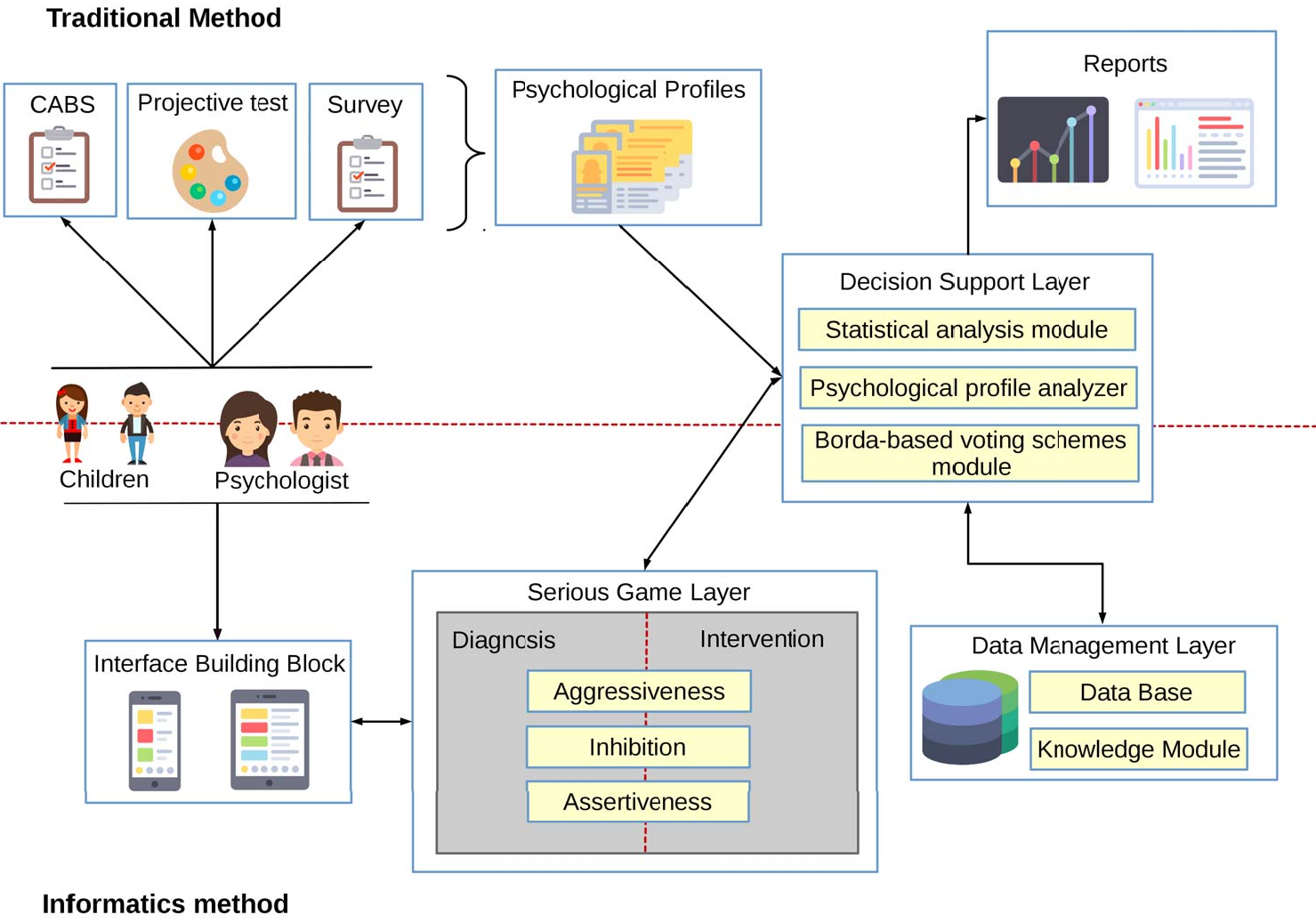
The core innovation lies in the Decision Support Layer, which treats different diagnostic tools as "voters" in an election.
1. The Borda Voting Module
To reconcile conflicting data from the CABS test, projective drawings, and classmate surveys, the system uses the Borda count. Each psychological trait (Aggressive, Inhibited, Assertive) is ranked by each "voter." This method ensures that the final profile is not just a majority vote but reflects the intensity and preference hierarchy of all inputs.
2. MicroLudi-Cycle: Digital Behavioral Markers
The serious game serves as a data collection engine. As a child navigates an avatar through "Day" and "Night" scenarios, the system logs:
- Aggression proxies: Number of monsters killed vs. frozen.
- Anxiety/Inhibition proxies: Number of jumps, time to complete a stage, and frequency of screen interaction.
- Reward orientation: Coins collected vs. monsters avoided.
Experiments and Results
The study involved 103 clinically diagnosed children in Ecuador. The results highlighted a significant "noise" issue in traditional scales: the CABS test suggested most children were assertive, while peer surveys pointed toward aggressiveness.
The Borda module's performance:
- Accuracy: 86% match with expert clinical validation.
- Robustness: It successfully filtered out the "noise" introduced by self-reporting bias in the CABS test.

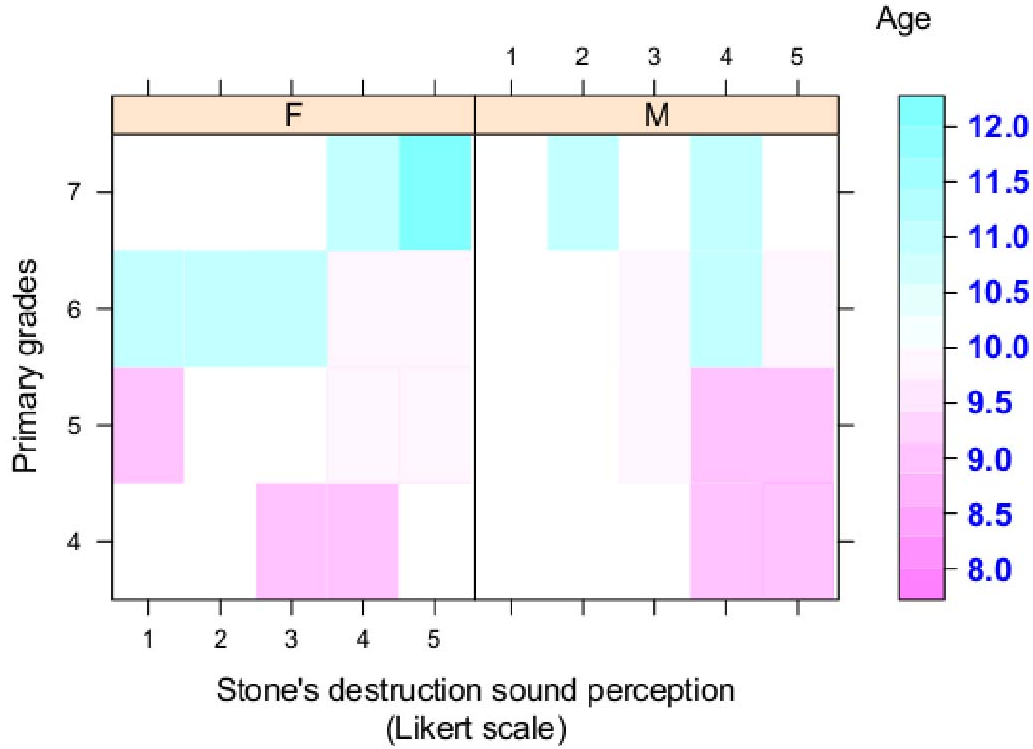
The researchers also found intriguing gender-based correlations: older girls (10-12 years) showed a significantly more positive perception of "killing monsters" in-game compared to younger girls, potentially signaling shifts in social development or coping mechanisms.
Critical Insights & Future Outlook
This research moves us closer to precision psychology. By treating game mechanics as diagnostic stimuli, we can observe behavior "in the wild."
Takeaways for the Industry:
- Fusion is Key: No single digital health tool is a silver bullet; mathematical aggregation (like Borda or Fuzzy Borda) is essential to manage clinical variance.
- The Power of Sound and Visuals: As shown in the "rock destruction" results, even the sound effects in a diagnostic game can elicit different emotional responses linked to specific behavioral traits.
Future Directions: The team plans to introduce Fuzzy Borda counts to assign weight to different tests based on their confidence levels and develop adaptive game environments that change in real-time based on the child's identified profile.