
MOAL: Decoding the Hidden Language of Bio-Ontologies via Multi-Level Data Mining
Interestingness measures and strategies for mining multi-ontology multi-level association rules from gene ontology annotations for the discovery of new GO relationships
The paper introduces MOAL (Multi-ontology data mining at All Levels), a framework for discovery of implicit relationships between sub-ontologies of the Gene Ontology (GO). By leveraging transitive "is-a" and "part-of" relations, it mines multi-level association rules and achieves state-of-the-art results in generating co-annotation suggestions and cross-ontology relationships.
TL;DR
The Gene Ontology (GO) is a cornerstone of bioinformatics, yet the relationships between its three branches—Molecular Function (MF), Cellular Component (CC), and Biological Process (BP)—are often under-explored. This paper presents MOAL (Multi-ontology data mining at All Levels), a method that uses advanced association rule mining and custom interestingness measures to discover new biological relationships. MOAL outperforms existing tools like QuickGO by providing 9x more annotation suggestions through structural awareness.
Problem & Motivation: The Bias of the "Standard" Background
In data mining, "Interestingness" is usually measured by Support and Confidence. However, in the realm of biological ontologies, these metrics fail. Why? Because not every gene is annotated to every sub-ontology.
If you are trying to find a rule between a Molecular Function and a Cellular Component, counting genes that lack any CC annotation in your denominator artificially dilutes the "Support" value. Most prior works either ignored the hierarchy (treating terms as flat items) or didn't account for this "missing data" bias in multi-ontology contexts.
Methodology: MOSupport and MOConfidence
The core innovation of MOAL lies in its "Background Selection" and "Structural Generalization."
1. Single-Step Generalization
Instead of mining level-by-level, MOAL takes every GO term and supplements it with its ancestors (via is-a and part-of). This ensures that patterns at higher levels of abstraction (e.g., "Protein Kinase Activity") are captured even if the data only contains specific instances (e.g., "MAP kinase activity").
2. Tailored Metrics
The authors redefine the background of interest. For a rule :
- MOSupport: Only considers the set of transactions that could have contained both ontologies.
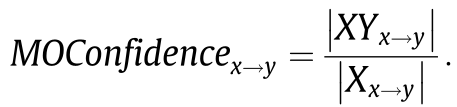
- MOConfidence: Evaluates the probability of given , restricted to genes that have at least one annotation in the target ontology of .
3. Pruning the "Rule Explosion"
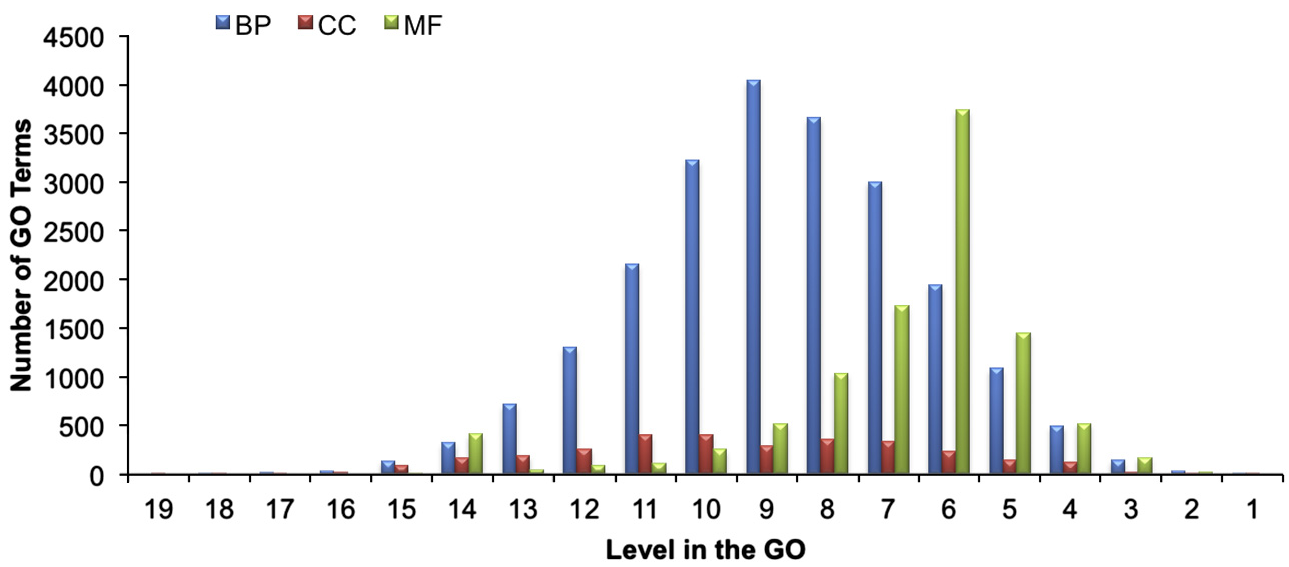
Generalizing data creates thousands of redundant rules. MOAL employs 6 pruning strategies, the most critical being:
- Generalized Rule Pruning: If is found, don't show unless it provides a massive jump in confidence.
- InterPro Filtering: Removing rules that are already "baked-in" to the computational tools used for annotation, ensuring the discovery is truly "new."
Experiments & Results: Outperforming QuickGO
The researchers tested MOAL on Chicken, Human, and Mouse datasets. The pruning strategies were remarkably effective, reducing the initial noise by 91-93%.
When compared to the QuickGO approach (the industry standard), MOAL discovered significantly more candidates.
- MOAL: 935,770 candidates.
- QuickGO: 108,006 candidates.
The reason for this massive gap? QuickGO only looks at the "flat" terms. MOAL’s ability to "see" through the hierarchy allows it to identify co-annotation patterns that are statistically significant but only visible when terms are generalized to common ancestors.

Critical Analysis & Future Outlook
MOAL is a significant step forward in Ontology-Aware Data Mining. It successfully transitions from "what co-occurs" to "what is biologically relevant" by filtering out the noise of the ontology structure itself.
Takeaway: The success of MOAL suggests that for any hierarchical knowledge base (like clinical phenotypes or product taxonomies), standard association mining is insufficient. One must account for "structural redundancy" and "missing category bias."
Limitations: The reliance on "is-a" and "part-of" means the method is only as good as the curated ontology. In rapidly evolving fields, the lag in ontology updates might limit the discovery of truly cutting-edge relationships.
Future Work: The authors envision applying MOAL to the Human Phenotype Ontology, potentially aiding doctors in diagnosing rare diseases by identifying non-obvious symptom clusters.