
iConsult: Bridging the Global Healthcare Divide through Social Telemedicine
International Consultants in Medicine: A Framework for Medical Expertise and Social Telemedicine Addressing Medical Disparities
This paper introduces iConsult, a teleconsultation and social networking framework designed to address global medical disparities. By utilizing a store-and-forward methodology, it connects healthcare providers in underserved regions with a global network of specialized volunteers to provide expert diagnostic advice via an asynchronous digital platform.
TL;DR
The medical world faces a crisis of distribution: expertise is concentrated in urban centers of developed nations, while rural areas suffer from a lack of specialists. This paper presents iConsult, a robust teleconsultation framework that leverages a "store-and-forward" approach to facilitate expert medical advice across borders, providing a lifeline to physicians in medically underserved regions.
Background & Motivation: The Disparity Gap
The World Health Organization (WHO) highlights a staggering deficit of 2.36 million service providers globally. The threat is not just local; the rapid spread of cross-border pandemics (HIV, Ebola, SARS) proves that "weak health systems" anywhere are a threat to health everywhere.
The primary technical hurdle in solving this is not just the distance, but the infrastructure. In many developing regions, a persistent, high-speed internet connection required for "live" surgery or video calls is non-existent.
Methodology: The iConsult Architecture
The researchers developed a system that prioritizes asynchronous collaboration. Unlike traditional video-conferencing telemedicine, iConsult treats medical cases as interactive, evolving documents.
1. Store-and-Forward Logic
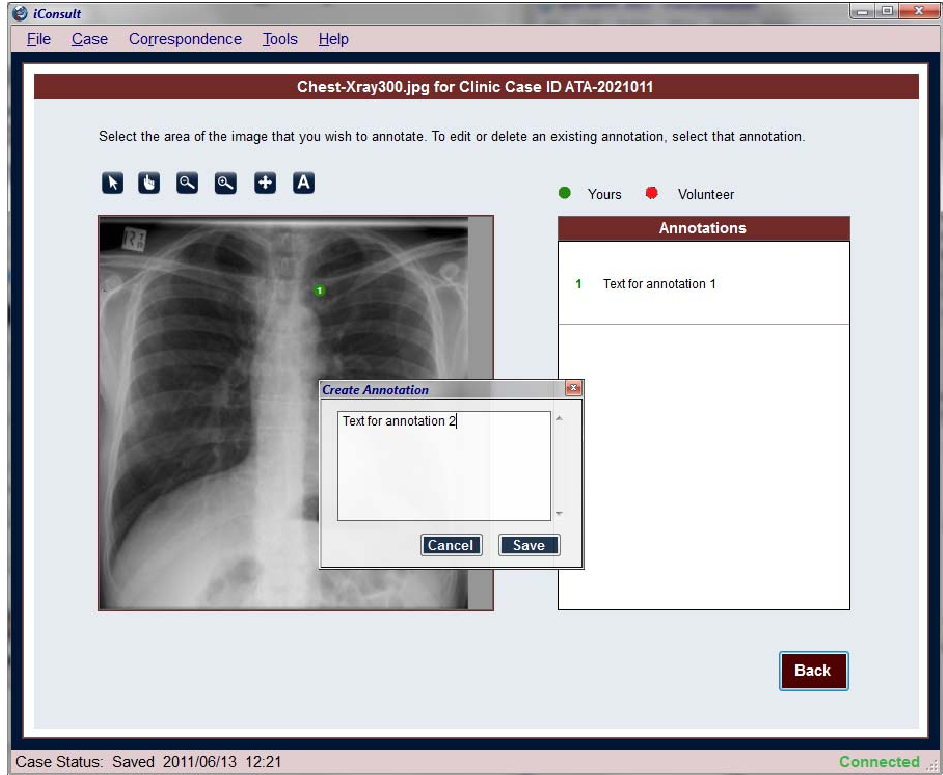
The client-side application allows doctors (Requestors) to document cases, attach images, and add annotations offline. Once a connection is found (e.g., via a mobile signal or a periodic internet link), the data is synced to a central server.
2. Vetted Social Networking
The system utilizes a social networking paradigm to build trust. Every user is vetted:
- Requestors: Local providers needing help.
- Volunteers: Specialists who donate time to review cases.
- Consultation Loop: Volunteers provide advice through messages and image annotations until the case is closed.
3. Security and Privacy
Despite being a global network, the system employs public-private key encryption. Data is encrypted at the client level before transmission, ensuring that only the consulting specialists and the requesting physician can access sensitive patient information.
Results & Impact
As of the paper’s publication, the iCons network has integrated:
- 400+ Members from 12 countries.
- 130+ Specialized Physicians across 35 medical disciplines.
- Rapid Turnaround: Most specialized cases are resolved within a few days, a timeline that is life-changing for patients who might otherwise wait months for a referral.
Future Directions: Mobile and AI
The authors identify two critical pivots for the future of the platform:
- Mobile Dominance: Recognizing that mobile phone penetration (81% even in infrastructure-poor areas) far exceeds PC/Internet access, the next phase involves a dedicated smartphone/tablet application.
- Clinical Guidelines (Balto): Partnering with MedRed to incorporate an inference engine. This would provide real-time diagnostic support even before a human volunteer responds, essentially acting as a primary "second opinion" filter using local patient vitals.
Critical Insight: Why it Works
The brilliance of iConsult lies in its Inductive Bias toward the constraints of the real world. Many tech-heavy solutions fail because they assume a Western digital infrastructure. By embracing asynchronicity and asymmetric membership (expert-volunteer vs. local-requestor), iConsult creates a sustainable humanitarian model rather than just a software tool.
Conclusion
iConsult proves that technology’s greatest role in medicine isn't always cutting-edge surgery—it is the democratization of knowledge. By turning medical expertise into a "social" commodity, we can begin to close the gap between those who have health and those who do not.