
Who is Teaching Whom? Empowering 3-Year-Olds to Master Machine Learning
International Journal of Child-Computer Interaction
This study investigates how children aged 3–9 engage with machine learning (ML) using Google’s Teachable Machine in informal settings. By adopting a sociocultural framework, the authors demonstrate that even very young children can successfully train, test, and reason about inductive ML models through embodied, multimodal interaction.
TL;DR
Artificial Intelligence is no longer just for PhDs; it’s becoming a playground for preschoolers. This study explores how children aged 3–9 use Google’s Teachable Machine to flip the script on traditional education. Instead of the computer teaching the child, the child "trains" the computer using facial expressions and dance moves, revealing that the core logic of Machine Learning (ML)—data-driven induction—is surprisingly accessible to the very young through embodied play.
Background: The Shift from Rules to Data
In the traditional "Computational Thinking" paradigm, we teach children to give step-by-step instructions (if-then-else). However, the modern world is driven by ML, which works on Inductive Bias and Pattern Recognition. The authors argue that as a generation grows up surrounded by "smart" artifacts, the "digital divide" will soon be defined not by access to tech, but by the ability to harness and understand these data-driven systems.
The "Insight": Machine learning as an Embodied Experience
The study's brilliance lies in its use of Teachable Machine to bridge the gap between abstract algorithms and physical reality. By training a model to recognize "happy," "angry," or "dancing," children use their own bodies as the primary data source.
The Pedagogical Framework
Drawing on Vygotsky’s sociocultural theory and Papert’s "Constructionism," the researchers positioned the ML tool as an "object-to-think-with."
- Externalization: Children must express their thoughts (facially or gesturally) precisely enough for the machine to "learn."
- Feedback Loops: The immediate response from the computer (e.g., a GIF of a bunny appearing when you smile) creates a tangible link between user action and machine inference.
 Figure 1: The sociocultural interaction between the child (Subject), the computer (Tool), and the taught emotion (Object).
Methodology: Playing Teacher to a Black Box
The research involved six children in Finland. The workflow was simple but profound:
- Teaching: Creating training sets by holding a button while making faces.
- Exploration: Testing the model with new movements.
- Explanation: Interviewing the children to see if they understood why the computer reacted.
Key Observation: The 3-Year-Old Perspective
"Toma," the youngest participant, demonstrated that he could distinguish between his "point of view" and the computer’s. When asked why the computer said "happy," he replied, "Because I smile... it saw that I was cheering." This indicates a nascent understanding of machine perception.
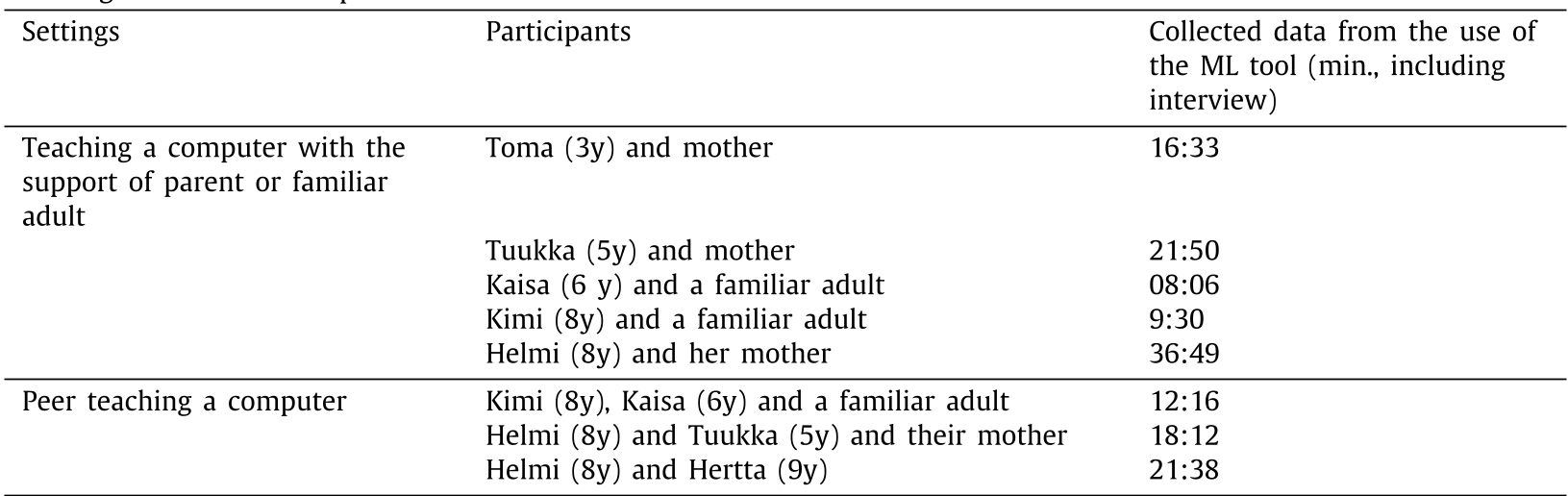 Table 1: Breakdown of session durations and participant roles.
Results: High-Speed Learning
The study found that the child-computer interaction was "quick-paced and embodied."
- Data Literacies: An 8-year-old, Helmi, correctly identified that the computer learned because "we showed that to it many times, a little over a hundred times." This shows an intuitive grasp of Sample Complexity.
- Agency: Children felt empowered. Helmi noted that while usually "the computer teaches us," here, she was the one in control.
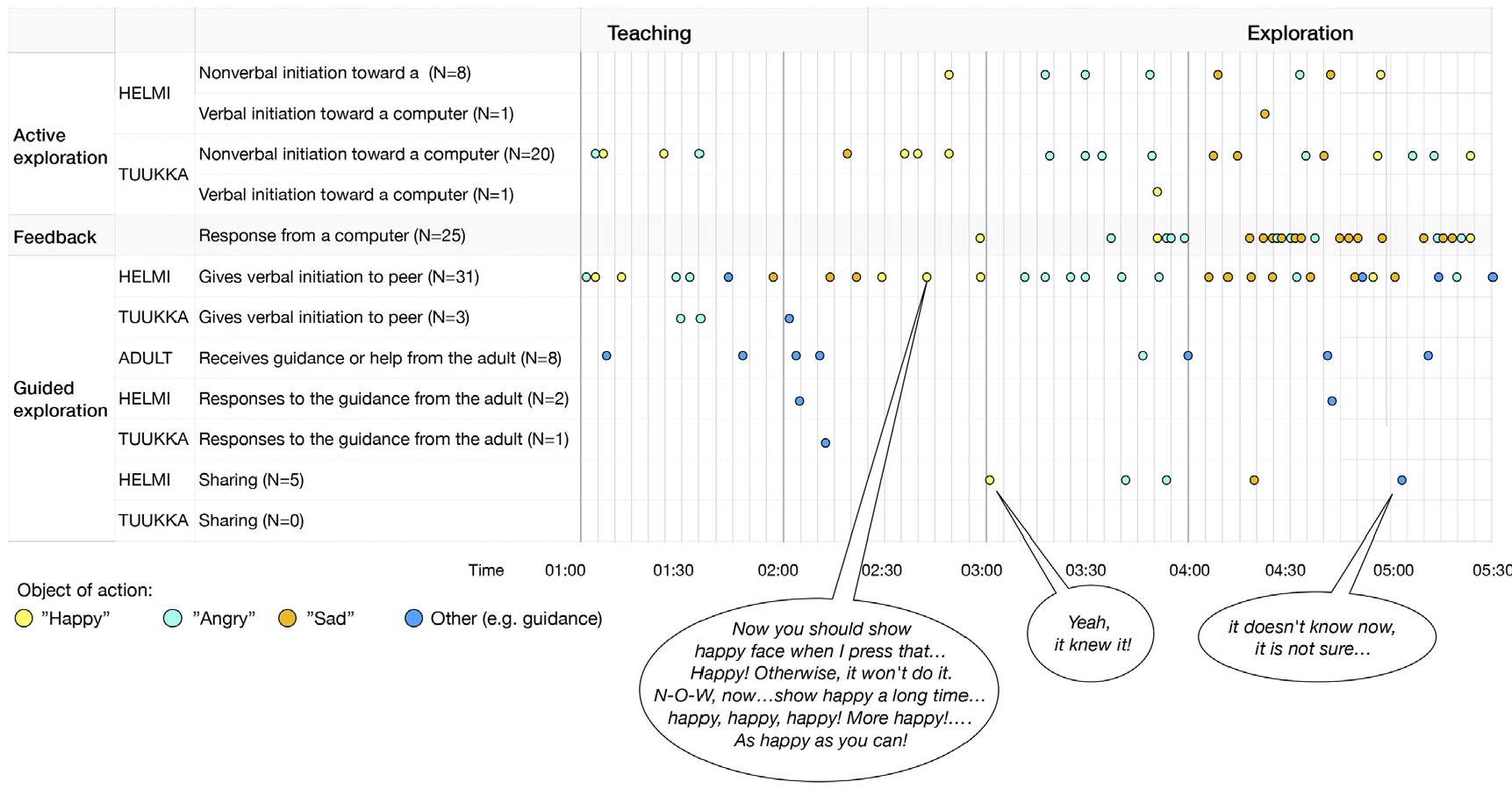 Figure 2: Older children scaffolded the learning of younger siblings, reinforcing their own understanding of data-driven logic.
Critical Insight: The "Brittleness" of Early Models
The study briefly touched on when models "fail." When the machine misidentified an expression, the children didn't just see a bug; they reasoned about why the data they provided was insufficient. This transition from "the computer is broken" to "the model is biased/undertrained" is the cornerstone of modern AI literacy.
Conclusion & Future Outlook
This paper serves as a proof-of-concept for Inclusive AI Education. It suggests that the path to ML literacy isn't through more coding syntax, but through inductive play.
Limitations: The study was conducted in a small, supportive home setting. Scaling this to a classroom where a teacher must manage 30 children training 30 different models remains a logistical challenge.
Takeaway: To prepare children for a world of pervasive AI, we must move beyond teaching them to use tools and start teaching them to shape the data that drives them.