
TouchSense: Decoding the "Feel" of Your Fingertips—Emotion Detection via Hybrid Typing and Swyping
International Journal of Human - Computer Studies
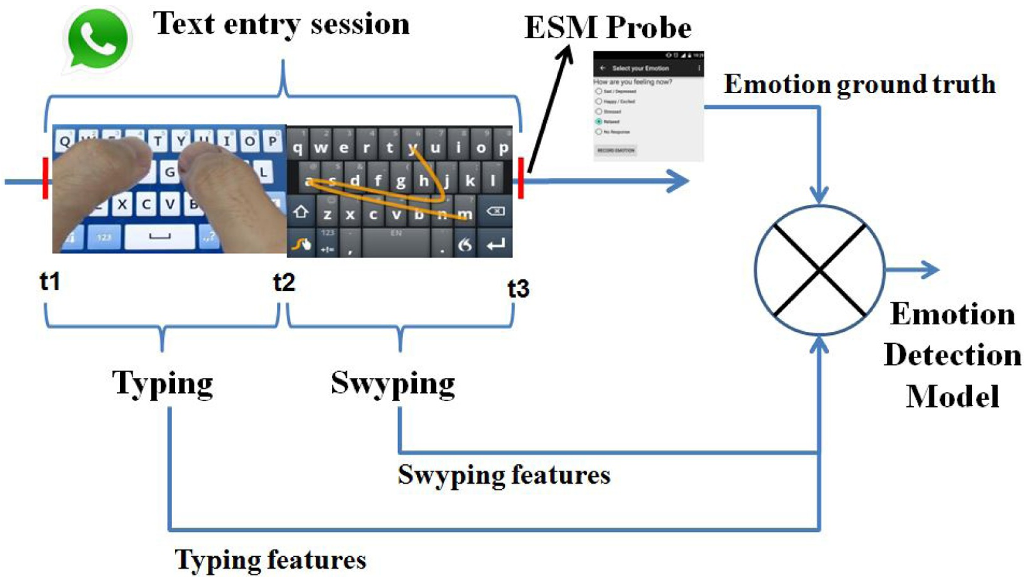
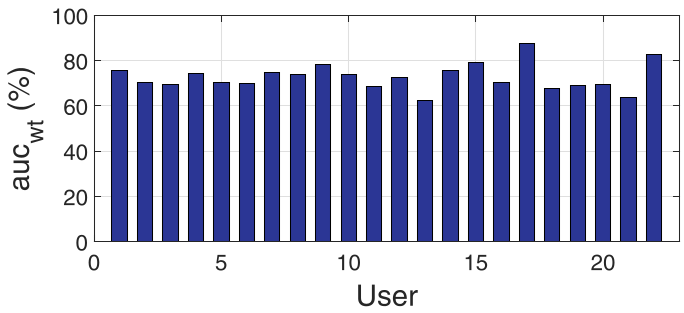
This paper introduces TouchSense, an Android-based system designed to detect four discrete emotion states (happy, sad, stressed, relaxed) by analyzing non-intrusive touch interactions. The core innovation lies in the joint modeling of both typing and swyping modalities during standard text entry on smartphones, achieving an average AUCROC of 73% in a 3-week in-the-wild study.
TL;DR
Can the way you slide your thumb across your screen reveal your stress levels? Researchers from IIT Kharagpur say "Yes." Their new system, TouchSense, moves beyond simple keystroke logging by combining typing and swyping dynamics to identify emotions like happiness or stress with over 73% accuracy—all without reading a single word you type.
Background Positioning
In the landscape of Affective Computing, we have seen two extremes: highly accurate but invasive "sensor-heavy" methods (reading your heart rate or GPS) and specialized but limited "app-specific" methods (detecting boredom during games). TouchSense occupies the "Goldilocks" zone—it is non-intrusive, privacy-aware, and works across any application by living inside the smartphone keyboard itself.
The Core Challenge: The Hybrid Nature of Modern Input
The fundamental difficulty in smartphone-based emotion detection is that we are "bilingual" touch users. We might type "Hello" (individual taps) but swype "how are you today?" (continuous strokes).
Previous SOTA (State Of The Art) methods often ignored one or the other. If a system tries to interpret a "swype" as a series of very fast "taps," the data becomes garbage. The authors realized that to get the "emotional signal," they first had to solve the Modality Identification problem.
Methodology: The Logic of the Touch
The authors built a custom Android keyboard to log metadata. The secret sauce lies in two specific areas:
1. The Clustered Speed Threshold
Instead of using a fixed speed to separate typing from swyping, TouchSense uses K-Means clustering on the natural log of finger speed. This allows the system to adapt to how "fast" or "slow" a specific user’s hands are, ensuring that a quick typist isn't mistaken for a swyper.
2. RMSI (Refined Mean Session ITD)
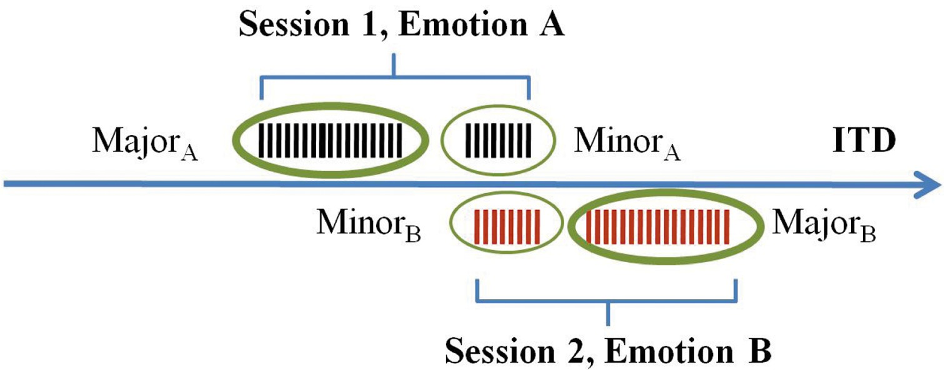
Standard "Inter-Tap Duration" (the time between keys) is messy. If you are sad but suddenly get a funny text, your speed might spike. The authors introduced RMSI—it ignores these outliers and calculates the mean based on the "dominant" cluster of speeds in a session. This makes the emotional "signal" much louder than the "noise."
Experiments: Real-World Evidence
The system was tested "in-the-wild" for 3 weeks. Unlike lab studies, this data includes walking, distractions, and varied lighting.
- Performance: The personalized Random Forest models hit an average AUCROC of 73%.
- The "Sad" Signal: Interestingly, the "Sad" state was the most accurately detected (over 85% AUCROC), likely because sadness manifests in very distinct, slower, or more consistent touch patterns.
- Key Feature: Swyping Pressure emerged as the #1 indicator of emotion. When users are stressed or happy, the physical force applied to the glass changes measurably.
Critical Insight & Conclusion
The success of TouchSense proves that behavioral biometrics are increasingly capable of replacing physiological sensors.
The Takeaway: For developers and researchers, the lesson is clear—don't build "one-size-fits-all" models. Emotional expression through touch is deeply personal. A "fast" swype for one person is a "leisurely" slide for another.
Limitations
- The Keyboard Gap: Users missed the "smart" features of Google Keyboard (like advanced auto-prediction), which can actually frustrate users and create artificial stress.
- Data Imbalance: As shown in the study, people are "relaxed" or "stressed" more often than they are "sad" on their phones, requiring techniques like SMOTE to balance the AI's training data.
TouchSense paves the way for a future where our devices can sense we are having a "stressed" afternoon and automatically enable "Do Not Disturb" or suggest a mindfulness break—all through the subtle rhythm of our fingertips.