
Mixed Reality: A Great Qualifier or a Cognitive Divider?
International Journal of Human - Computer Studies
The paper investigates the effects of Mixed Reality (MR) on player behavior and immersion in cultural tourism games via a cognitive processing lens. Utilizing Field Dependence-Independence (FD-I) theory and eye-tracking (N=73), the study demonstrates that MR significantly amplifies individual cognitive differences compared to traditional desktop environments.
TL;DR
Is Mixed Reality (MR) truly "natural" for everyone? A new study reveals that MR actually amplifies the gap in how different people process visual information. While Field-Independent (analytical) users thrive in MR's complex 3D space, Field-Dependent (holistic) users struggle. The good news? We can now use eye-tracking to "detect" these styles in real-time with over 80% accuracy.
Background: Beyond the Average User
In the rush to build the Metaverse and sophisticated MR tourism apps, designers often assume a "standard" human observer. However, cognitive psychology tells us otherwise. The Field Dependence-Independence (FD-I) theory categorizes people based on how they extract information from complex visual backgrounds.
- Field-Independent (FI): Analytical, detail-oriented, excels at finding "the needle in the haystack."
- Field-Dependent (FD): Holistic, context-driven, perceives the scene as a whole and struggles to decouple details from the background.
The Core Insight: MR as a Cognitive Magnifier
The researchers hypothesized that the transition from flat 2D screens to 3D MR environments (with depth, 360-degree content, and gesture-based interaction) would make these cognitive differences even more pronounced. Using Microsoft HoloLens and wearable eye-trackers, they tested 73 participants in a cultural tourism game, HoloTour.
Methodology & Architecture
The study compared two groups:
- Desktop (PC): Traditional mouse/keyboard on a 22" monitor.
- Mixed Reality (MR): Microsoft HoloLens with natural gesture and gaze control.
 Figure 1: The study utilized the GEFT tool to categorize cognitive styles and compared performance across technology tiers.
Key Performance Findings
The data confirms a "magnification effect":
- Game Performance: In the MR environment, FI players collected far more "secrets" (small, hidden moving items) than FD players. The effect size (Hedges' g) jumped from 0.669 on PC to a massive 1.892 in MR.
- Visual Behavior: Heatmaps distinctly show that FIs explored larger, more varied areas of the 3D scene, while FDs remained "locked" to the center, often missing interactive elements placed in the periphery.
- The Immersion Paradox: While everyone felt more immersed in MR than on PC, the "gap" in immersion scores based on cognitive style was significant.
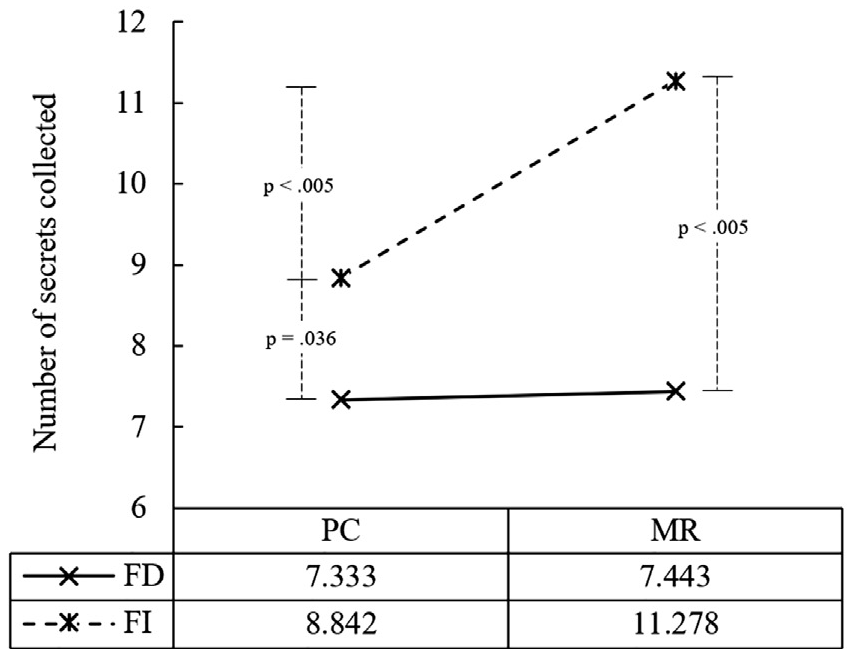 Figure 2: Note how much wider the gap in "Secrets Found" becomes in the MR context compared to Desktop.
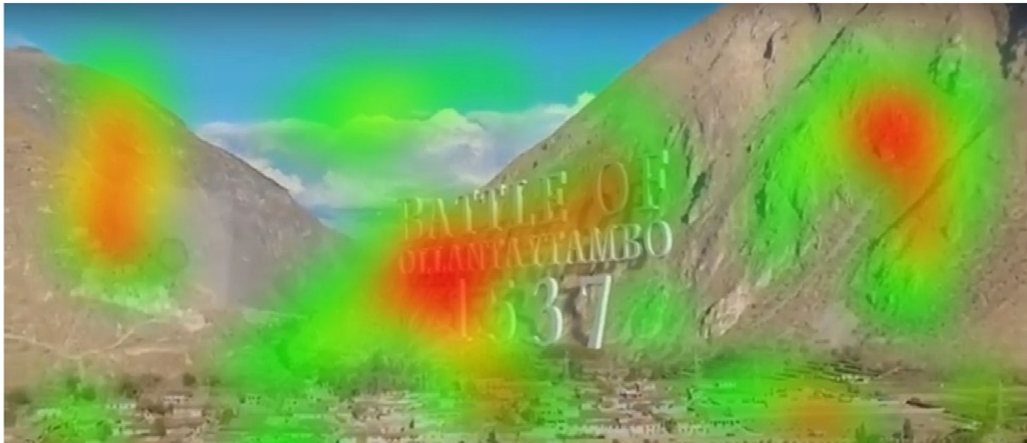 Figure 3: Visual evidence showing FI users (bottom) covering a much larger search area than FD users (top).
Implicit Modeling: The Path to Personalization
The most exciting contribution of this work is the Implicit Elicitation model. By analyzing "Fixated Secrets" and "Fixated Topics," the researchers trained a classifier that reached 80.56% accuracy in predicting a user's cognitive style within MR.
| Technology | Accuracy | Best Classifier |
|---|---|---|
| Desktop | 67.56% | SMO / Logistic |
| Mixed-Reality | 80.56% | Logistic Regression |
This suggests that future MR headsets can "learn" who you are within minutes of gameplay and start offering help if you exhibit FD patterns.
Critical Insight & Future Implications
The study proves that MR is not a "one-size-fits-all" medium.
- Design for Inclusion: Developers should include explicit cues (e.g., visual highlighting or auditory guides) specifically for Field-Dependent users who might otherwise feel overwhelmed.
- Adaptive UX: The future belongs to "Cognitive-Aware" systems. Imagine an MR headset that notices you haven't looked at a specific quadrant for 30 seconds and subtly shifts the lighting to guide your holistic gaze toward a critical detail.
- Limitations: The study's age range (20-42) and small sample (N=73) mean we need more research on the elderly and different game genres.
Conclusion
This paper is a wakeup call for the XR industry. As we move toward more visually enriched realms, we must acknowledge that our "internal hardware"—our cognitive style—defines our experience. By leveraging eye-tracking, we can move past static designs and toward truly personalized Mixed Reality.