
Fifty Years of the Psychology of Programming: Why Modern AI Still Needs Human-Centric Design
International Journal of Human - Computer Studies
This paper provides a 50-year retrospective on the "Psychology of Programming" (PP), tracking its evolution from early cognitive models to modern collaborative and cultural practices. It synthesizes half a century of research from the IJHCS journal and key specialist communities (PPIG, ESP, VL/HCC) to define the theoretical foundations and future trajectory of how humans interact with code.
TL;DR
This landmark review traces the 50-year journey of the Psychology of Programming (PP)—a field born to understand why coding is hard and how to make it better. From the early days of "structured programming" to modern "live coding" as an art form, the authors argue that programming remains a unique cognitive challenge: it is the act of making changes now for effects later. Even in the age of AI, the core problem remains one of notation and attention.
Problem & Motivation: Beyond "Direct Manipulation"
The central insight of this paper is the definition of programming by what it is not. Unlike "Direct Manipulation" interfaces (think dragging a file into a folder), where actions are immediate and reversible, programming requires a different cognitive load.
In programming, the user invests attention now to save time/effort later, using notations (code, diagrams, or spreadsheet formulas) to describe intent to a machine. This inherent "gap" between action and effect is where bugs, misunderstandings, and cognitive friction reside.
Methodology: Five Decades of Evolution
The authors observe that PP has mirrored the "three waves" of HCI:
- The 1970s & 80s (The Cognitive Wave): Focus on the individual programmer. Researchers used "beacons" and "mental models" to understand how experts read code differently than novices.
- The 1990s & 2000s (The Social Wave): Focus on teams. The rise of Agile and Pair Programming shifted the lens toward how groups coordinate around a shared codebase.
- The 2010s to Now (The Cultural Wave): Programming as a craft. Coding moved into the home (IoT), the classroom (Scratch), and even the stage (Live Coding for music).
The Core: Intersecting Communities
The "Psychology of Programming" isn't a silo; it is the glue between Software Engineering, Education, and Design.
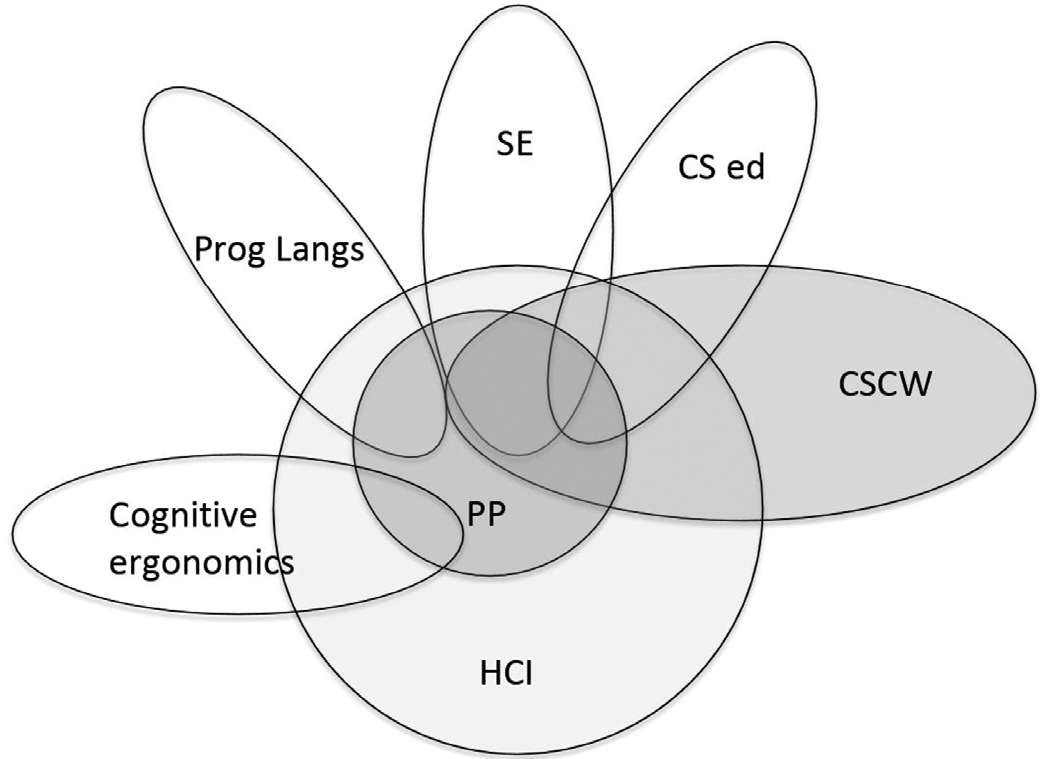 Fig 1: The intersection of PP with other fields like CSCW and CS Education.
The paper highlights the Psychology of Programming Interest Group (PPIG) as a unique community that prioritizes conversation over high rejection rates, fostering "risky" ideas that mainstream conferences might ignore.
Key Frameworks: Tools for Thinking
The paper revisits two critical frameworks that remain relevant today:
- Cognitive Dimensions of Notations (CDs): A vocabulary for designers to discuss trade-offs in languages (e.g., "Viscosity"—how hard is it to make a small change?).
- Attention Investment Model: A behavioral economics approach to why people choose to program. Users weigh the "cost" of learning a tool against the "payoff" of automation.
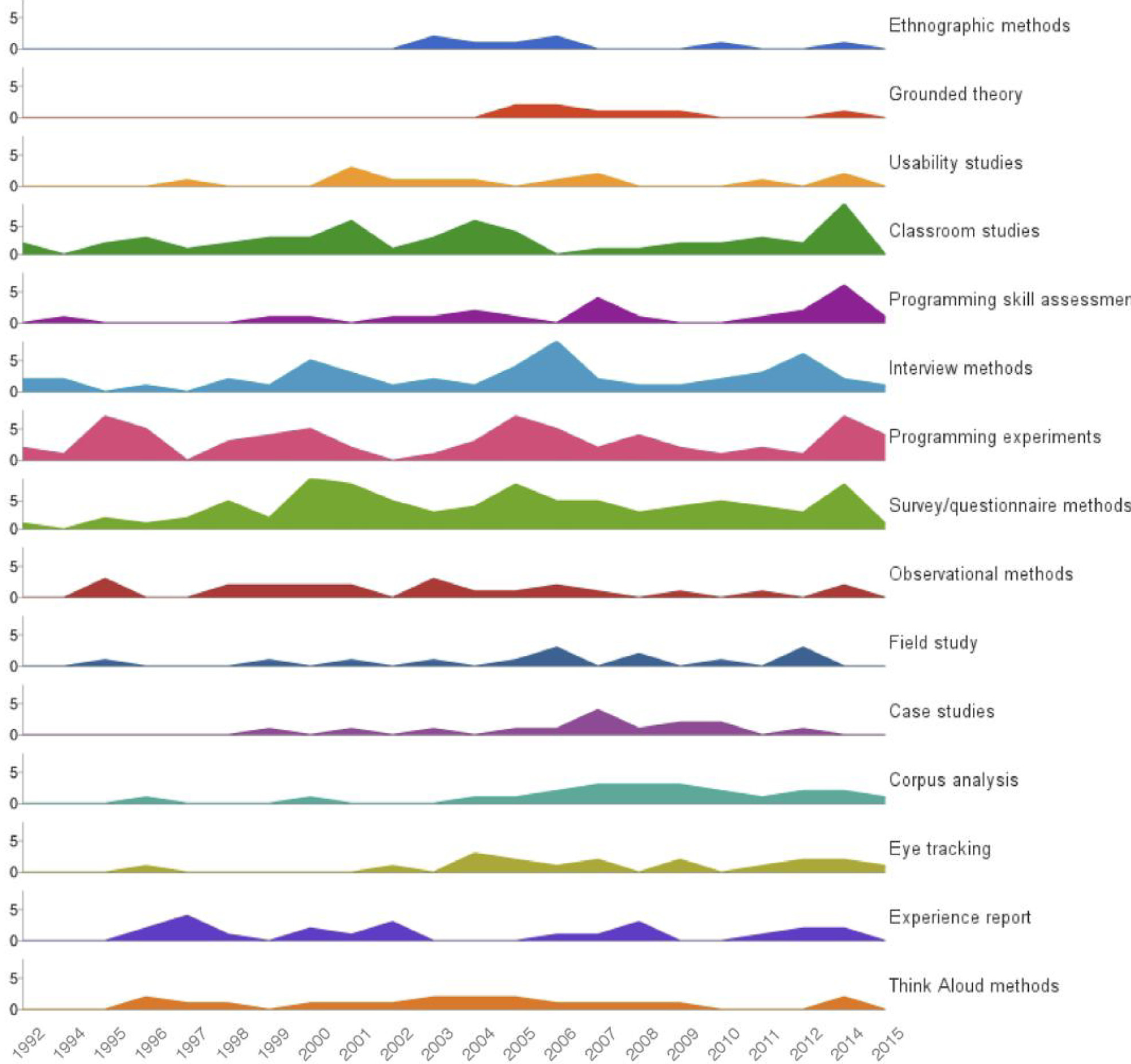 Fig 2: The evolution of empirical techniques within the community, showing a persistence of variety.
Critical Insight: Will AI Kill Programming?
The authors offer a provocative critique of the current AI boom. Many claim we will soon "teach" machines instead of "programming" them. The authors disagree:
- Labeling is Programming: Providing training data for an AI is still a form of "Programming by Example." You are still specifying future behavior.
- The Notation Problem: Even if we use natural language, the struggle for a "perfect language" is a historical trap (the "Search for the Perfect Language"). Human specifications are inherently messy.
- Explainability: If a human doesn't understand how the AI is learning, they cannot "debug" it—reaffirming the need for program visualization research from the 1980s.
Conclusion: Code as Craft
As we look forward, the paper suggests that computer science should embrace a "craft" perspective. Programming is not just math; it is an embodied, socially situated practice. Whether it's a child coding a game or a professional building a neural network, the psychological principles of comprehension, notation use, and attention investment remain the bedrock of the human-computer relationship.
Takeaway for Researchers
Don't reinvent the wheel. Many "new" problems in AI transparency and end-user automation were extensively studied 30 years ago under the guise of Program Comprehension and Visual Languages.