
Beyond Leaderboards: Why Inter-Team Competition is the Secret Sauce for Gamified Crowdsourcing
International Journal of Human - Computer Studies
2023-01-01
Summary
Problem
Method
Results
Takeaways
Abstract
This paper presents a large-scale field experiment investigating how different gamification goal structures—competition, cooperation, and inter-team competition—affect user participation in a crowdsourcing app called ParKing. The study reveals that inter-team competition is the most effective design for increasing perceived enjoyment and actual crowdsourcing contributions, establishing a new SOTA framework for gamified crowdcreation.
## TL;DR
Researchers from Karlsruhe Institute of Technology and Tampere University conducted a field experiment using a custom parking-data app to settle a long-standing debate: Is it better to make users compete or cooperate? The answer is a sophisticated hybrid. **Inter-team competition**—where groups work together to beat other groups—beats pure competition and pure cooperation in both user enjoyment and actual data contribution.
## The Motivation: The "Crowdcreating" Dilemma
Crowdsourcing giants like Wikipedia and Waze rely on the "crowd" to generate value. However, keeping that crowd motivated without direct financial payment is notoriously difficult. Gamification is the go-to solution, yet most designs focus on **individualistic competition** (rankings, badges).
The problem? Pure competition can be cutthroat and demotivating for average users, while pure cooperation can lack the "spark" of a challenge. The authors hypothesized that the magic lies in how we structure **Social Interdependence**.
## Methodology: The ParKing Experiment
The authors built **ParKing**, an AR-based crowdsourcing system for mapping urban parking spots. They divided users into three distinct versions of the game:
1. **Competitive**: Users fight individually to own "hexagons" on a map.
2. **Cooperative**: All users work together to expand a single, shared "realm."
3. **Inter-team Competitive**: Users join teams to conquer territories from opposing factions (similar to *Pokémon Go* or *Ingress*).
### The Core Mechanism
Users earned virtual coins by sharing real-world parking data. These coins allowed them to purchase street segments and build structures. Crucially, they implemented an **output-agreement mechanism**: bonus coins were awarded when one user's data was confirmed by another, ensuring data quality.
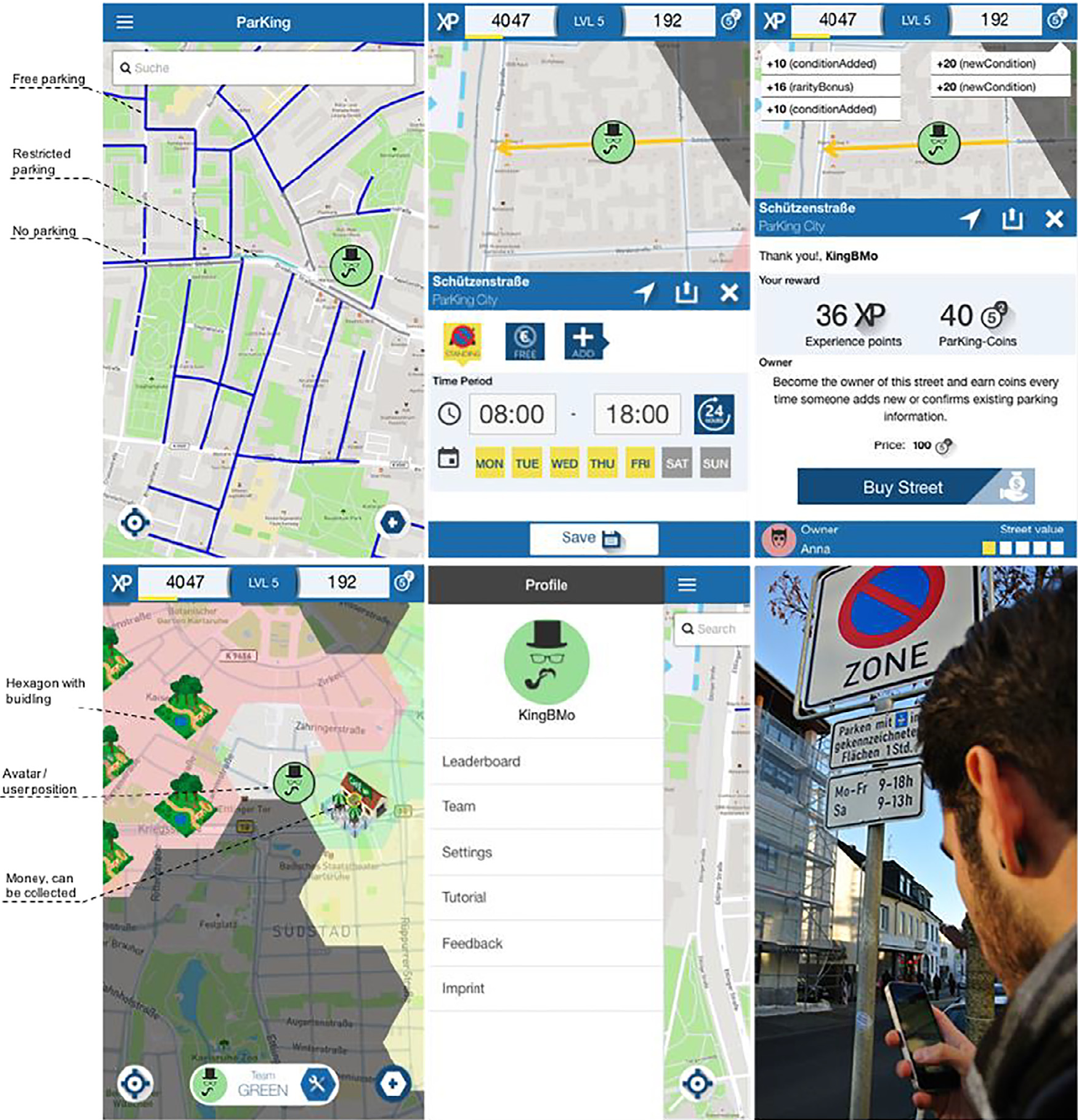
*Figure 1: The ParKing interface showing the AR map and the gamified building mechanics.*
## Deep Dive into Results: Why Inter-Team Wins
The study used **k-sample Anderson-Darling tests** to analyze "heavy-tailed" data (where a few "power users" do most of the work).
### 1. The Enjoyment Factor
Users in the inter-team competition reported the highest levels of **perceived enjoyment**. Why? It satisfies three innate needs: **Competence** (winning matches), **Autonomy** (strategic building), and **Relatedness** (shared team identity).
### 2. Productive Output vs. Time Spent
Interestingly, the *total time* spent in the app was similar across all groups. However, the **density of contribution** was significantly higher in the inter-team mode. Users weren't just "playing" more; they were "contributing" more effectively.
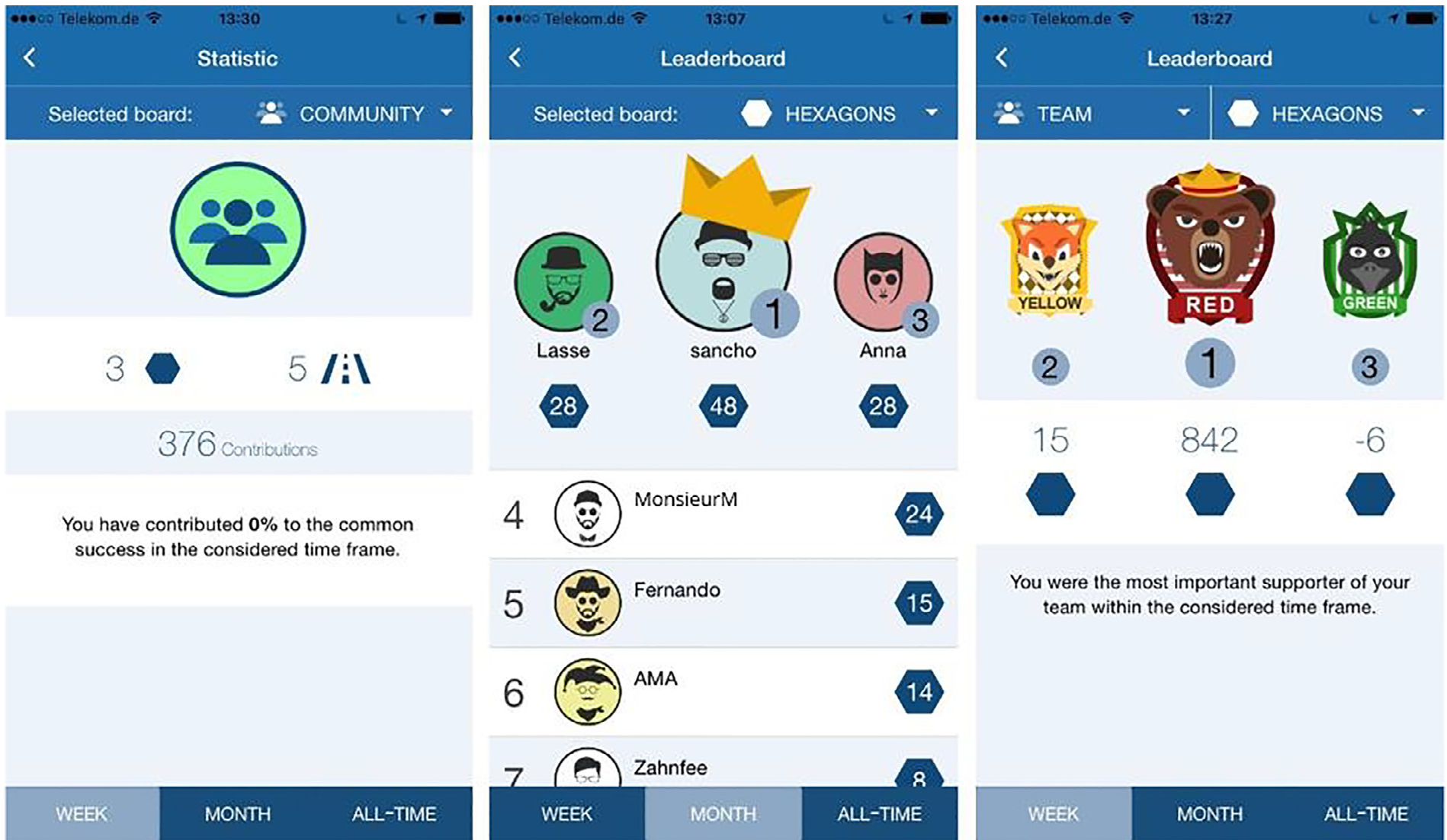
*Figure 2: The feedback shift—from individual rank (left) to team performance (center) to community goals (right).*
### 3. The Referral Advantage
If you want your platform to grow via "Word of Mouth," **avoid pure competition**. The study found that users in competitive modes were *less* likely to recommend the app because more users meant more rivals. Inter-team and cooperative users, however, saw new users as valuable allies.
## Critical Analysis & Takeaways
The genius of inter-team competition is that it **relativizes failure**. In a 1-on-1 ranking, losing feels personal and demotivating. In a team, the "tribal instinct" keeps you engaged even if you aren't the top player.
### Design Guidelines for Tech Leads:
* **Implement Factions**: If your app requires data entry or resource sharing, group users into teams to trigger natural social identification.
* **Specific Goals over "Do Your Best"**: The study noted that vague cooperative goals ("let's all work together") are less effective than specific team challenges.
* **Balance Peer Feedback**: Use leaderboards not just to show who is #1, but to show how the team is contributing to a larger victory.
## Conclusion
This research moves gamification from a "shallow" design of badges and points to a "deep" design of social structures. To build a sustainable crowdsourcing ecosystem, designers must stop treating users as solo players and start treating them as members of a tribe.