
Regulating the Storm: How Cognitive Big Data Analytics Decodes Public Emotion in Emergencies
International Journal of Information Management
This paper proposes a fine-grained sentiment computing framework based on cognitive big data analytics to investigate how government information release (GIR) strategies influence the contagion-evolution of negative emotions during public emergencies. Using a hybrid deep learning approach (Word2Vec + LSTM) and dependency parsing, the study demonstrates that current GIR strategies often fail to regulate anxiety and disgust effectively due to systemic delays and lack of transparency.
TL;DR
In the wake of public emergencies, the speed and quality of government communication can either quench or fuel the fire of public anxiety. This research introduces a sophisticated cognitive big data framework to compute fine-grained emotions (Anxiety, Disgust, Hope, Happiness) from social media. By analyzing landmark Chinese incidents like the "Brother Watch" scandal, the authors prove that current government information release (GIR) strategies are often too slow and opaque, failing to mitigate negative emotional contagion.
Background: The Gap in Crisis Communication
When a crisis hits, the public doesn't just consume information; they react emotionally. Previous research in Information Systems (IS) has largely focused on the flow of information while ignoring the evolution of sentiment. Scholars Wei Zhang, Meng Wang, and Yan-chun Zhu argue that without a quantitative understanding of whether the public is feeling "anxious" versus "disgusted," government responses remain "descriptive and speculative," lacking the precision needed for modern social governance.
Methodology: Beyond Simple Sentiment Polarity
The core innovation of this paper lies in its hybrid approach to fine-grained sentiment classification. Instead of just labeling a post as "negative," the authors break down the "How" and "Why" of emotional intensity.
1. Lexicon Construction & Word2Vec
The researchers didn't rely on generic dictionaries. They used Word2Vec to generate word vectors from a massive corpus of Microblog (Weibo) posts, extending a benchmark emotional lexicon to 4,573 specific terms through the SO-PMI algorithm. This ensures the model understands the specific "slang" and context of crisis-related discourse.
2. Dependency-Based Emotion Computing
The study introduces an Emotion Binary Tree. By using dependency parsing (via the LTP platform), the model identifies the relationship between subjects, verbs, and emotional modifiers (e.g., "very" vs. "not").
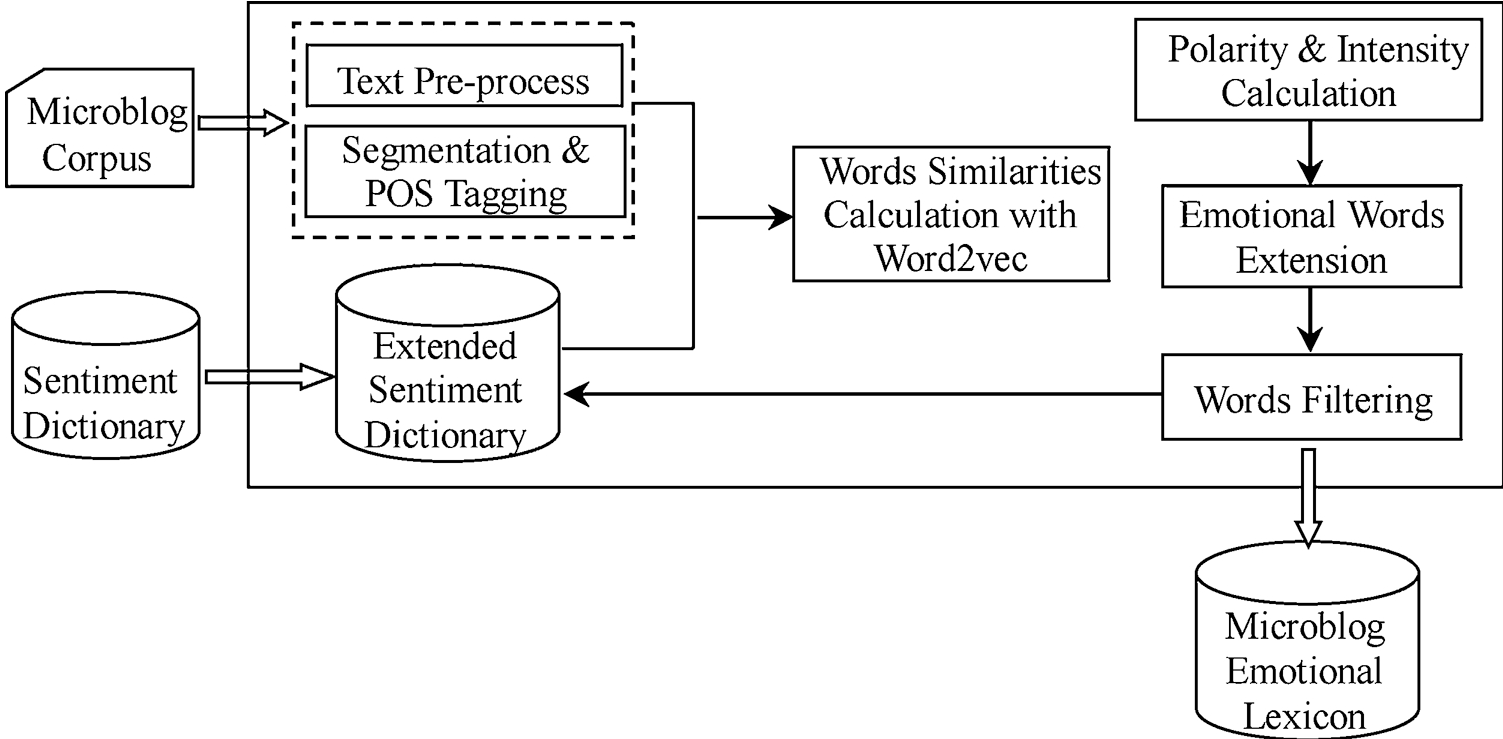 Figure 1: The iterative process for building a domain-specific Microblog emotional lexicon.
3. The Hybrid Neural Network (LSTM + ANN)
The "Model II" architecture is particularly clever: it takes the raw word vector sequence (via LSTM) and concatenates it with the calculated "emotion value" (via a fully connected ANN). This allows the deep learning model to benefit from both latent semantic features and explicit linguistic rules.
Experimental Results: A Significant Performance Leap
The authors compared their hybrid model against traditional baselines. The results were clear:
- Baseline (Model I - Word Vectors Only): 50.64% Accuracy.
- Proposed (Model II - Vectors + Emotion Values): 74.13% Accuracy.
This 23.5% jump demonstrates that "teaching" a neural network the linguistic rules of emotion significantly aids in understanding short, noisy social media posts.
 Table: Comparison of Model II against Artificial Neural Networks (ANN) and Naïve Bayes (NB).
Empirical Insight: The "Brother Watch" Case Study
The researchers applied their model to the "Brother Watch" incident (where an official was caught smiling at an accident site wearing expensive watches). They mapped the Netizen Emotion Index across six phases (Brewing, Outbreak, Diffusion, Fluctuation, Dissipation, and Long-tail).
The findings were a wake-up call for policy makers:
- Timeliness & Transparency: Governments often wait for "media evidence" before responding (Brewing Phase), missing the golden window for emotional regulation.
- The Negative Impact: Regression analysis showed that failures in department coordination and accuracy had a significant negative impact on the contagion of anxiety and disgust.
- Positive Sentiment Neutrality: Interestingly, GIR strategies had almost no effect on increasing "Hope" or "Happiness," suggesting that in a crisis, the government's role is primarily damage control of negative emotions rather than positive promotion.
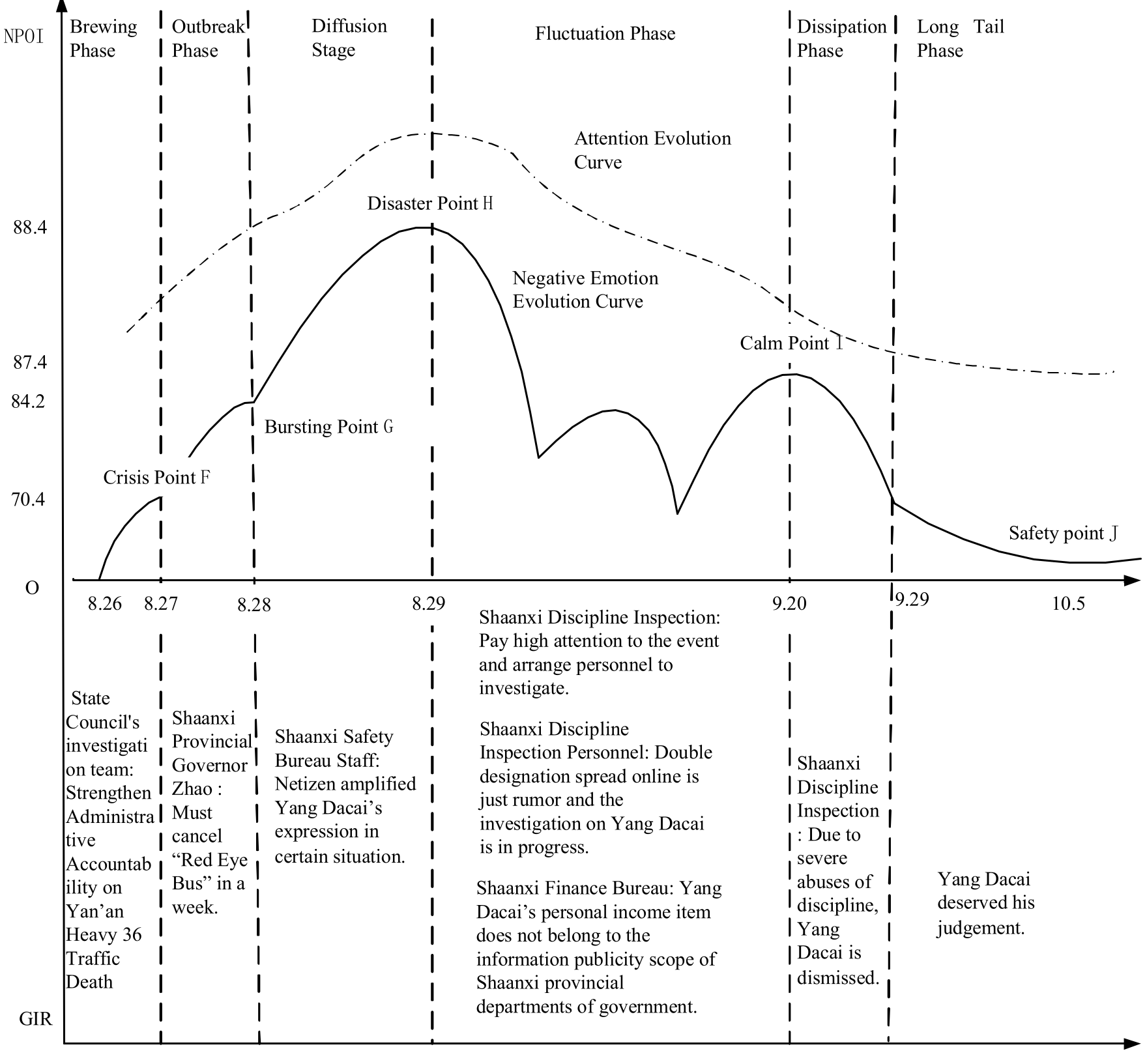 Figure 2: The trajectory of negative emotions relative to government intervention points.
Critical Analysis & Conclusion
Takeaway
The paper successfully demonstrates that fine-grained sentiment is a more accurate "thermometer" for societal health than simple keyword counts. For government agencies, the takeaway is clear: you cannot manage what you do not measure. A big-data-driven "GIR mechanism" is no longer optional; it is a fundamental requirement for social stability.
Limitations
While the technical model is robust, the study relies on older cases (pre-2016). The evolution of internet culture and the rise of algorithmic feeds (like ByteDance/TikTok) might slightly alter the "contagion" dynamics compared to the traditional BBS/Microblog era analyzed here.
Future Outlook
Future research should look into Agent-Based Modeling (ABM) to simulate how specific "rhetorical devices" in a government tweet might trigger different emotional branches in a virtual population. As AI continues to evolve, the bridge between cognitive linguistics and crisis management will only grow stronger.