
GAMIFY-SN: Bridging the Gap Between Social Networks and Educational Gamification
International Journal of Information Management
This paper introduces GAMIFY-SN, a systematic meta-process designed to help educators plan and deploy gamification strategies integrated with Social Network Sites (SNS). It bridges the gap between theoretical game design and practical classroom application, achieving high student acceptance in a SOTA-informed educational framework.
TL;DR
Gamification in education is often a "black box" for teachers. GAMIFY-SN is a new meta-process that provides a structured roadmap for instructors to turn traditional lesson plans into social, gamified experiences. In a real-world programming course, it successfully boosted student interaction, but also highlighted a critical "bottleneck": the immense manual effort required by teachers to keep the "game" running.
The "Implementation Gap" in Gamification
We know gamification works—the dopamine hit of a leaderboard or a badge is a proven motivator. However, the literature reveals a harsh reality: educators often find these systems too complex to build and too exhausting to maintain.
The authors identify three fatal flaws in prior work:
- Resource Scarcity: Teachers aren't game designers; they don't have the time to "balance" a game.
- Lack of Systematics: Most gamification is "ad-hoc," lacking a rigorous link between learning objectives and game mechanics.
- The Social Silo: There are few formal ways to leverage existing Social Network Sites (SNS) like Facebook or Twitter for structured learning tasks.
Methodology: The "Gamified Task" Framework
The core innovation of GAMIFY-SN is the Gamified Task model. It breaks down a classroom activity into four distinct layers:
- Instructional Objective: What should they learn? (e.g., Input/Output commands)
- Social Resource: Which SNS feature will host it? (e.g., a Forum post or Status Update)
- Game Property: The interaction logic (e.g., Competition vs. Cooperation).
- Game Feedback: The reward (e.g., Points, Levels, or Trophies).

By decoupling the learning from the playing, teachers can swap out game elements (like trading a leaderboard for a quest) without destroying the educational value of the lesson.
The Case Study: Learning to Code on Facebook
The authors tested GAMIFY-SN in an undergraduate programming course.
- The Workflow: Students used a Facebook group to submit code. The first to answer correctly gained points, leading to level-ups and skills.
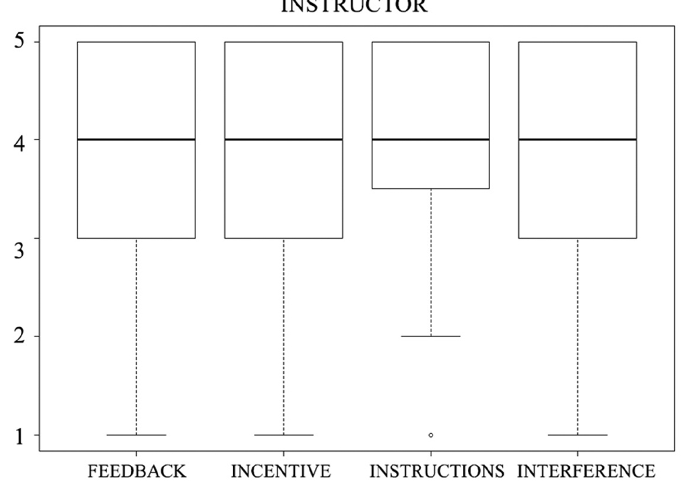
- Student Sentiment: High acceptance of the Progression System (Levels/XP).
- The Correlation: Interestingly, the "Level System" wasn't what made the students happy—it was the Instructor Feedback (ρ = 0.74). The game was merely a vehicle for more frequent communication between the teacher and the student.
Critical Insight: The "1,600 Exercise" Problem
While the students loved the system, the instructors were exhausted. In the case study, the game mechanics required managing 1,600 individual exercises to keep 40 students engaged.
This is the "Scaling Wall" of gamification. Without automation, a successful gamified course is a victim of its own success—the more students participate, the more "labor" the teacher must perform to grant XP, update leaderboards, and explain rules.
Conclusion & Future Outlook
GAMIFY-SN proves that the instructor is the most important "game mechanic." The framework is a significant step toward making gamification accessible, but its reliance on manual management is a limitation.
The next frontier? Data-driven gamification. We need systems that use AI to automate the feedback loop, allowing the teacher to focus on teaching while the "meta-process" handles the points, levels, and social coordination.
Takeaway for Educators: If you gamify your class, prioritize Progression (Levels/XP) over Competition (Leaderboards), as students often find public rankings demotivating, but they love seeing their own growth.