
Beyond Satisfaction: Why Regret and Self-Identity Are the Real Drivers of SNS Habit
International Journal of Information Management
This paper introduces an integrated research model to explain the continued use of Social Network Sites (SNS) by incorporating alternative-oriented (Regret) and self-oriented (Self-image Congruity) perspectives alongside the traditional target-oriented approach. Utilizing long-term survey data from Cyworld users, the study demonstrates that regret significantly hinders habit formation, while self-image congruity fosters it, achieving a comprehensive understanding of both conscious and automatic usage mechanisms.
TL;DR
Why do we stay on some social networks out of habit, while others lose our interest overnight? This paper argues that traditional "satisfaction" is only part of the story. By introducing Regret (alternative-oriented) and Self-image Congruity (self-oriented) into the IS Continuance model, the authors reveal that our social media habits are kept alive by how well a platform reflects our identity and are systematically destroyed when we perceive a rival app is performing better.
The Missing Pieces in the Habit Puzzle
For years, the academic gold standard for understanding technology use was the Expectation-Confirmation Model (ECM). It’s a target-oriented view: if the app meets your expectations, you are satisfied; if you are satisfied, you keep using it.
However, the authors point out two critical blind spots in this logic within the SNS context:
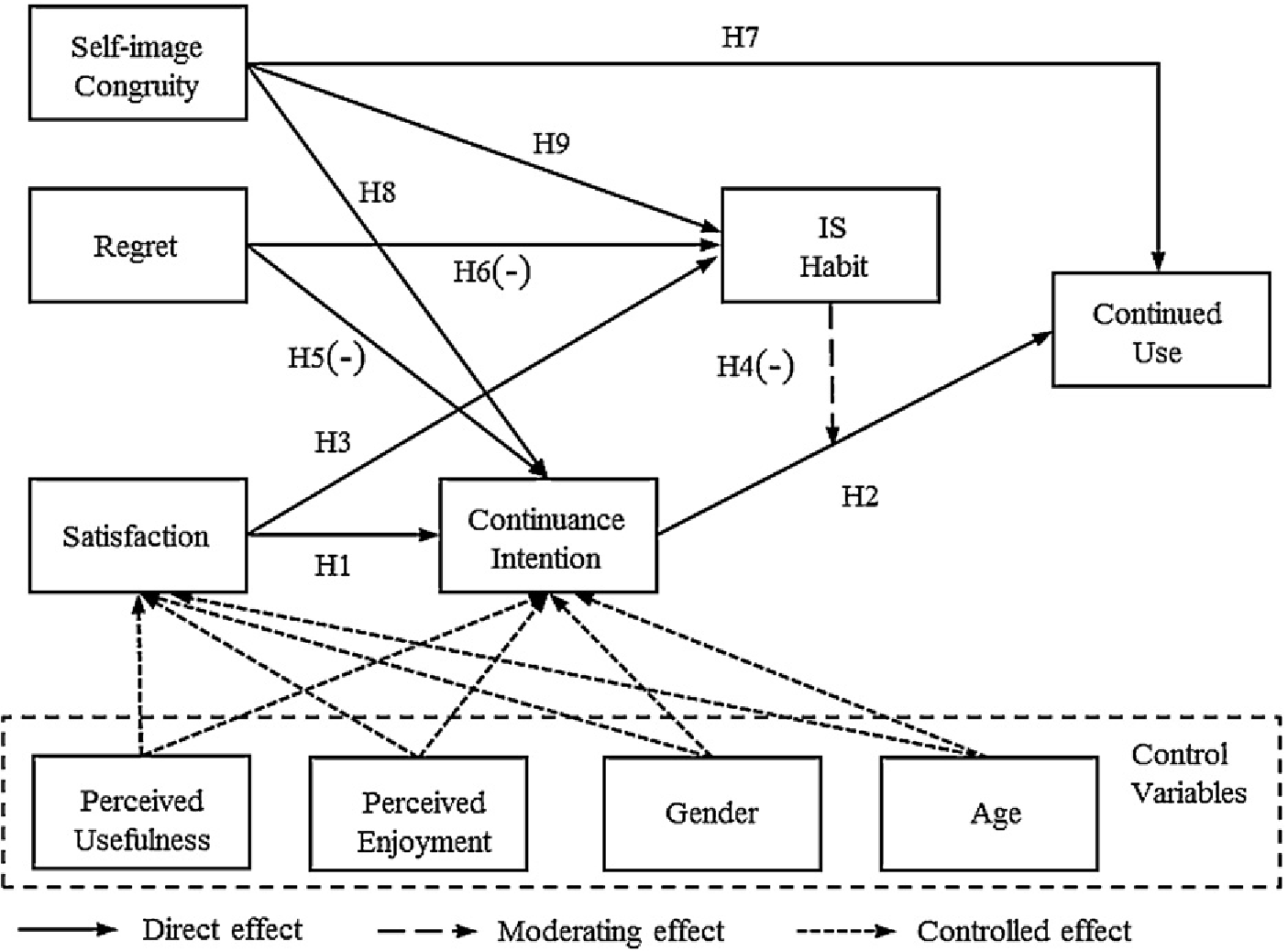
- The Ghost of Choices Past (Regret): Unlike a mandatory office ERP system, you choose your social media. If Facebook adds a feature that your current platform lacks, you experience "decision regret."
- The Digital Mirror (Self-image Congruity): SNS are tools for self-expression. We don't just use them for utility; we use them to "type ourselves into being" via profiles and avatars.
Methodology: The Reference-Based Framework
The researchers didn't just look at what people intended to do; they tracked actual behavior over a month using a two-round survey of Cyworld users (a major Korean SNS). They mapped three distinct reference points:
- Target (Satisfaction): Did the app do what it promised?
- Alternatives (Regret): Is the "grass greener" on another platform?
- Self (Congruity): Does using this app feel like "me"?
Key Insight: What Breaks a Habit?
The most fascinating finding involves the automaticity of habits.
- Habit as a Buffer: The study found that once a habit is strong, your intentions matter less. You find yourself opening the app without even thinking.
- The Habit Breaker: Regret is the "emergency brake" for automatic behavior. When you feel regret because a rival service is better, it forces your brain out of "autopilot mode" and back into "active thinking." This deliberation breaks the habit loop.
- The Habit Builder: Self-image congruity functions as an "abstract scheme." Because it aligns with your core identity, processing the app becomes effortless and rapid—the perfect breeding ground for long-term habits.
Results & Visual Evidence
The structural equation modeling (PLS) showed that while perceived usefulness and enjoyment are important, Regret had a surprisingly powerful negative effect on intentions, even stronger than some traditional positive drivers.
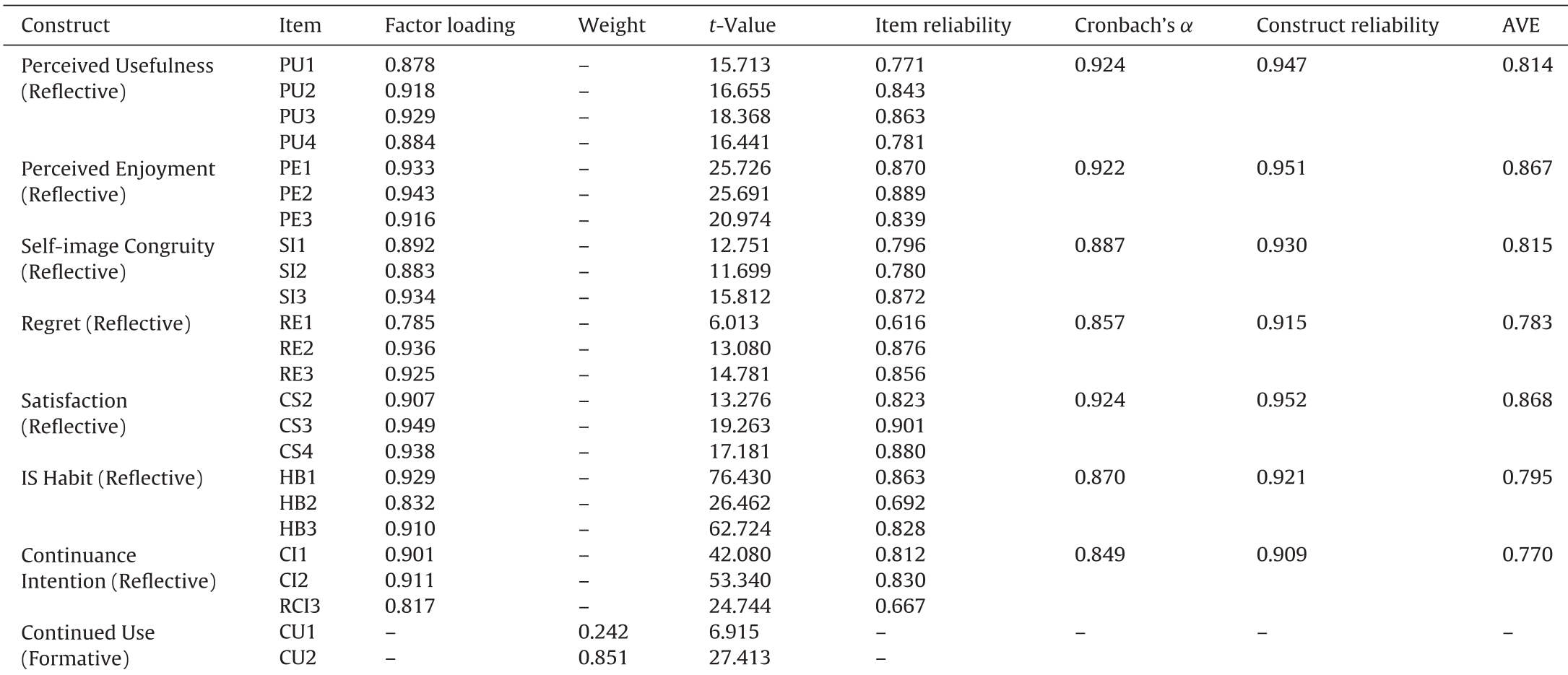
Table: Note the high factor loadings for Self-image Congruity (SI) and IS Habit (HB), validating the strong link between identity and automaticity.
Critical Analysis & Takeaways
This work shifts the focus from "User vs. System" to a more holistic "User vs. Market vs. Self."
Theoretical Value: It provides a rare look at how habits break. Most IS research focuses on how habits form, but understanding the "mode switch" from automatic to conscious processing via Regret is a major academic contribution.
Practical Implication:
- For Product Managers: Don't just focus on your own features. Monitor "Revolutionary" phases of competitors. If the performance gap grows too wide, your users' habits will break, and they will start "thinking" about leaving.
- For Designers: "Personalization" isn't just a feature—it's a retention strategy. The more a user can reflect their Ideal Self through your platform, the more "effortless" (habitual) their return visits become.
Limitations: The study was conducted on a specific demographic (Korean students) and a specific platform (Cyworld). Future research should verify if these identity-habit links hold true in anonymous spaces like Reddit or fast-paced video platforms like TikTok.