
Beyond Satisfaction: The Secret Sauce of Facebook Loyalty is Well-Being
International Journal of Information Management
This study investigates the drivers of user subjective well-being and loyalty on social network sites (SNSs) like Facebook by integrating Network Externality Theory and Social Identity Theory. The research establishes a comprehensive model identifying how network attributes (size, prestige, compatibility, and complementarity) influence satisfaction and social identification to secure long-term user retention.
TL;DR
Why do we stay on Facebook even when we claim to "hate" it? This study reveals that loyalty isn't just about the number of friends you have (Network Size) or how well it works (Satisfaction). Instead, true loyalty is driven by Subjective Well-being—the happiness derived from your online social life—and Social Identification. Surprisingly, as networks grow too large, our sense of belonging actually decreases, suggesting that quality of interaction beats quantity every time.
Background: The MySpace Ghost
In the fast-paced world of Social Network Sites (SNS), today’s giant can become tomorrow’s footnote—as seen with the rapid decline of MySpace. For platform managers, the holy grail is Loyalty. While previous research focused on "Satisfaction" (Expectancy Disconfirmation Theory), this paper argues that satisfaction is no longer enough. To truly lock in users, platforms must address the user's psychological state: their sense of identity and their overall well-being.
Why Loyalty is Complex: The Problem with Growth
The authors identify a critical gap: as SNSs become more pervasive, the role of Network Externalities (the value gained as more people use a service) becomes dominant. However, we don't know exactly how these external factors translate into internal feelings of happiness and a "commitment to stay."
Methodology: The Research Model
The study proposes a structural model that bifurcates the user experience into two paths:
- The Identity Path: Driven by Network Size and External Prestige.
- The Satisfaction Path: Driven by Compatibility (how it fits your life) and Complementarity (extra tools like games and fan pages).
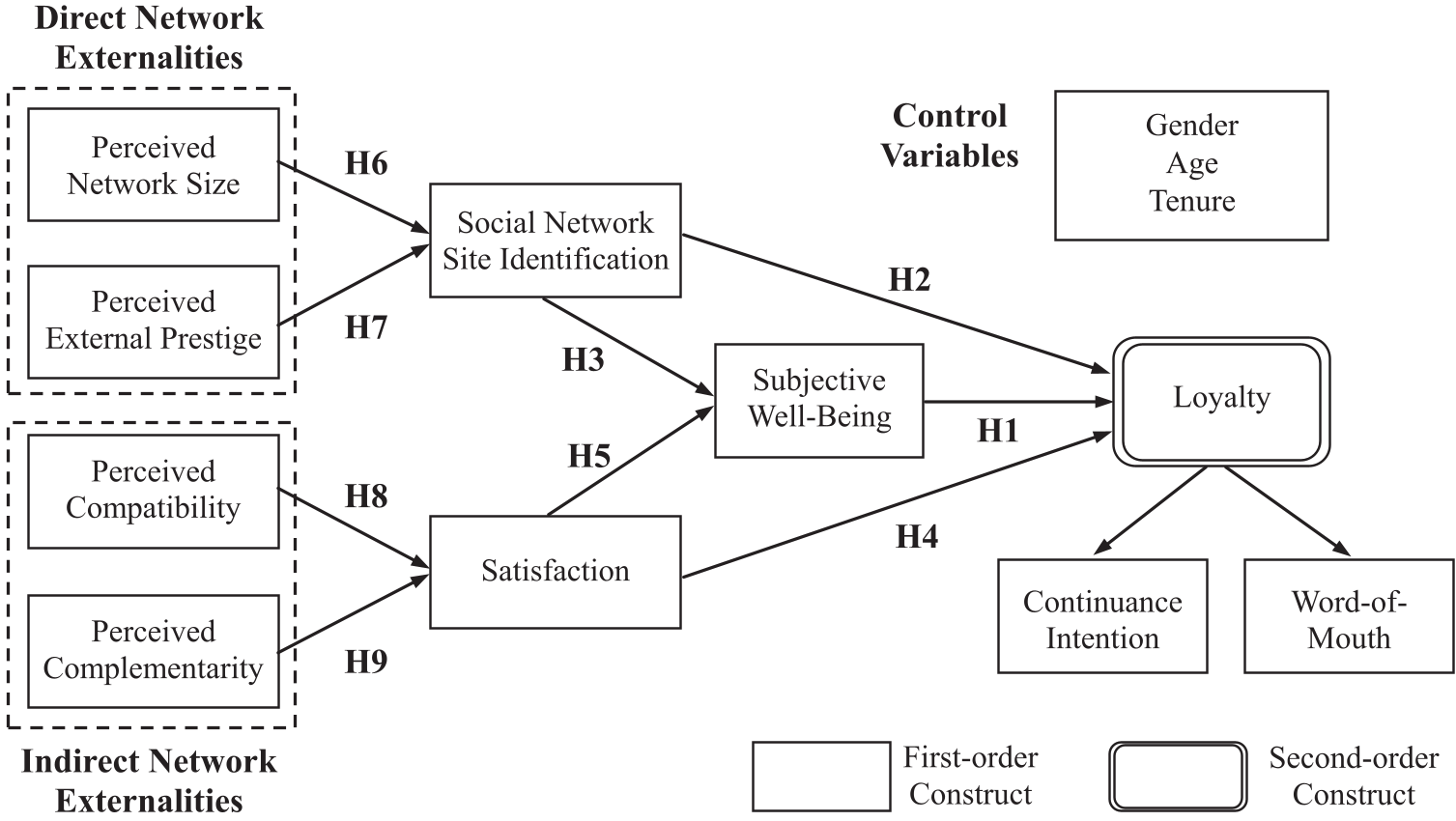
The researchers surveyed 615 Facebook users in Taiwan, utilizing Partial Least Squares (PLS) to analyze the complex relationships between these variables.
The "Size Paradox" and Other Key Findings
The results provided a shock to traditional economic theory:
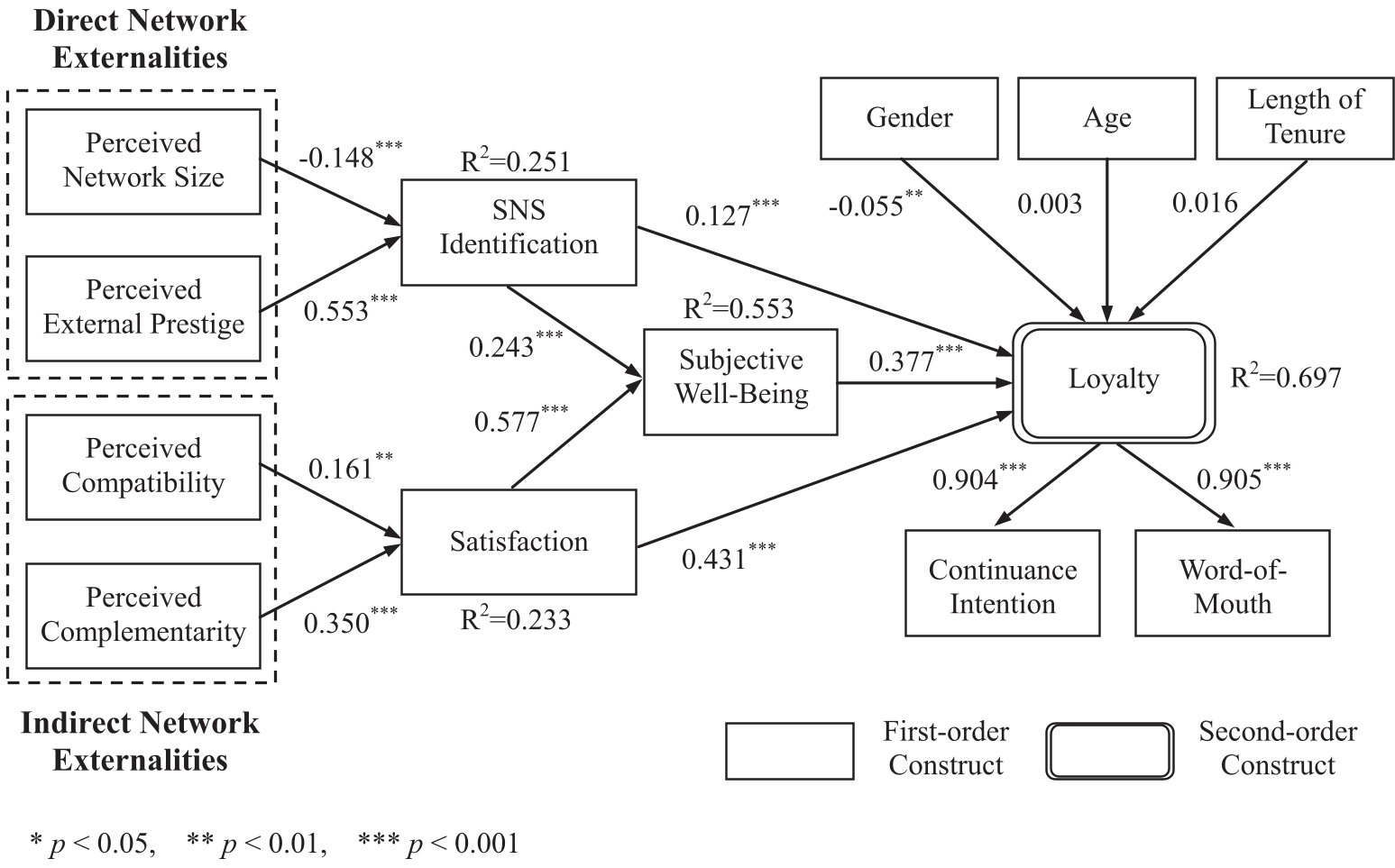
- The Paradox of Network Size: Contrary to the belief that "bigger is always better," perceived network size negatively impacted SNS identification. The intuition? As a network grows massive, the quality of ties erodes. We have 500 "friends" but only 2 people to call in a crisis. This "erosion of quality" makes users feel less connected to the platform as a community.
- The Power of Prestige: While size might hurt identity, External Prestige (how the world views Facebook) helps it. Users feel "reflected glory" when they belong to a prestigious group.
- Complementarity > Compatibility: Users care more about the extra stuff—games, photo sharing, and social activities—than they do about how well Facebook syncs with their other apps.
- The Spillover Effect: Satisfaction with the app's functions "spills over" into a user's social happiness (Subjective Well-being).
Critical Insight: The Loyalty Stack
The study confirms that Satisfaction (β = 0.431) and Subjective Well-being (β = 0.377) are the two most powerful drivers of loyalty.
- Satisfaction keeps you using the tools.
- Well-being keeps you connected to the people.
- SNS Identification creates an emotional anchor that prevents switching to a competitor.
Future Outlook & Industry Impact
For product managers and founders, the message is clear: Stop chasing raw user counts at the expense of community intimacy.
To build "The Next Facebook" (or save the current one), you must:
- Enhance Complementarity: Focus on value-added tools that facilitate meaningful social interaction (like the "video calling" or "recommendation systems" suggested in the paper).
- Manage Prestige: Ethical standards and social responsibility aren't just PR; they directly influence whether users identify with your brand.
- Prioritize Well-being: Tracking "Time Spent" is a vanity metric. The real metric is "Social Happiness"—if users feel their life is better because of your platform, they will never leave.
Conclusion
This study bridges the gap between cold economics (Network Externalities) and warm psychology (Social Identity). It proves that in the digital age, loyalty is not bought with features alone, but earned through the enhancement of the user’s subjective sense of self and social well-being.