
Empowering Teams: The Hidden Synergy Between Social Ties and Transactive Memory
International Journal of Information Management
This study develops a model exploring how instrumental and expressive social network ties empower teams through the Transactive Memory System (TMS) and team efficacy. Using data from 66 Chinese organizations, the authors demonstrate that social ties facilitate the development of specialization, credibility, and coordination, which significantly enhance team performance.
TL;DR
A high-performing team isn't just a collection of experts; it's a social network that knows how to tap into its collective brain. This study reveals that instrumental ties (work advice) and expressive ties (friendships) build a Transactive Memory System (TMS). Crucially, this system only maximizes performance when it fosters Team Efficacy—the shared belief that the group can actually get the job done.
The "Black Box" of Team Performance
In modern organizations, the "lone wolf" is extinct. Success depends on knowledge coordination. However, previous research has struggled to explain how relationships turn into results. Does being friends with a colleague make you better at work, or just happier?
The authors argue that the missing link is the Transactive Memory System (TMS). Think of TMS as a "collective hard drive" where every member knows who holds which files. But a hard drive is useless without the power to run it—that power is Team Efficacy.
Understanding the Social Fabric: Instrumental vs. Expressive
The study breaks down social connections into two categories:
- Instrumental Ties: Focused on "how do I do this task?" They are utilitarian pathways for information and technical assistance.
- Expressive Ties: Focused on "how are you feeling?" These affect-based ties provide emotional support and a sense of belonging.
The Research Model
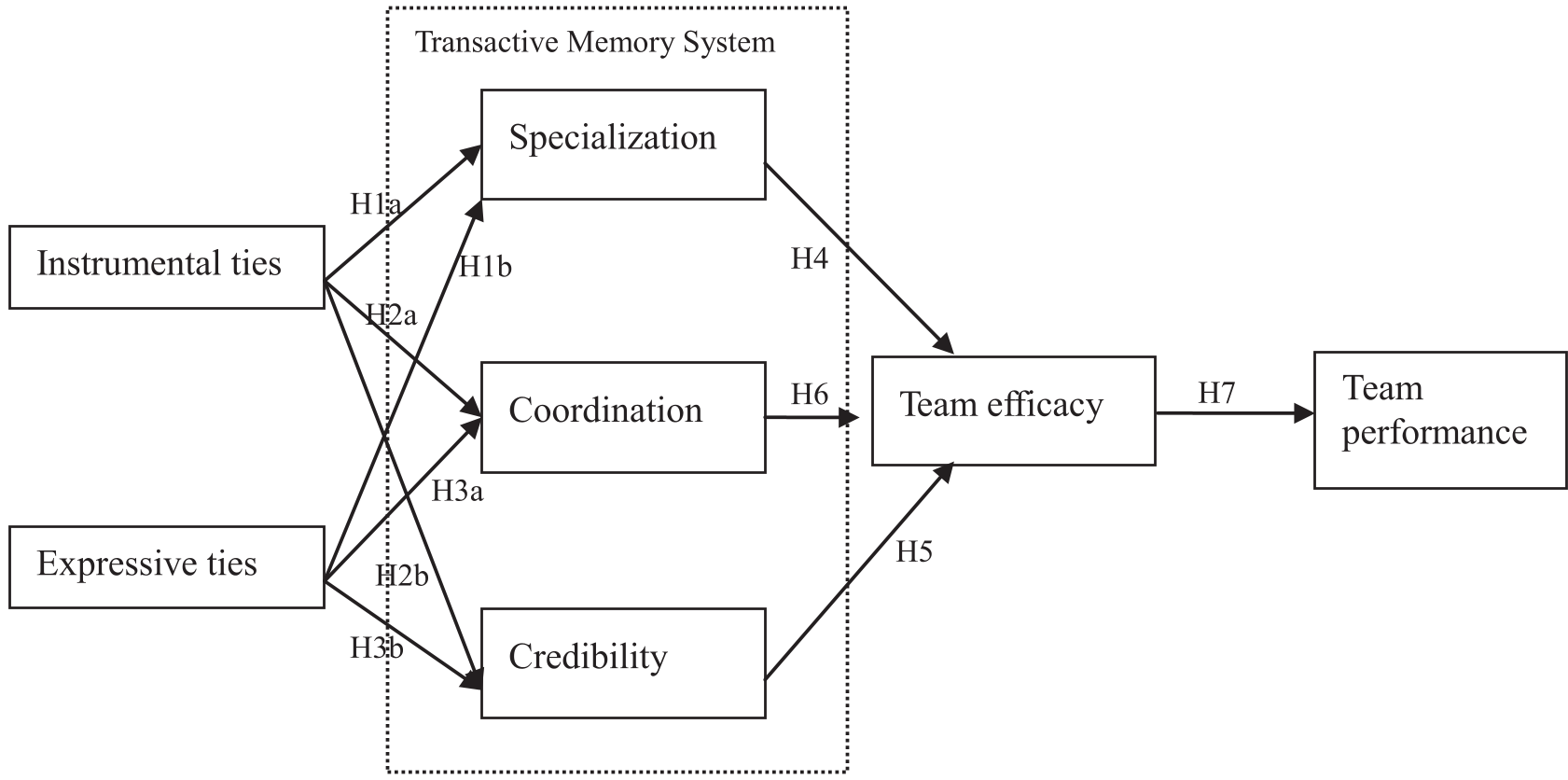
The authors propose that these ties are inputs that feed into the three dimensions of TMS:
- Specialization: Awareness of "who knows what."
- Credibility: Trusting that the "expert" is actually reliable.
- Coordination: The behavioral ease of working together.
Key Findings: Why Friendships Matter for Credibility
Through a PLS (Partial Least Squares) analysis of 66 teams, the study yielded surprising insights:
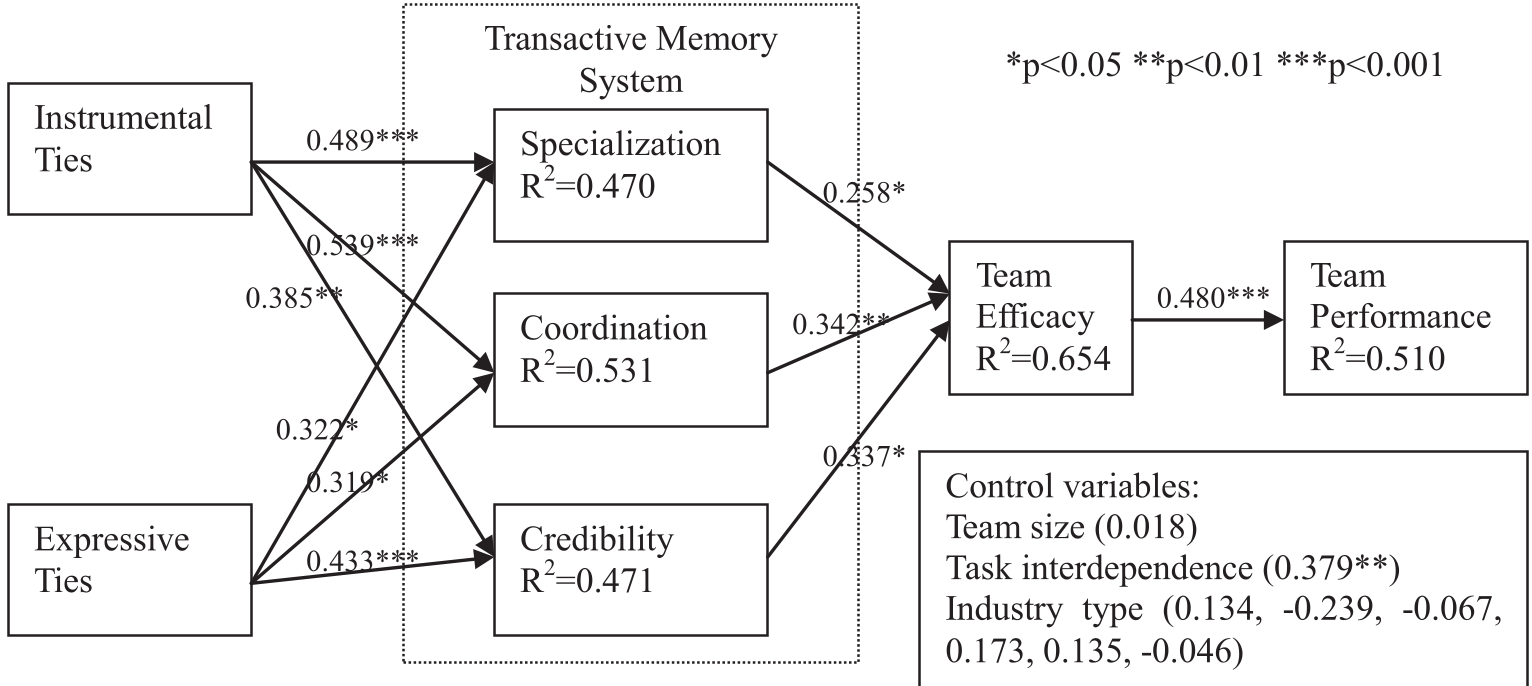
- Instrumental Ties for Logic: Work-related contacts are the best for building Specialization and Coordination. If you talk shop, you figure out the workflow.
- Expressive Ties for Trust: Friendships have a significantly stronger impact on Credibility. Even if someone is a genius, you are more likely to trust their data if you have a social bond with them.
- The Power of Efficacy: All three TMS dimensions lead to higher team efficacy. If we know where the knowledge is and we trust each other, we feel "unbeatable."
SOTA Comparison: Mediating Results
The study is one of the first to prove that TMS doesn't just "improve performance"—it changes the team's psychology.
| Independent Variable | Mediator | Dependent Variable | Result |
|---|---|---|---|
| Specialization | Team Efficacy | Performance | Partial Mediation |
| Coordination | Team Efficacy | Performance | Full Mediation |
| Credibility | Team Efficacy | Performance | Partial Mediation |
Note: Coordination was so powerful that it only influenced performance by boosting the team's collective confidence.
Critical Insights for Managers
- Don't Just Build Databases: Knowledge Management Systems (KMS) are great, but "personalized searches"—knowing your teammate’s secret skills through conversation—are often more effective.
- Dinner is a Business Expense: Get-together dinners and sightseeing aren't just "fun"; they build the Expressive Ties that make Credibility possible.
- Task Interdependence is Glue: The study found that teams that have to work together (high interdependence) perform better because the social ties become "activated."
Conclusion & Future Outlook
This research bridges the gap between social network theory and knowledge management. It proves that a team’s performance is limited by its "motivational state." Even a team of geniuses will fail if they lack a Transactive Memory System or the Efficacy to use it.
Future Work: As work moves to the Metaverse and remote settings, how do we build "Expressive Ties" without the office water cooler? This remains the next frontier for team research.