
Towards Sustainable Collaborative Networks: Re-Engineering Smart City Co-Governance
International Journal of Information Management
This paper introduces an analytical recommender framework for Sustainable Collaborative Networks (SCN) in smart city co-governance. It utilizes an ethnographic mixed-method approach, combining qualitative "smart factors" with quantitative graph theory "smart indicators" to optimize organizational structures for resilience and efficiency.
TL;DR
Governing a smart city isn't just about deploying IoT sensors; it's about managing the "human infrastructure." This paper presents an analytical framework that uses Graph Theory and Ethnographic Research to recommend the best organizational structures for sustainable collaboration. By balancing Robustness, Flexibility, and Efficiency, the authors provide a roadmap for cities to endure crises and optimize daily governance through data-driven organizational design.
The Background: Why Governance Fails in "Smart" Cities
Many smart city initiatives fail because they treat governance as a purely technical or bureaucratic challenge. The authors argue that a city is a "complex social organism." Existing models often fail to account for the structural dynamics of how different stakeholders—government agencies, NGOs, and citizens—actually interact. The pain point is clear: we lack a way to quantify whether a collaboration network is actually "fit for purpose" or just a mess of redundant power chains.
Methodology: The Socio-Technical Blueprint
The research employs a Micro/Macro Ethnographic Mixed Method. It bridges the gap between the "Why" (Qualitative) and the "How much" (Quantitative).
1. The Three Pillars of Performance
The paper defines three "Smart Factors" used to judge a network:
- Robustness (R): The capacity to resist failure and face risks.
- Flexibility (F): The ability to reassign roles to cope with changing tasks.
- Efficiency (E): Managing resources (human and data) with minimal waste.
2. Relational Dimensions
The authors model the network using three types of directed edges:
- Power: Task delegation and obligations.
- Control: Monitoring and recovery functions.
- Coordination: Knowledge and information flow.
3. The Recommender Framework
The system operates in two modes:
- OC Construction: Predictive modeling at design time to suggest the best initial structure.
- OC Monitoring: Real-time analysis at run-point to suggest modifications (e.g., removing a redundant control link to boost efficiency).
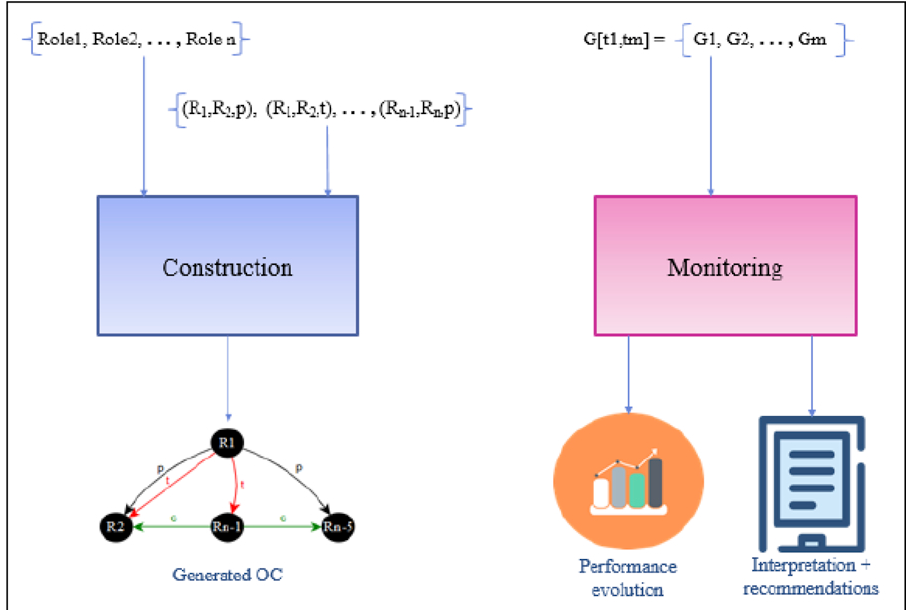 Fig 1: The SCN Recommender Framework Architecture.
Experimental Evidence: Crisis and Coordination
The framework was tested against a real-world disaster: Hurricane Charley (Florida, 2004).
Key Insights from the Data:
- The "Trilemma": You cannot maximize all three factors at once. For instance, increasing links improves Robustness but usually hurts Efficiency.
- The Power of Coordination: Experimental results showed that "Coordination Structures" (the green arcs in their models) are the single most important factor for network health. Removing coordination links tanked the "Configuration Rank" much faster than removing Power or Control links.
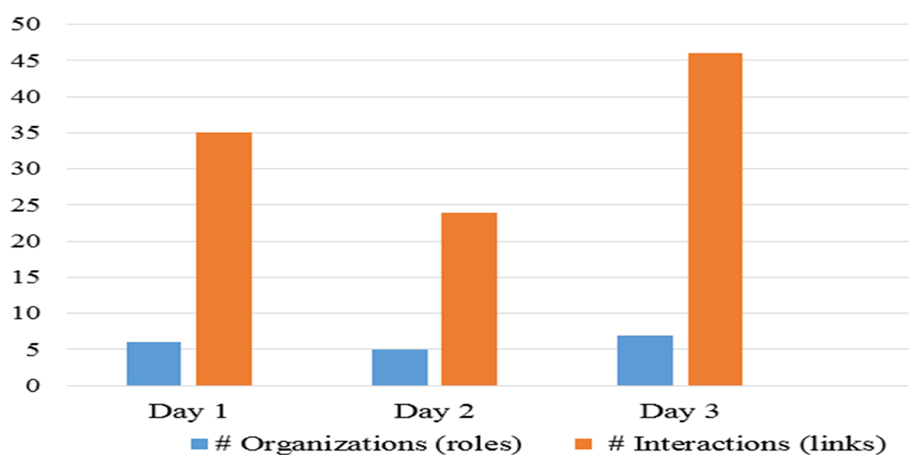 Fig 2: Evolution of OC Ranks during Hurricane Frances, showing the vital impact of coordination.
Critical Analysis & Takeaways
This work shifts the smart city conversation from "technology-centric" to "organization-centric."
Core Insight: The authors empirically suggest that smart cities should move away from rigid, top-down bureaucratic hierarchies (high Power/Control) toward Dynamic Collaborative Networks.
Limitations:
While the structural graph-based approach is mathematically rigorous, it assumes that nodes (people/orgs) behave predictably. Future work needs to integrate Social Proximity and human emotions—since a citizen's motivation to participate in a network is more volatile than a programmed agent's.
Conclusion
The path to a sustainable smart city lies in the ability to pivot organizational structures as quickly as the environment changes. By treating governance as a dynamic graph that can be optimized for rank and performance, city leaders can build truly resilient urban ecosystems.