
Decentralizing Privacy: Shifting Data Stewardship from Platforms to Users
International Journal of Information Management
This paper proposes a decentralized conceptual design for the stewardship of personal data on social networking sites (SNS), utilizing principles of Distributed Computing and Separation of Concerns (SoC). The method shifts data control from platforms to users via a three-layer architecture (Shim, Storage, Processing), effectively achieving a "privacy-by-design" framework where data analysis occurs on the user-side.
TL;DR
Social Networking Sites (SNS) currently operate on an extractive model where user data is centralized and exploited, leading to major privacy risks and power imbalances. This paper introduces a decentralized conceptual design that flips the script: data stays with the user. By utilizing a three-layer architecture (Shim, Storage, and Processing), the authors demonstrate how we can achieve complex social networking and analytics without users ever surrendering their raw personal data to a central "Honey-pot."
The Core Problem: The Power Asymmetry
In the current Information Management (IM) landscape, users are often forced into a binary "accept or reject" relationship with Terms of Service (ToS). Existing work highlights three critical failures:
- Lack of Legibility: Users cannot discern how their data is aggregated or analyzed.
- Zero Agency: Users have no way to influence data collection mechanisms once they join a platform.
- The Honey-pot Risk: Centralized storage makes organizations a prime target for data breaches, turning personal data into a corporate liability.
The authors argue that platforms like Facebook and Twitter have become "monolithic silos" that fail to respect the multi-faceted nature of human identity—forcing users to create multiple "dummy" accounts just to separate their professional and personal lives.
Methodology: High-Level Conceptual Design
The authors adopt a Design Science approach focused on "Separation of Concerns" (SoC). Instead of one platform doing everything, the system is broken down into modular layers:
1. The Architecture
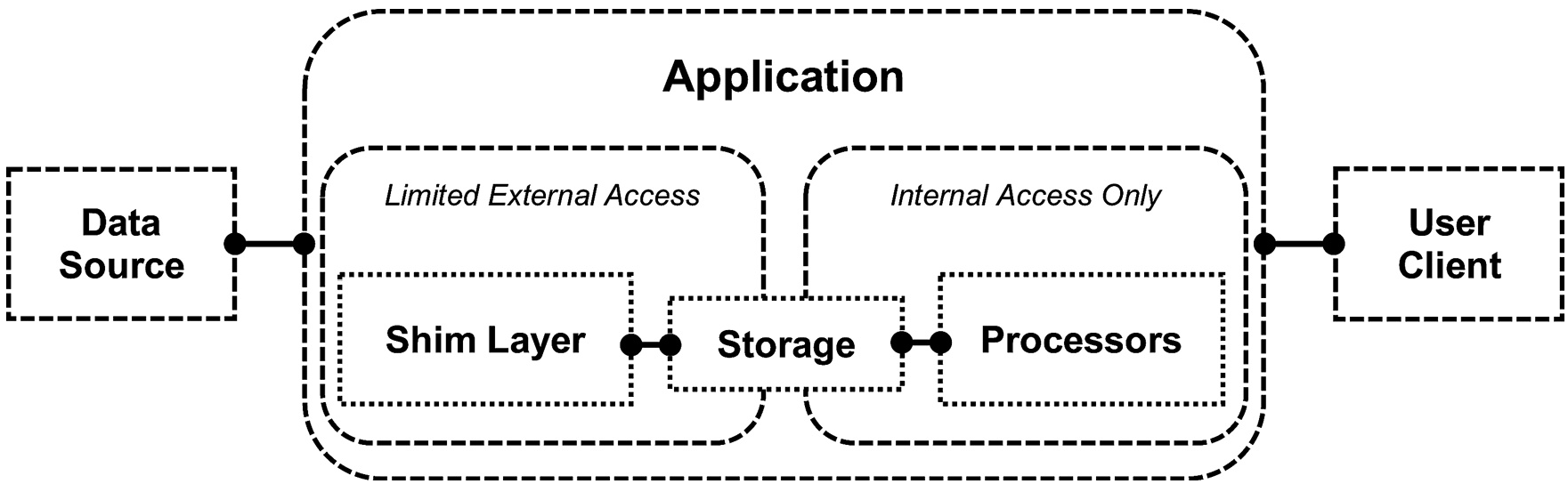
The proposed system functions similarly to an email client (IMAP/SMTP model) but for social data.
- Shim Layer: Normalizes data from various SNS APIs into a unified format.
- Storage Layer: A distributed repository residing strictly on the user's side.
- Processing Layer: Tiny "agent" applications that run local audits on data before anything is sent out.
2. Physical Intuition: Bringing the Analytics to the Data
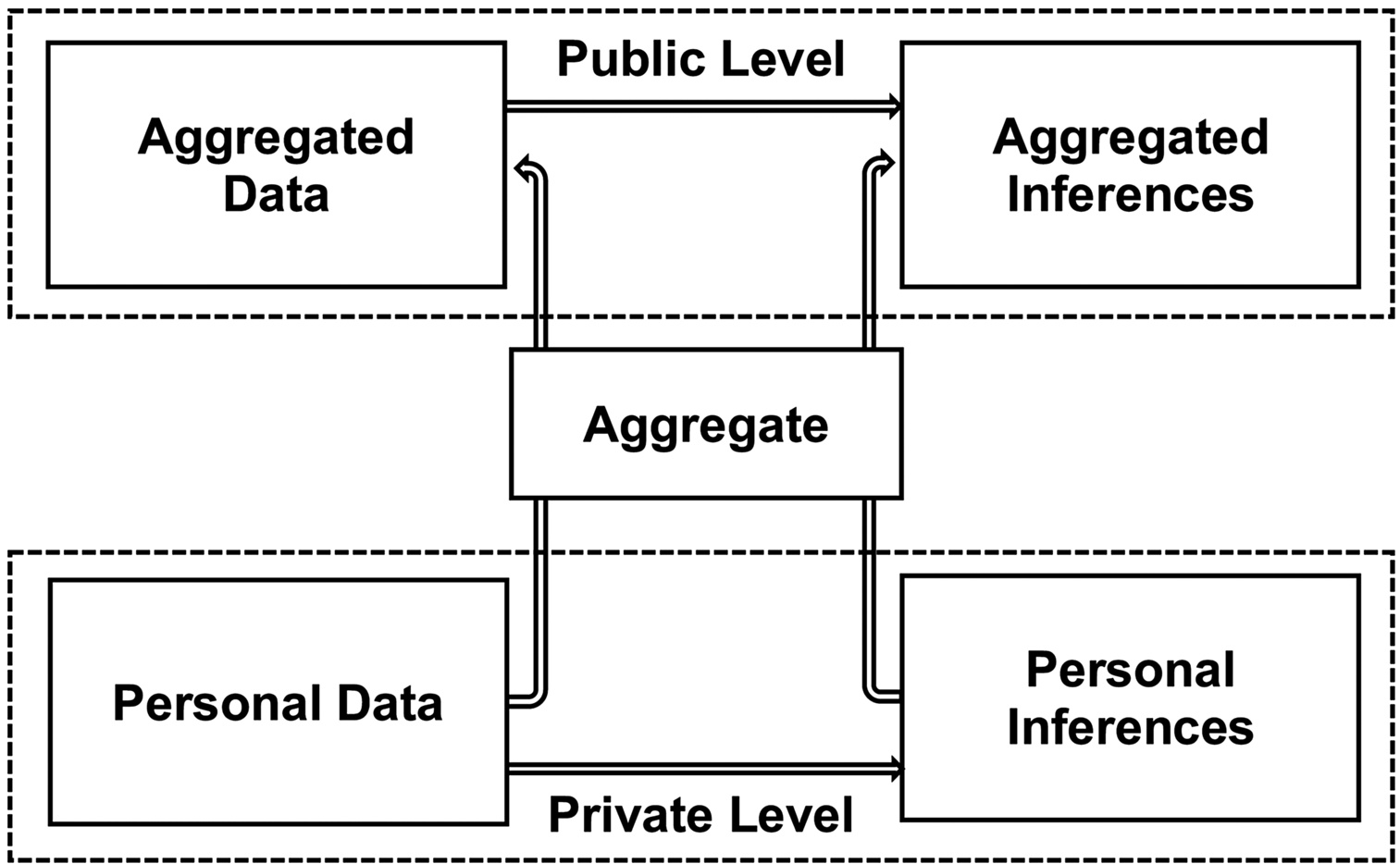
The most profound shift here is in the analytics workflow. Usually, a company takes your data to their cloud to run a model. In this design, the company sends the model to your device. Your device processes the data locally and returns only the final answer (e.g., "User is interested in Tech") without ever exposing the original posts or photos.
Evidence from the Field
To ground their design, the authors conducted a survey of 269 SNS users. The data revealed a "context-dependent" behavior:
- Identity Fragmentation: Users who use more SNS are significantly more likely to maintain multiple accounts on the same platform to manage different audiences.
- Information Revelation: There is a massive variance in what people share on LinkedIn vs. Facebook, yet current platforms often try to merge these profiles behind the scenes, violating the "context of origin."
Two Proposed "Processors"
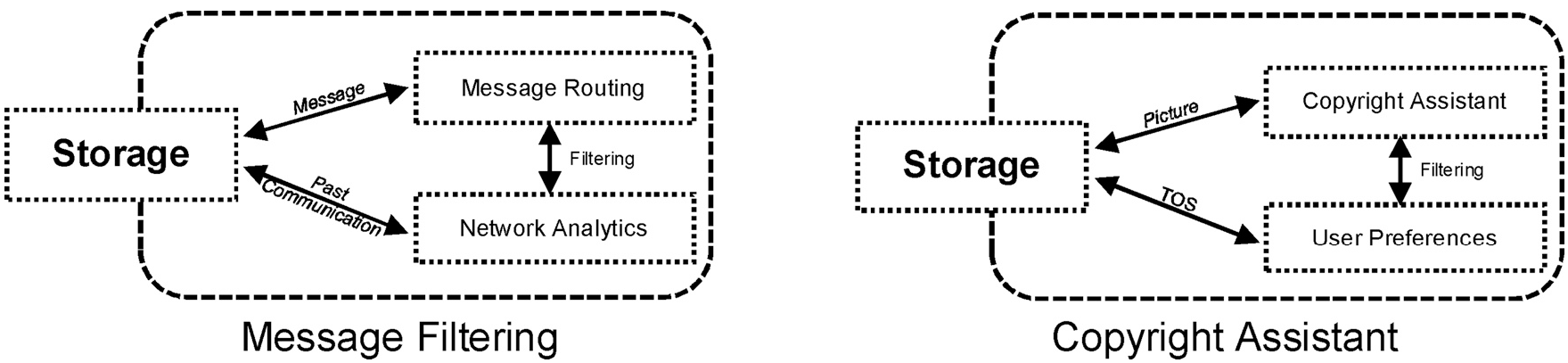
Based on these findings, the authors designed two specific modules:
- Adaptive Message Filter: Detects if you are sending the same message across multiple platforms (Twitter, FB, LinkedIn) to ensure your contacts don't receive triple notifications.
- Copyright Processor: Scans the ToS of the platform you are about to post to. If the platform requires you to "surrender all rights" to an image, the processor warns you before you hit upload.
Critical Insight: Beyond SNS
The real value of this paper isn't just about "better Facebook." It provides a blueprint for Human-Data Interaction (HDI).
- For Organizations: It turns data from a "liability" (risk of breach) into a "utility." Companies get the insights they need without the legal headache of holding the raw data.
- For Users: It provides "agency" and "negotiability." You can choose to allow a banking app to see your social proof for a loan without giving them access to your private messages.
Conclusion & Future Outlook
While the paper lacks a large-scale implementation (a common hurdle for such radical systemic shifts), it offers a rigorous theoretical alternative to the "Data-as-Oil" extractive economy. The next frontier for this research lies in inter-social-networking protocols—creating a truly open standard where your digital identity is yours to keep, no matter which platform you happen to be using today.