
Who Stays to Play? Deciphering the Personality Blueprint of Loyal Gamers
International Journal of Information Management
This study investigates how Big Five personality traits influence interdependence and network convergence in online gaming communities. Analyzing data from 2,212 gamers via Structural Equation Modelling (SEM), it identifies specific psychological profiles that drive social exchange and establishes these social features as critical predictors of continuance intention.
TL;DR
Why do some players quit after a week while others remain loyal for years? This study reveals that the answer lies within the Big Five personality traits. By leveraging Social Exchange Theory (SET), the research proves that traits like Extraversion and Openness act as catalysts for "social stickiness"—specifically through Interdependence and Network Convergence—which ultimately dictate whether a gamer will keep playing.
The "Social Stickiness" Gap
For years, the gaming industry has chased the "Fun Factor"—optimizing graphics, rewards, and UI. However, academic focus has shifted toward the social fabric of games. We know that communities create loyalty, but we haven't known why certain people are more likely to weave themselves into these communities.
The authors identify two vital social metrics:
- Interdependence: Relying on others' opinions to make in-game decisions.
- Network Convergence: Sharing a common circle of friends (social overlap).
The core problem? Most theories assume everyone "exchanges" social value equally. This paper shatters that assumption, arguing that your personality determines your "exchange rate" in the digital world.
Methodology: Mapping Personality to Social Exchange
The researchers surveyed 2,212 valid respondents and utilized Structural Equation Modelling (SEM) to test how personality traits influence social structures.
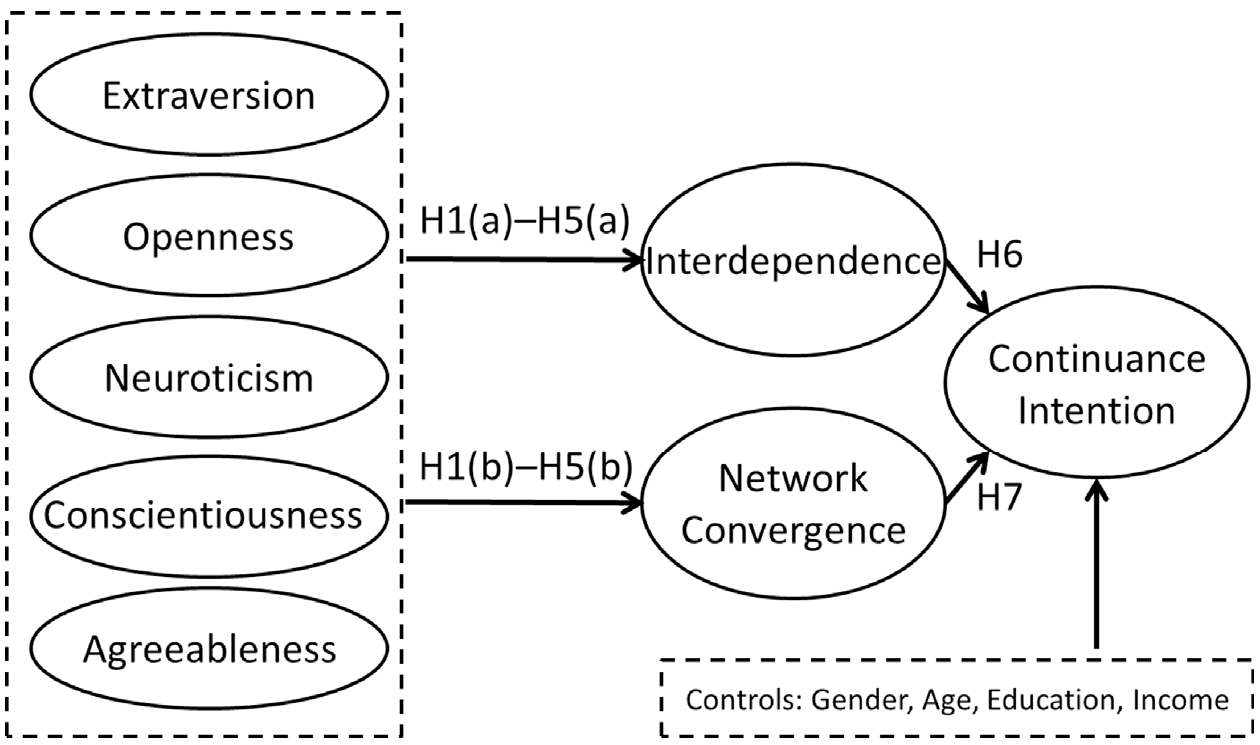
Why Social Exchange Theory (SET)?
SET posits that social behavior is the result of an exchange process. The purpose of this exchange is to maximize benefits and minimize costs. In an online game, "valuable" players (e.g., those who are helpful or talkative) are more likely to be introduced to new friends (Convergence) and consulted for advice (Interdependence), creating a cycle of reciprocity that makes leaving the game "costly."
Key Insights: The Good, The Bad, and The Surprising
1. The High Flyers: Extraversion & Openness
As expected, Extraverted individuals are the "social glue." Their talkative nature encourages reciprocity, leading to higher interdependence. Similarly, Openness is a strong predictor of social activity. Curious players engage more with the game's lore and community, facilitating both decision-sharing and friend-sharing.
2. The Lone Wolves: Conscientiousness
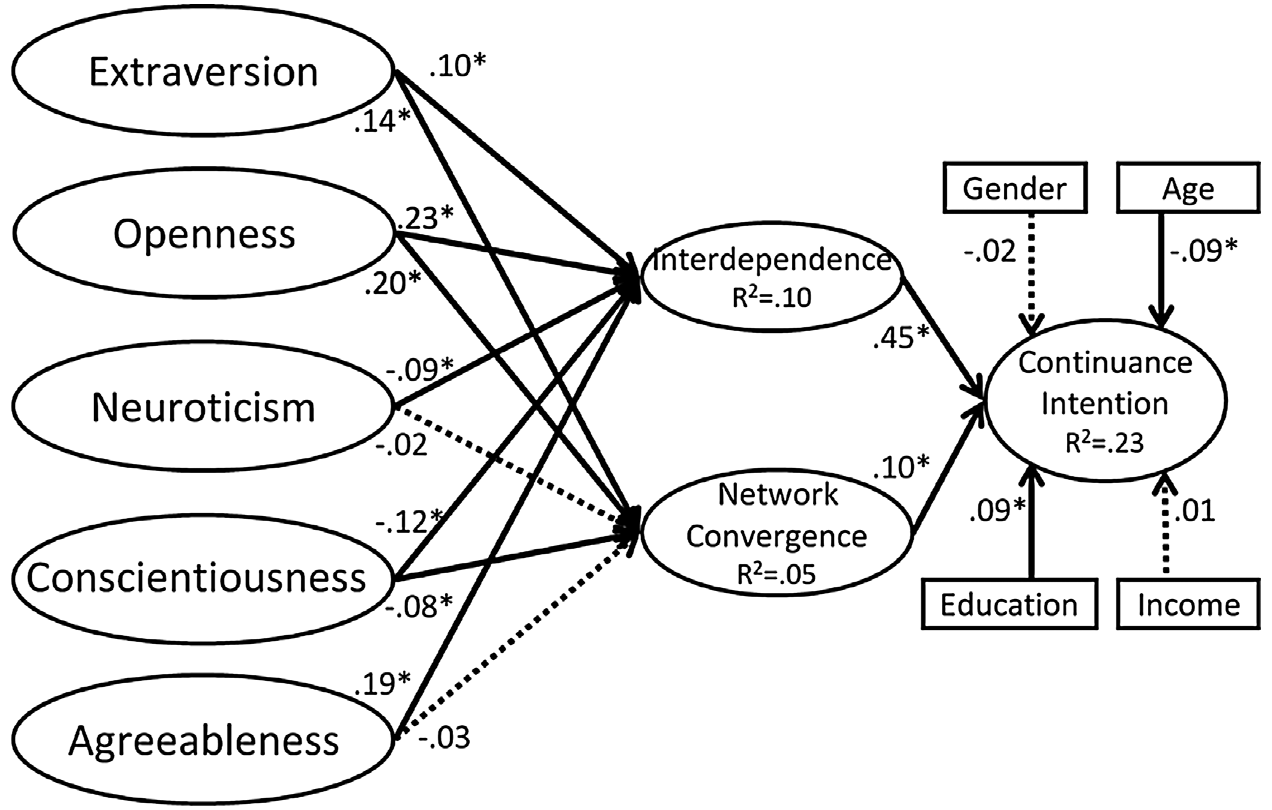
In a counter-intuitive twist, Conscientiousness is negatively related to social interdependence.
- The Logic: Highly conscientious gamers are often goal-oriented and efficient. They view social "chit-chat" or consulting others as a distraction from their industrious pursuit of level-grinding or objective-clearing. They don't want to depend on others; they want to win.
3. The Anchor: Interdependence vs. Convergence
The study found that Interdependence (Path = 0.45) is a much stronger driver of loyalty than Network Convergence (Path = 0.10). Feeling that your team needs your input to succeed is a more powerful retention tool than simply having mutual friends.
Experimental Evidence
The SEM results confirmed that the model has a sufficient effect size ( for Continuance Intention). This means nearly a quarter of a gamer's intent to keep playing can be explained simply by their personality and the resulting social network structure.
| Personality Trait | Interdependence | Network Convergence |
|---|---|---|
| Extraversion | Positive (+) | Positive (+) |
| Openness | Positive (+) | Positive (+) |
| Neuroticism | Negative (-) | No Significant Effect |
| Conscientiousness | Negative (-) | Negative (-) |
| Agreeableness | Positive (+) | No Significant Effect |
Critical Perspective: Beyond the Data
While the study is robust, it faces a few academic hurdles:
- The "Conscientiousness" Paradox: While these players are less "social," they might be the most likely to pay for "skip-the-grind" items. The study focuses on social retention, but utilitarian retention might be a different story.
- Cultural Specificity: The data comes from Taiwan. Since "Agreeableness" and "Interdependence" are highly valued in collectivist cultures, the path coefficients might look different in Western, individualistic markets.
Actionable Conclusion for Industry
If you are building an online game:
- For Extraverts: Build "Reunion" hubs and voice-chat-heavy features.
- For Agreeable Players: Create "Mentor" roles or "Assistance" mechanics where helping others is rewarded.
- For the Conscientious: Don't force them into slow social queues; give them efficient, solo-achievable milestones that still contribute to a larger team goal without requiring constant consultation.
In the end, retention isn't just a software problem—it's a psychological one.