
The Affective Bridge: Why We Stay and Why We Get Hooked on Social Commerce
International Journal of Information Management
This study proposes the Integrated Gratifications & Motivational Model (IGMM) to investigate post-adoption behaviors in social commerce, combining Uses and Gratifications Theory (U>) with the Dual Processing View. It identifies social, hedonic, and utilitarian gratifications as key drivers for continuance intentions and addictive use, achieving superior explanatory power over existing independent models.
TL;DR
Is affect (feelings) the ultimate driver of social commerce usage, or is it just a byproduct of utility? This study introduces the Integrated Gratifications & Motivational Model (IGMM), proving that our post-adoption behaviors—ranging from the intention to continue using a site to full-blown addictive use—are driven by a complex interplay of rational cognitive appraisal and emotional satisfaction.
Background: A Conflict of Views
In the world of academic Information Systems (IS) research, two camps have long argued over why we keep using apps. The Independency View (rooted in Uses & Gratifications Theory) argues that we use tools simply because they meet our needs, bypassing deep emotional processing. Conversely, the Dual Processing View suggests that our feelings (Satisfaction) are the mandatory gatekeeper between our needs and our actions.
This paper argues that both are right—and both are incomplete on their own.
The Problem & Motivation: Beyond Initial Adoption
Social commerce—buying via platforms like Facebook Marketplace or Pinterest—is booming. Yet, researchers have struggled to explain why some users simply "continue" while others develop "maladaptive dependency" (addiction). The authors identified a gap: previous models didn't simultaneously account for Social, Hedonic, and Utilitarian gratifications while testing the exact weight of Satisfaction as a mediator.
Methodology: The IGMM Framework
The researchers proposed a three-step path: Appraisal → Emotional Reaction → Coping Response.
- Appraisals: How well does the site meet my Social (status), Hedonic (fun), and Utilitarian (savings/info) needs?
- Emotional Reaction: Satisfaction.
- Coping Responses: Continuance Intentions (Rational) and Addictive Use (Irrational).
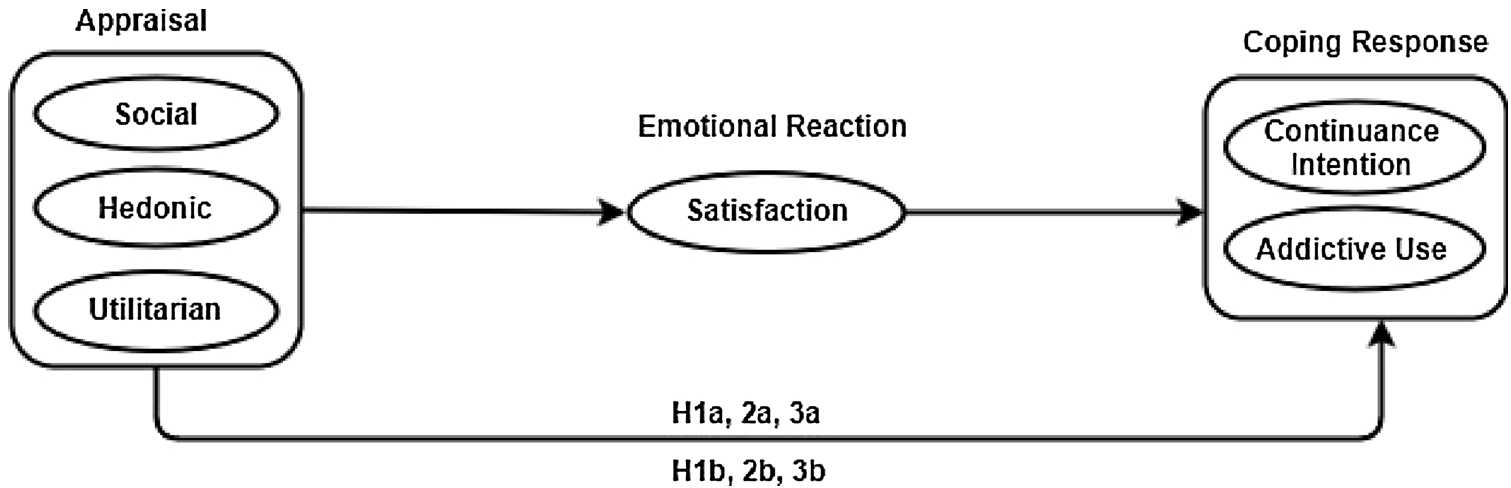
The team surveyed 510 active social commerce users and used Partial Least Squares (PLS-SEM) to map the relationships.
Key Insights: Rational Utility vs. Irrational Addiction
The results revealed a fascinating split in human behavior:
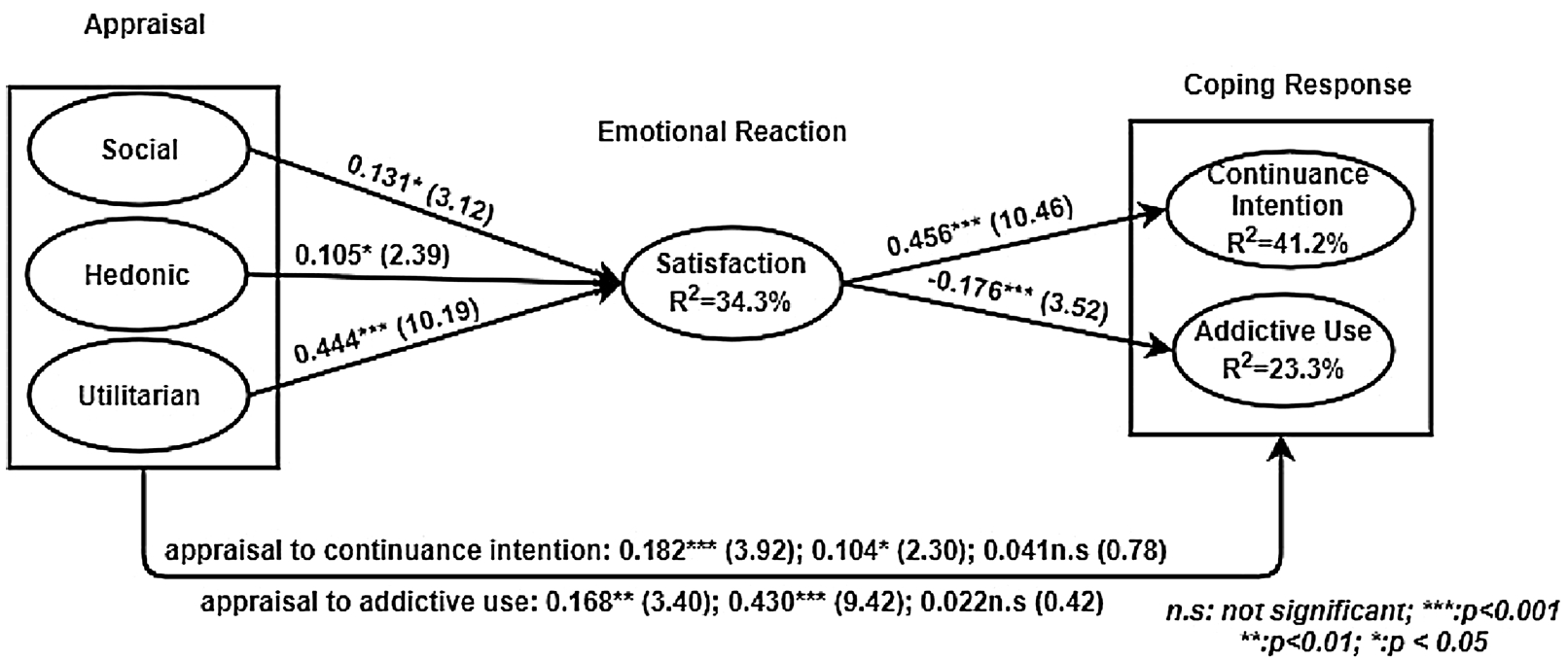
- The Utilitarian Rationality: Utilitarian gratification (finding bargains) is the strongest driver of Satisfaction. Interestingly, Satisfaction fully mediates this. If a site is useful, you feel satisfied, and then you decide to keep using it. Utility actually reduces the likelihood of addiction (negative path coefficient).
- The Emotional Double-Edged Sword: Social and Hedonic gratifications (feeling "cool" or having "fun") are different. They influence behavior directly even if you aren't particularly satisfied. They are the primary drivers of Addictive Use.
- The Performance Gap: The integrated model (IGMM) explained significantly more variance ( for continuance) than either individual theory could alone.
Critical Analysis & Conclusion
This paper provides a sophisticated "Academic Reality Check" for social commerce developers.
Takeaway for Research: Satisfaction is "vital but not exclusive." The discovery that social and hedonic needs can bypass satisfaction to drive behavior suggests that social commerce has an inherent "irrational" component that traditional e-commerce (like early Amazon) lacked.
Takeaway for Industry: If you want customer loyalty (Continuance), fix your search and pricing (Utilitarian). If you want high engagement/usage, focus on social features and the "fun" factor—but be wary of the ethical implications of fostering addictive dependencies.
Limitations: The study is cross-sectional (a snapshot in time), meaning it can't definitively prove 100% causality, only strong relationships. Future work should look at specific platforms like TikTok to see if these "addictive" triggers are even more pronounced.