
Aigents: Crafting Socially-Aware Agents for the Decentralized Web
Architecture of Internet Agent with Social Awareness
The paper introduces Aigents, a cognitive architecture for personal software agents designed to navigate the "spatial-temporal-attentional continuum." It leverages a unique "GRASP" pipeline (Gather, Recognize, Analyze, Synthesize, Present) to provide social awareness and personalized news filtering across traditional and blockchain-based social networks.
TL;DR
In an era of information overload, the "Aigents" project introduces a cognitive architecture that doesn't just watch the web—it understands your social ecosystem. By utilizing a "GRASP" pipeline, this agent integrates personal history with social dynamics (from Facebook to Steemit) to offer "Blended Relevance" in news and social interactions, effectively turning the agent into a digital mirror of the user’s social world.
The Missing Link: Social Awareness
While current AI assistants are great at scheduling or simple Q&A, they are largely "socially blind." They treat information as isolated nodes rather than part of a vibrant, interconnected socio-temporal context. The author, Anton Kolonin, argues that for agents to be truly effective, they must perceive a 3-dimensional continuum:
- Time: Specific experience duration.
- Social Context: The producers and consumers of data.
- Attention: The allocation of memory (short-term vs. long-term).
Existing systems fail because they don't account for how social influence—like the "emotional contagion" or "authority" from opinion leaders—shapes our decision-making.
Methodology: The GRASP Pipeline
The architecture is built on a functional cognitive system that mimics biological learning. The standout feature is the GRASP Pipeline, which structures the flow of data:
- Gather: Uses a "Social Integrator" to pull data from diverse sources including traditional sites and blockchain-based platforms like Steemit.
- Recognize: Employs a "Social Feeder" to process likes, votes, and comments into internal representations.
- Analyze: The "Thinker" layer uses machine learning to find associative relationships between users and topics.
- Synthesize & Present: Generates HTML reports or visual graphs that clarify the user's social position.
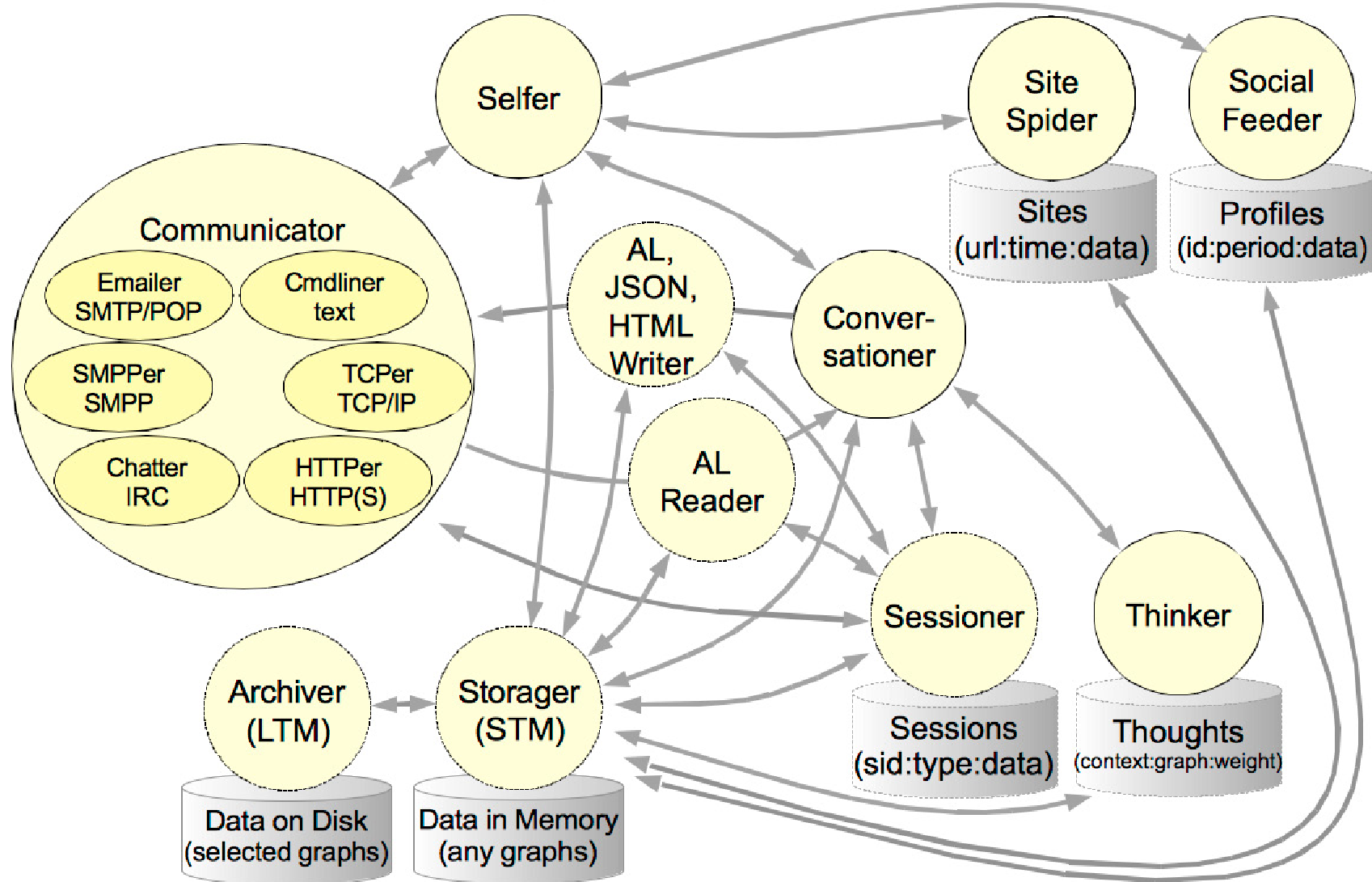 Figure 1: The Aigents architecture featuring the Social Feeder and Thinker layers.
Decoding Your Social DNA
One of the most compelling aspects of this research is the classification of social personas. By analyzing interaction intensity and interest similarity, the agent identifies whether you are:
- A Follower: Many opinion leaders, high shared interests.
- An Opinion Leader: Many silent followers.
- A Peer: Symmetric, balanced interactions.
- A Diverse Communicator: A mix of all the above.
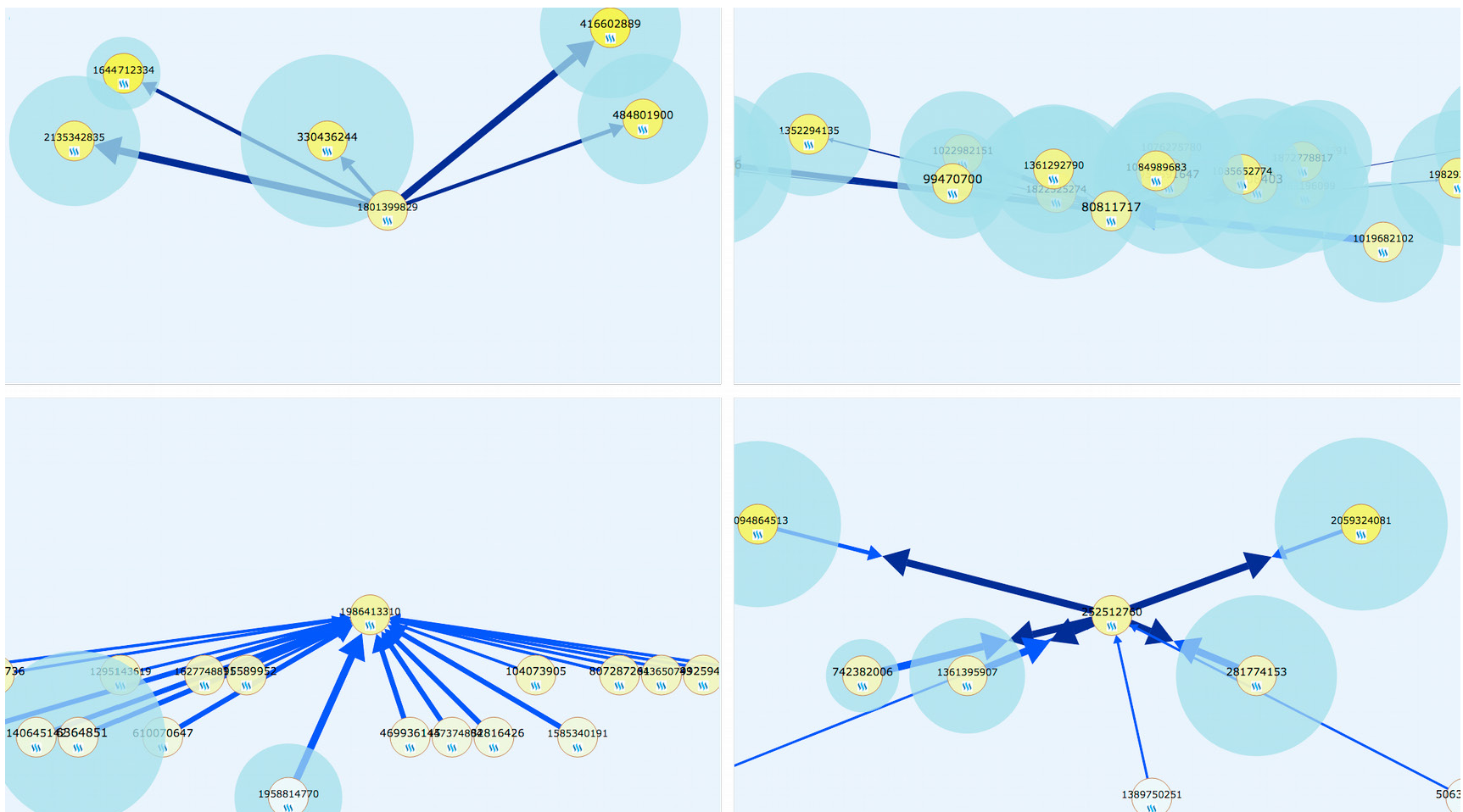 Figure 2: Visualization of different social expression types detected by the agent.
Blended Relevance: Personal vs. Social
The practical payoff of this social awareness is Blended Relevance. Traditional filters look at what you liked (Personal Relevance). Aigents adds what your social environment values (Social Relevance). In the UI, this is represented by a dual-bar system, allowing users to see why a piece of news was recommended—is it because they liked similar things, or because their peers are buzzing about it?
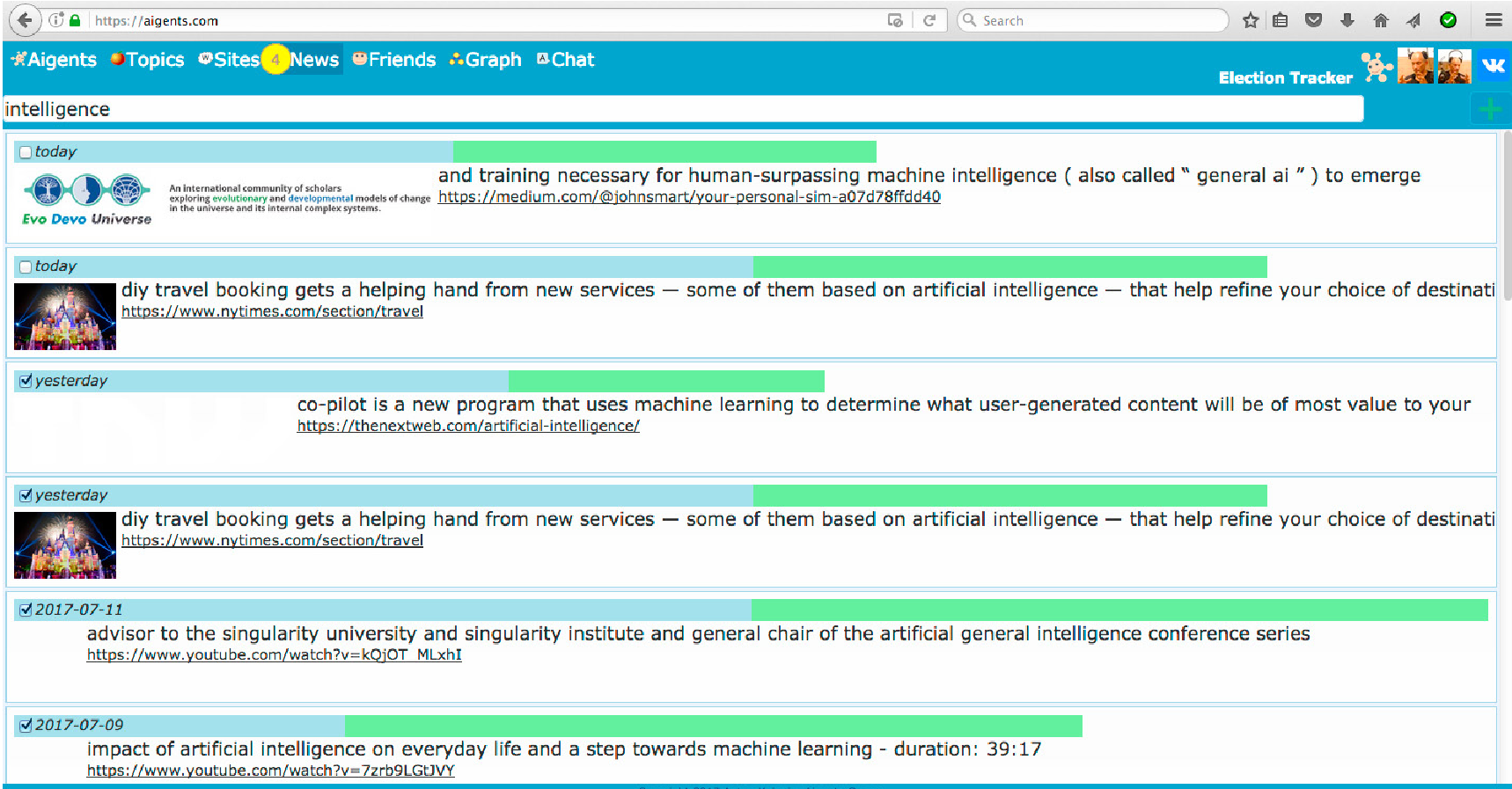 Figure 3: News items showing both personal and social relevance metrics.
Critical Analysis & Conclusion
Takeaway: The Aigents project successfully demonstrates that social context is a computable dimension. By successfully integrating blockchain data, it paves the way for "Web 3.0" agents that are more transparent and less reliant on centralized silos.
Limitations: While the architecture is robust, the current testing pool (400 users) is relatively small. The reliance on public blockchain data is a clever privacy workaround, but scaling this to "walled gardens" like Facebook remains a challenge due to API restrictions and privacy laws.
Future Outlook: We are moving toward a future where our AI won't just be a tool, but a "Social Secretary" that understands our status, our friends, and our changing interests across the vast, noisy landscape of the internet.