
Smart Agri-Research: Revolutionizing Experimental Bases with IoT and AI
Discussion on Application of the Internet of Things in Modern Agricultural Experimental Base
This paper proposes an intelligent management and data acquisition platform for agricultural experimental bases leveraging IoT, 5G, and AI. Developed for the Chinese Academy of Agricultural Sciences (CAAS), it integrates a four-tier architecture to transform 118 scattered bases into a unified, visual, and digitally perceptible research network.
TL;DR
To address the fragmentation of agricultural scientific data, researchers at the Chinese Academy of Agricultural Sciences (CAAS) have developed a comprehensive Intelligent Experimental Base Management Platform. By utilizing a four-layer IoT architecture, the system bridges the gap between isolated field sites and centralized data processing, enabling real-time monitoring of ecological environments, automated data mining, and visualized resource management across 118 national bases.
Background & Motivation: Moving Beyond "Data Islands"
Agricultural research is inherently distributed. CAAS manages a staggering 103,900 mu of land spread across 27 provinces. Traditionally, these bases operated as closed silos.
- The Problem: Researchers faced "Information Islands" where precious soil, biological, and environmental data were trapped in local logs. This led to redundant experiments and hindered the output of major scientific breakthroughs.
- The Insight: The authors realized that the experimental base is not just a field of crops, but a high-value data generator. By applying the Internet of Things (IoT), they could transform physical variables into a continuous stream of digital intelligence.
Methodology: The Four-Layer IoT Architecture
The core of this work lies in its structured approach to data flow, moving from the physical soil to the researcher's dashboard.
1. Wireless Network Layer (The Senses)
This layer utilizes image sensors and environmental nodes (soil, biological, and plant protection sensors). It uses ZigBee for local data aggregation and GPRS for long-distance transmission to the server.
2. Data Link Layer (The Gateway)
The gateway acts as the "translator," converting various perception protocols into standard communication formats. This ensures that whether a sensor is measuring soil moisture or capturing insect images, the data is unified.
3. Data Storage & Control (The Brain)
This layer handles the heavy lifting. It identifies anomalies in equipment and processes raw data through fusion algorithms.
- Key Insight: The system uses the Itti algorithm and bottom-up visual attention models to fuse visual data with sensor readings, allowing the system to "notice" critical events automatically, such as equipment failure or environmental stress.
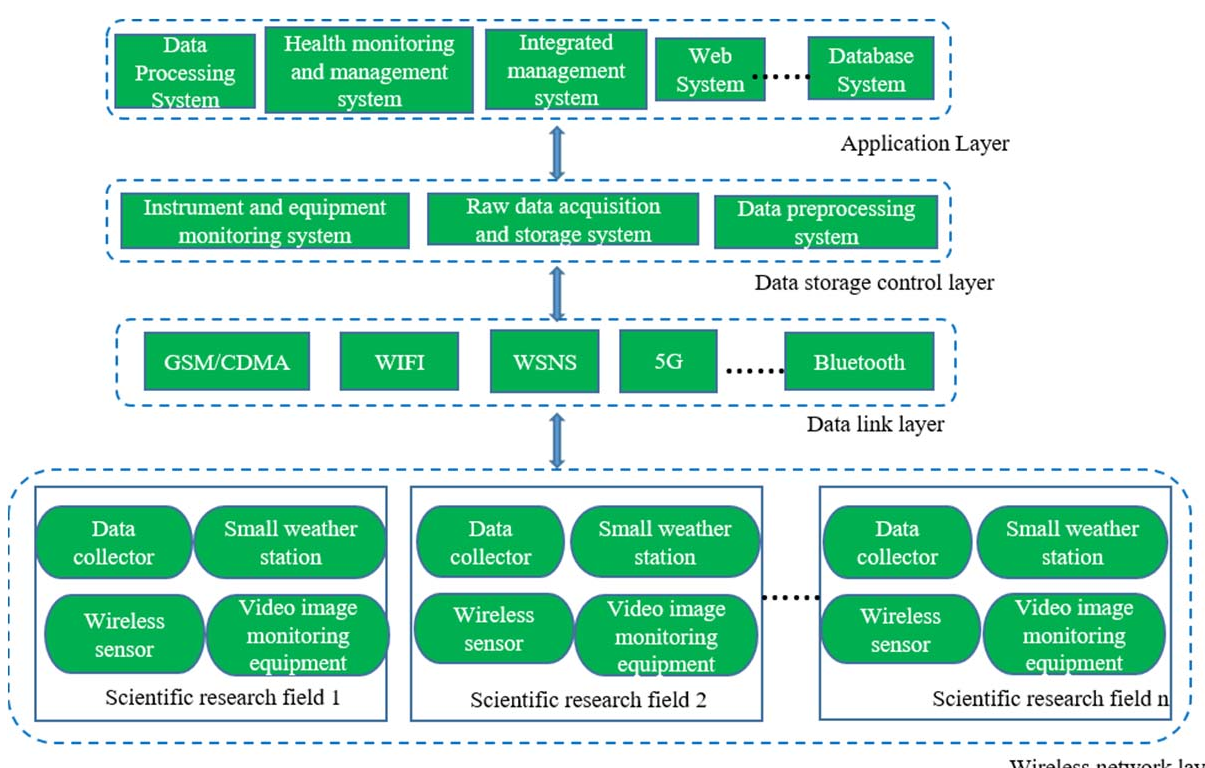 Figure 1: The hierarchical design of the CAAS Intelligent Experimental Base platform.
4. Application Layer (The Interface)
This provides the Web and Mobile interfaces for researchers. It includes:
- Health Monitoring: Real-time status of field equipment.
- Data Processing: Modeling and analyzing original research data.
- Integrated Management: Scientific management of human and financial resources.
Experimental Impact & Real-World Results
The implementation of this intelligent framework has yielded significant academic and operational dividends for CAAS:
- Research Output: In the 2018 evaluation year alone, bases supported by this data-centric approach contributed to 35 provincial awards and 1,753 high-level papers.
- Radar Entomology: The persistent data collection at the Changdao base has accumulated over 10 years of migratory insect data, allowing China to lead the world in "radar entomology" with the most complete historical datasets.
- Efficiency: Digital management of 47.5% of property-right land has significantly reduced manual monitoring labor, allowing researchers to focus on high-level analysis rather than data collection.
Critical Analysis & Future Outlook
Takeaway
The value of this paper isn't just in the specific tech stack (GPRS/ZigBee), but in the paradigm shift it represents: Agricultural experimental bases are evolving into "living laboratories" where the infrastructure itself participates in the scientific process via automated perception.
Limitations & Future Work
While the architecture is robust, the reliance on GPRS in the link layer may face bandwidth bottlenecks as 4K video monitoring and high-frequency spectral imaging become standard. Future iterations will likely need to integrate Edge Computing (processing data at the gateway level) to reduce the burden on the central data center and leverage 5G for ultra-low latency control of agricultural robotics.
By breaking down the "Application Islands," CAAS has set a blueprint for how national-scale research organizations can modernize their physical assets for the AI era.