
Cyber Resilience in 6G Healthcare: Deep Learning for Lung Cancer Digital Twins
SPECIAL SECTION ON INTERNET-OF-THINGS ATTACKS AND DEFENSES: RECENT ADVANCES AND CHALLENGES
This paper introduces "DeepVR," a novel cyber resilience framework for healthcare digital twins of lung cancer. It combines Bi-LSTM networks with a self-attention mechanism to detect software vulnerabilities in IoT-related code, outperforming traditional static analysis and pure DL methods.
TL;DR
As we enter the 6G era, the Healthcare Digital Twin—a virtual replica of a patient—is becoming a reality for precision medicine. However, the software powering these MIoT (Medical IoT) devices is riddled with vulnerabilities. This paper presents DeepVR, a deep learning-based vulnerability detection system that uses Bi-LSTM and Self-Attention to identify risky code functions with unprecedented precision, providing an essential layer of "Cyber Resilience" for lung cancer diagnosis systems.
Context: The Digital Twin Security Crisis
A healthcare digital twin for lung cancer integrates real-world patient data (EMR), physics-based rendering for surgical simulation, and AI-driven prediction for pulmonary embolism. However, if the underlying IoT software has vulnerabilities (like the infamous Heartbleed), the entire medical infrastructure becomes a target.
Prior works in vulnerability detection often failed because:
- Static Tools (like Flawfinder) produce excessive false positives.
- Traditional Machine Learning requires manual feature engineering.
- Basic Deep Learning (RNNs) cannot distinguish between "boring" boilerplate code and "critical" vulnerability keywords.
Methodology: Bi-Directional Context meets Self-Attention
The authors argue that a vulnerability is rarely about a single line; it’s about the relationship between code fragments.
1. Code Tokenization and Embedding
Instead of treating code as just text, the system removes comments and splits content into tokens (keywords, operators, variables). It uses a CBOW Word2Vec model to map these tokens into a 100-dimensional vector space where semantically similar keywords (like int and float) are cluster-positioned.
2. The Architecture (DeepVR)
The core of the system is a Bi-Directional LSTM layer followed by a Self-Attention Mechanism.
- Bi-LSTM: Captures the "before and after" context of a code statement.
- Self-Attention: This is the "secret sauce." It assigns different weights to different tokens. For instance, in a memory allocation block, it learns to ignore standard setup code and "focus" its neurons on risky functions like
__get_page_typeor_raw_read_unlock.
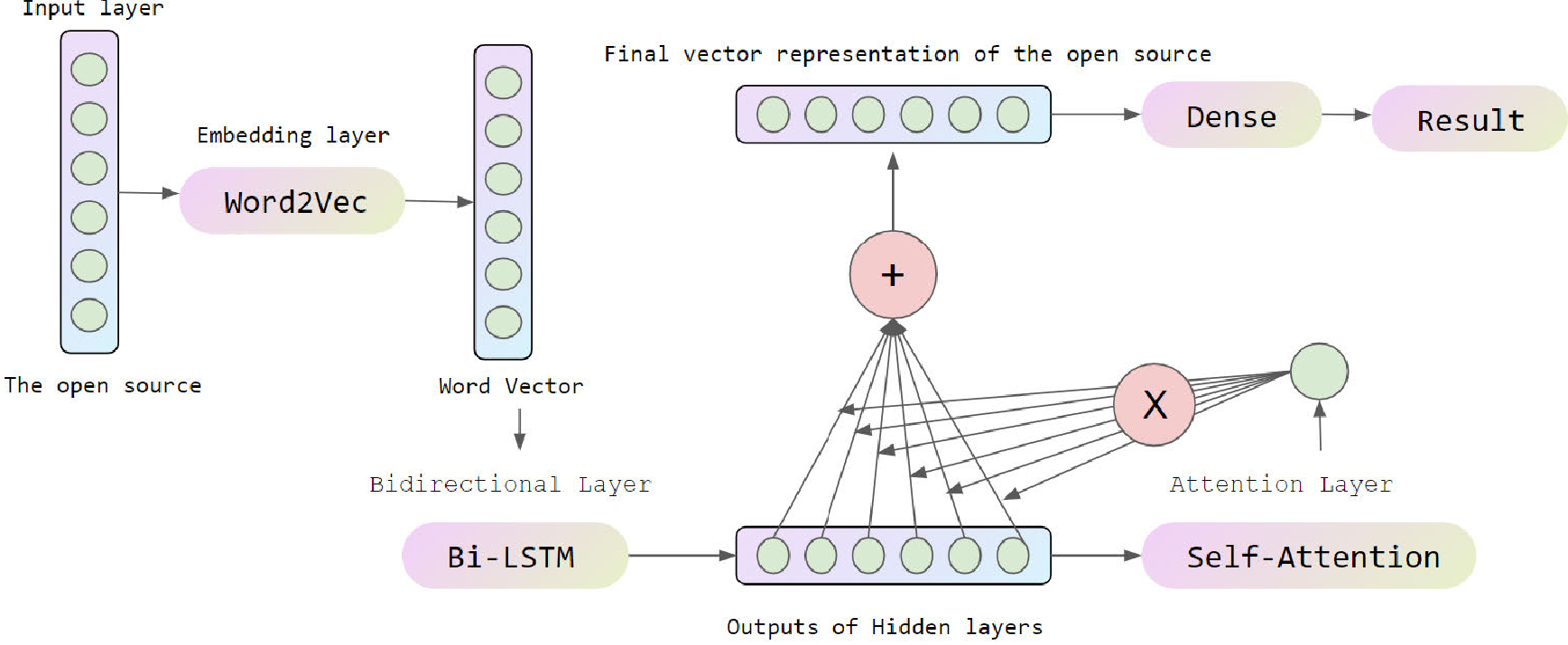 Figure 1: The New Vulnerability Attention Scheme (DeepVR).
Experimental Results: SOTA Performance
The model was tested on two massive datasets: a synthetic SARD dataset and a real-world 9 Open-Source Projects dataset (including OpenSSL and FFmpeg).
- Accuracy Boost: On real-world code, DeepVR achieved an F1-score of 0.78, dwarfing the standard Bi-LSTM (0.62) and Flawfinder (0.29).
- Top-K Precision: In a clinical setting, a developer's time is limited. DeepVR achieved 100% precision in its Top-40 recommendations, meaning every single one of the first 40 functions flagged was an actual vulnerability.
 Table 1: Comparison of DeepVR against standard Bi-LSTM and industry benchmarks.
Visualizing the "Focus"
One of the most impressive parts of the paper is the Interpretability. By visualizing the attention weights, the authors show that the model actually "looks" at the vulnerable sink—the exact line of code that causes the bug.
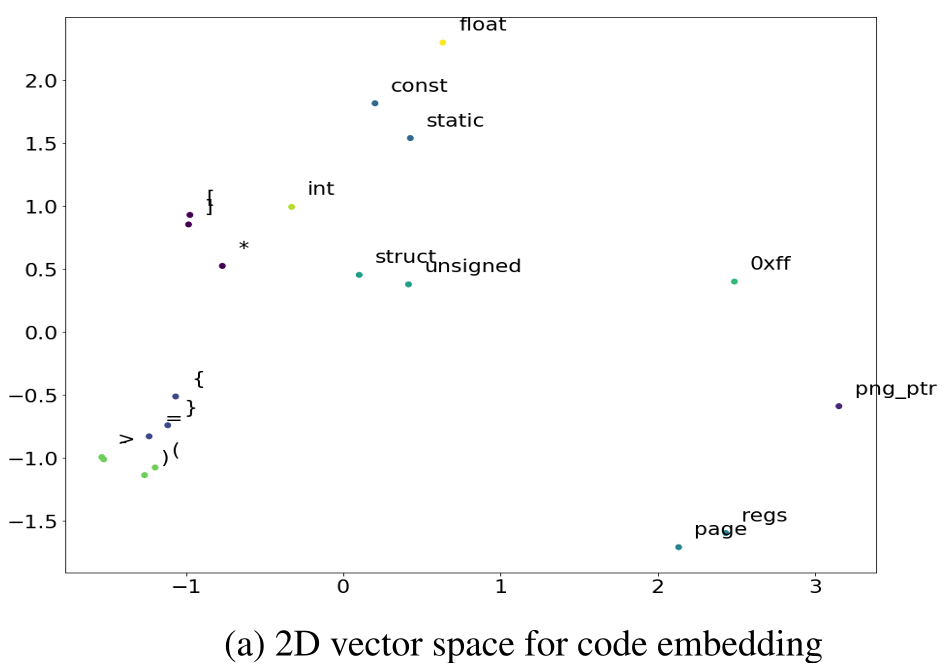 Figure 2: Attention mechanism highlighting the vulnerable 'sink' in CVE-2013-1432.
Final Insights
The transition to 6G and Digital Twins requires Cyber Resilience that is as intelligent as the medical services it protects. The success of DeepVR proves that:
- Self-Attention is not just for NLP; it is critical for "reading" code semantics.
- Interpretability is non-negotiable in healthcare; showing why a function is risky is as important as finding it.
While the model is highly effective on C/C++ projects, the next frontier will be adapting these attention-based models to handle the variety of programming languages found in cross-platform medical ecosystems.