
Social-IoT: Bridging the Real World and Social Networks via Object-Oriented Logic
The Application of Internet of Things in Social Network
This paper introduces a social-IoT model that integrates the Internet of Things (IoT) with social networks using an Object-Oriented (OO) approach. By abstracting physical entities into "objects" with attributes and operations, the study establishes a smart office prototype where devices like sensors and actuators interact via WeChat and cloud platforms.
TL;DR
This research tackles the "communication gap" between humans and machines by treating physical objects as social entities. By applying Object-Oriented (OO) principles to the Internet of Things (IoT), the authors created a system where your office plants or lamps are not just "sensors" but "social nodes" that can post status updates on WeChat, inherit properties from their environment, and be discovered through social service tags.
Background & Motivation: Why Stop at Human Socializing?
While platforms like Facebook and WeChat have revolutionized human connectivity, the vast world of physical objects remains largely isolated. Conventional IoT architectures focus on data transmission but ignore the social context—the relationships between owners, locations, and services. The authors argue that for IoT to be truly "universal," it shouldn't just copy human social networks; it should extend them to include "everything" using a logic humans already understand: Object Orientation.
Methodology: The Object-Oriented Blueprint
The brilliance of this paper lies in its mapping of traditional software engineering (OO) to physical reality:
- Encapsulation: Users don't need to know the raw sensor voltage; they just "ask" the object (e.g., "What is the PM2.5 today?") and receive a processed attribute.
- Inheritance: A "Lamp" node can inherit location and ownership data from its "Office" parent node.
- Polymorphism: A "Switch Off" command behaves differently whether it's sent to a single bulb or an entire office node (which then iterates through all children).
Architecture Overview
The system utilizes a hierarchical tree for location/ownership and a web-graph for complex social interactions.
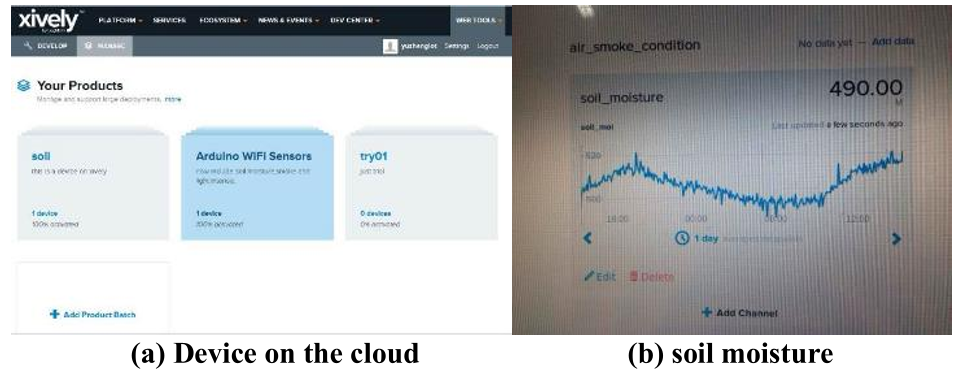 Figure 1: The hierarchical organization of the Smart Office prototype.
Experiments: When Plants Start "Microblogging"
To prove the concept, the team built a "Smart Office" using Arduino microcontrollers and the Xively cloud platform.
Hardware & Cloud Integration
The setup included DHT11 (temp/humidity) sensors and soil moisture probes connected via WiFi shields. Data was formatted as JSON to ensure high-efficiency transfer between the "hardware middleware" and the user's mobile app.
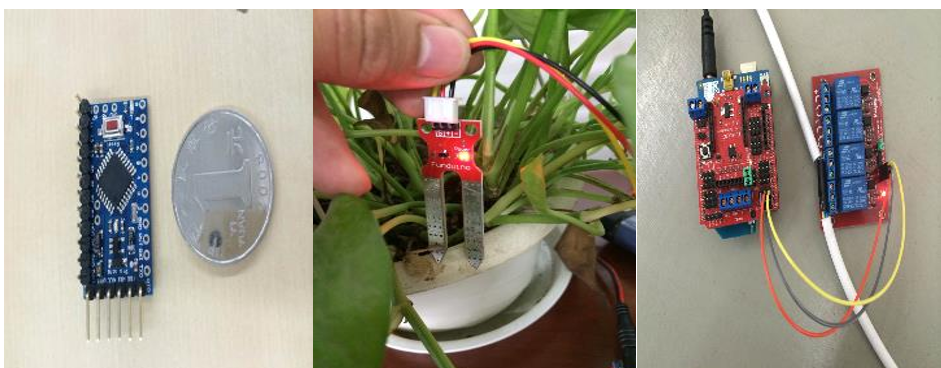 Figure 2: Hardware components including Arduino Pro Mini and soil moisture sensors.
The "IFTTT" Social Trigger
One of the core demonstrations involved the IFTTT (If This Then That) logic applied to social media. When the soil moisture sensor detected the plant was dry, it didn't just log a data point; it invoked the WeChat API to send a message to the owner’s smartphone: "I am thirsty, give me water!"
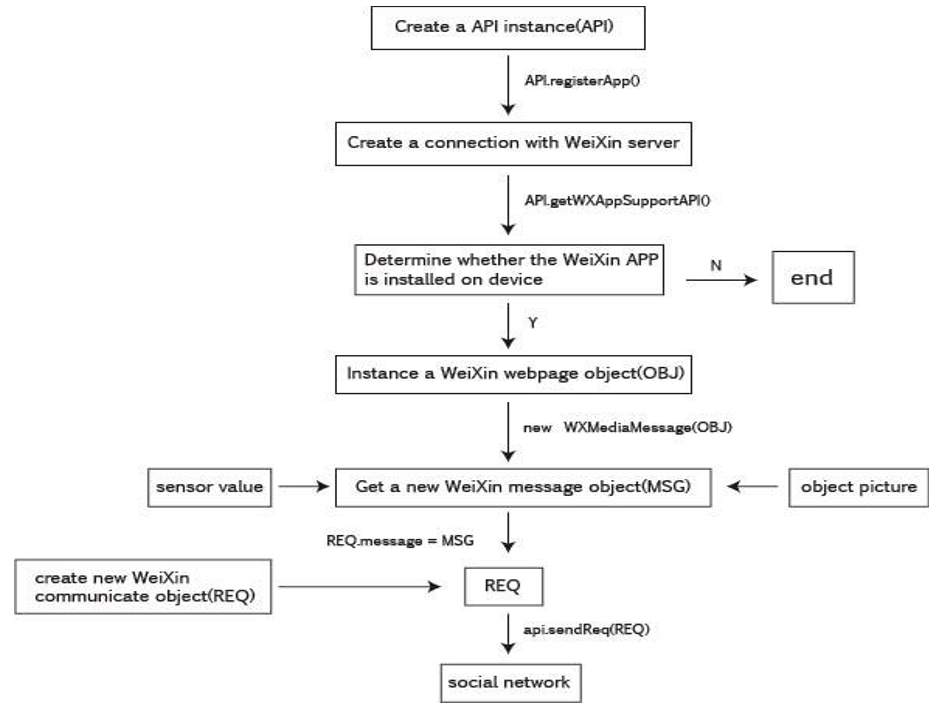 Figure 3: Methodological flow for an object sending status updates to WeChat.
Critical Insight & Conclusion
Takeaway
The paper successfully demonstrates that the Social Internet of Things (SIoT) is more than just a buzzword. By moving from "data-centric" to "object-centric" management, we can significantly reduce the cognitive load on users trying to manage complex smart environments.
Limitations
While the "tree-node" location method is intuitive for an office, it struggles with mobile objects (e.g., wearable devices) that frequently move between parent nodes. Future research must address dynamic cross-context inheritance.
Final Thought
The future of IoT isn't just about "connecting" things; it's about making things "relatable." This work provides the technical syntax for that future social grammar.