
Digital Inclusion or Digital Illusion? How the Internet Shapes Senior Wellbeing
Are Internet and Social Network Usage Associated with Wellbeing and Social Inclusion of Seniors? – The Third Age Online Survey on Digital Media Use in Three European Countries
This study investigates the relationship between digital media usage and the psychosocial state of senior citizens (60+) in Germany, the Netherlands, and Switzerland. Utilizing a large-scale survey (N=3,126) and logistic regression, it identifies key predictors for Internet and social network adoption, establishing a significant link between online activity and mental wellbeing.
TL;DR
Is the Internet a lifeline for the elderly or just another source of frustration? This study from the Third Age Online (TAO) project analyzes over 3,000 seniors in Europe to find that while Internet use is strongly tied to better mental health, social network usage (like Facebook) is more common among those who are already socially active—creating a nuanced "digital divide" within the senior population itself.
The Silver Tsunami Goes Online: Motivation & Friction
As the global population ages, the "digital gap" is no longer just about access; it's about impact. Previous studies have been a battlefield of contradictions: some claim the Internet cures loneliness, while others suggest it makes no difference.
The researchers identified a major methodological gap: most existing studies used tiny samples, making it impossible to account for complex factors like education, gender, and pre-existing social habits. The TAO project sought to resolve this by looking at seniors in three tech-forward nations: Germany, the Netherlands, and Switzerland.
Methodology: Beyond Simple Surveys
The team didn't just ask "Do you use the web?" They utilized high-fidelity psychometric tools:
- MHI-5: A gold-standard screening tool for depression and emotional states.
- PCS (Psychosocial Consequences Scale): To measure if the Internet specifically boosted self-esteem or communication frequency.
- Logistic Regression: To filter out "noise" and find the true predictors of digital adoption.
Key Findings: The "Rich-Get-Richer" Phenomenon
The results reveal a fascinating split between general Internet use and social media use.
1. The Internet as a Mental Health Booster
Onliners were significantly more likely to have a high mental wellbeing score. Even when controlling for age and education, "being online" remained a predictor of better emotional health. Interestingly, the data suggests the Internet serves two masters:
- For the Isolated: A tool to "escape" loneliness (low partnership/no person to talk to predicted higher online presence in some models).
- For the Social: A platform to amplify existing social ties.
2. The Social Network Paradox
Social network usage (e.g., Facebook) followed a different pattern. Unlike general browsing, social media was dominated by:
- The "Computer-Ripened": Those who had been using PCs since before 1990.
- The In-Person Socialites: Those who met friends at least once a week in the real world.
- The "Unexpected" Education Gap: Contrary to general tech trends, seniors with lower education were more likely to use social networks. The authors suspect highly educated seniors may have higher privacy concerns or a more cynical view of social media's benefits.
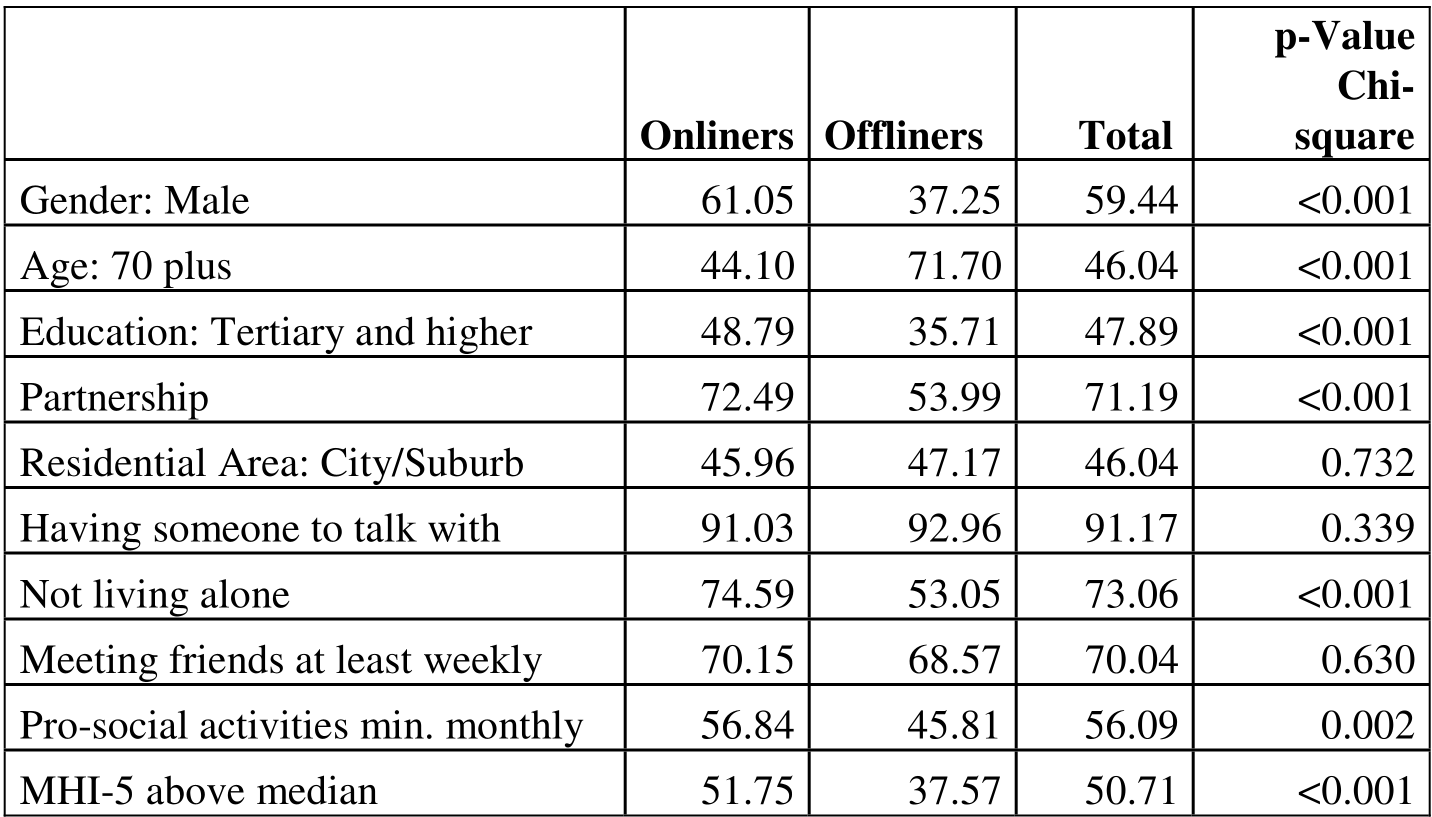 Table 1: Comparison between Onliners and Offliners showing significant gaps in mental health and social activities.
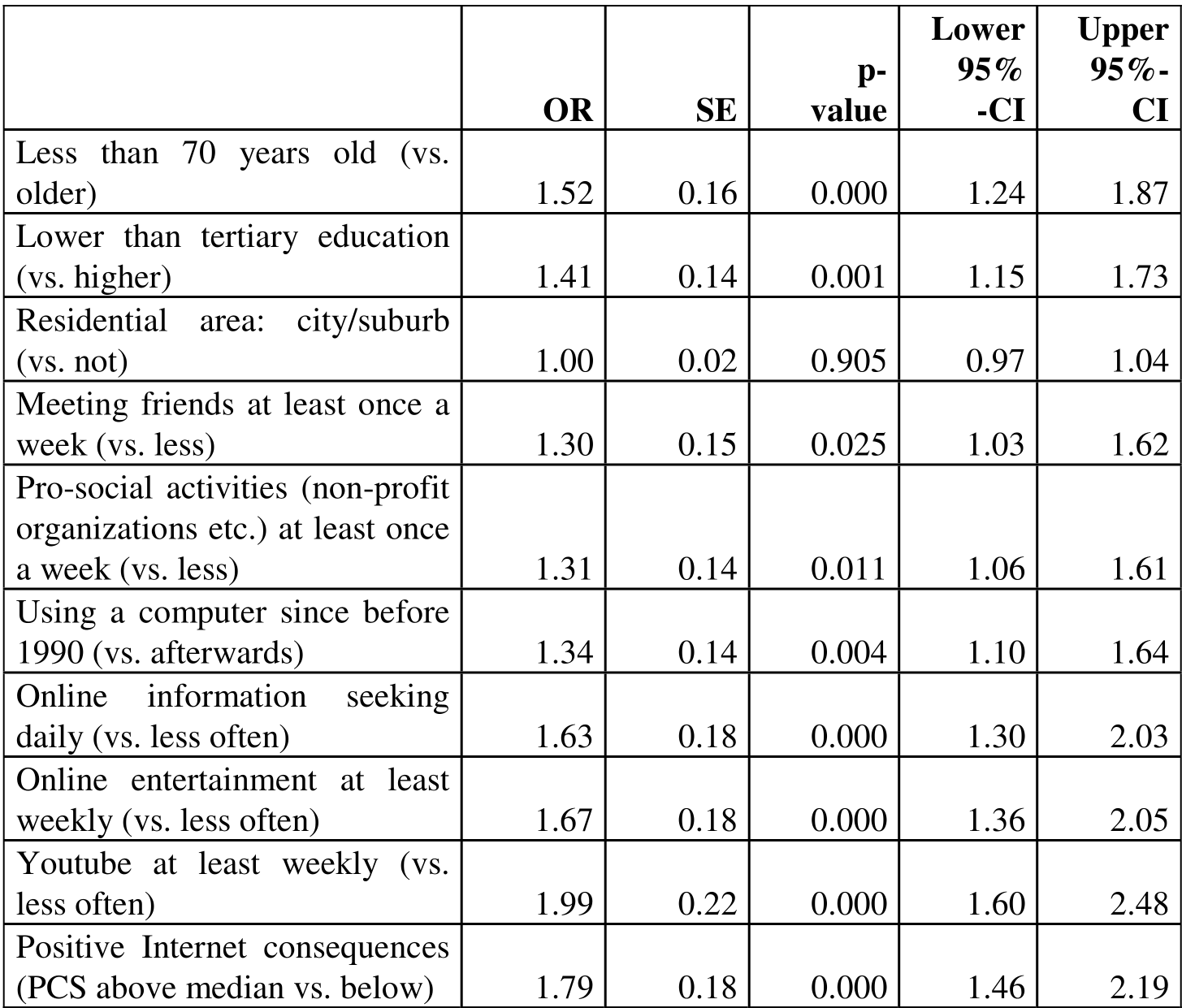 Table 4: Logistic regression highlighting that "Real-life" social habits and long-term computer experience are the strongest predictors of social network adoption.
Critical Insight: Causality vs. Correlation
While the study shows that "happy" seniors are online, it doesn't yet prove the Internet makes them happy. It's just as likely that seniors with better mental resilience are more motivated to learn new technologies. This is the classic "Inductive Bias" in social science: we see the connection, but the "Why" requires the longitudinal data the TAO team is currently collecting.
The Takeaway for Product Designers and Policy Makers
- Stop treating "Seniors" as a monolith: A socially isolated 80-year-old uses the web differently than a socially active 65-year-old.
- Privacy is a hurdle for the educated: To reach the "high-education" demographic in social tools, platforms must emphasize security and data sovereignty.
- Real-world inclusion matters: Digital tools are an extension of, not a replacement for, physical social inclusion.
In conclusion, the Internet is a potent tool for senior wellbeing, but social networks currently serve as an "extra" for those already integrated, rather than a primary bridge for the most isolated individuals.