
Internet Social Networking: Bridging the Gap Between Web 2.0 and the Enterprise
Internet Social Networking - Research State of the Art and Implications for Enterprise 2.0
The paper provides a comprehensive review of research on Internet Social Networking (ISN), categorizing existing literature into four streams: privacy, link nature, self-presentation, and user motivation. It explores how these public social phenomena can be translated into "Enterprise 2.0" contexts to improve corporate communication and recruiting.
TL;DR
This seminal review maps the chaotic landscape of early social media research (ISN) and provides a strategic roadmap for Enterprise 2.0. It identifies how user behaviors like "social searching" and "impression management" move from Facebook to the corporate intranet, offering a blueprint for enhancing distributed work, recruiting, and customer engagement.
The "Bottom-Up" Revolution vs. Corporate Hierarchy
The core tension in this research is the transition of Social Software—originally designed for leisure and "bottom-up" user participation—into the structured, "top-down" environment of the enterprise. The authors argue that merely installing a platform isn't enough; companies must understand the human phenomena of networking.
Existing research at the time was heavily focused on US-based students on Facebook. This paper highlights a critical gap: we know how teenagers use social media, but we lack a systematic understanding of how professionals use it to build Social Capital.
Methodology and Conceptual Framework
The researchers categorized the evolution of social networking into a clear matrix, distinguishing between the artifact (the site itself) and the phenomenon (the act of networking).
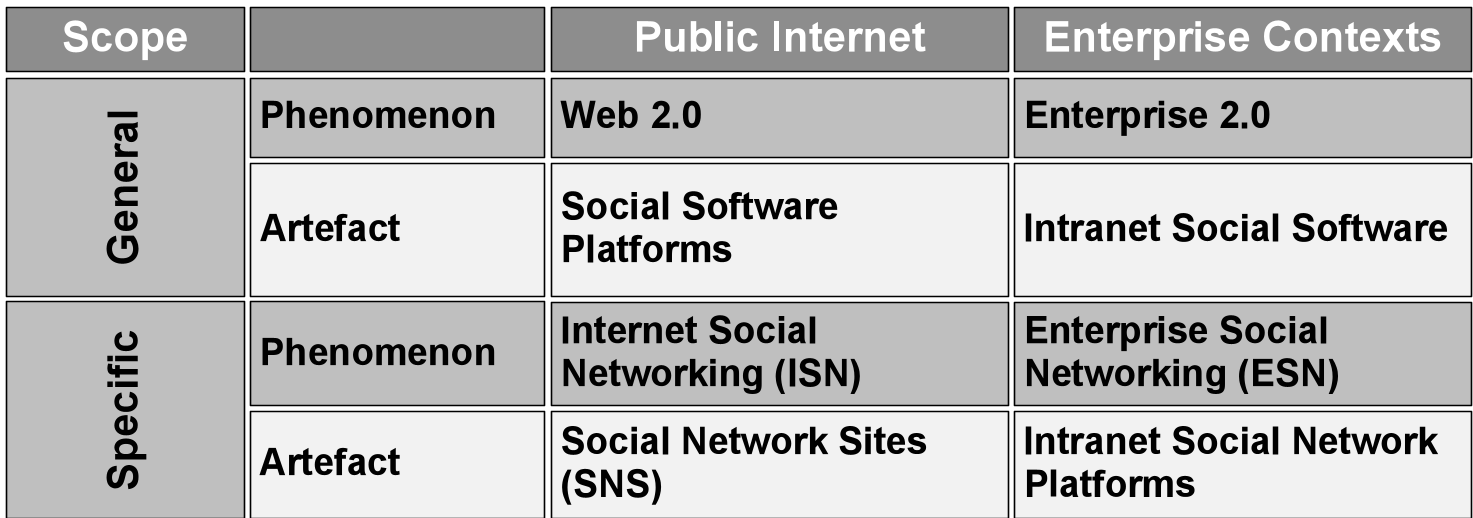 Fig 1: Distinguishing between public and enterprise contexts in social networking.
Four Pillars of Social Networking Research
The authors distilled 202 relevant papers into four primary research streams:
- Privacy & Disclosure: Users are becoming more "privacy-aware" by adjusting visibility settings rather than sharing less.
- Nature of Links: There is a fundamental difference between "Online" and "Offline" friends; too many links on a professional site can actually decrease perceived trustworthiness.
- Impression Management: Users curate "ideal selves." On professional sites like Xing or LinkedIn, this behavior is more calculated and focused on competence.
- User Motivation: The primary driver isn't just "meeting new people," but Social Searching—using the site to research people you have already met offline.
Social Networking in the Enterprise (ESN)
The paper identifies three high-value areas for Enterprise 2.0:
1. Recruiting and Career Development
SNSs act as marketplaces for skills. The "correct" self-representation on professional sites allows HR to identify R&D talent more efficiently than traditional resumes.
2. Distributed Work & Social Capital
In virtual teams, the lack of "water cooler" talk leads to a breakdown in shared understanding. ESN platforms allow for the building of weak ties—connections between distant co-workers that act as vital channels for information transfer.
3. Customer "Prosuming"
Beyond simple advertising, SNSs allow for Prosuming—where customers are included in the design process. This turns a social site into a live market intelligence laboratory.
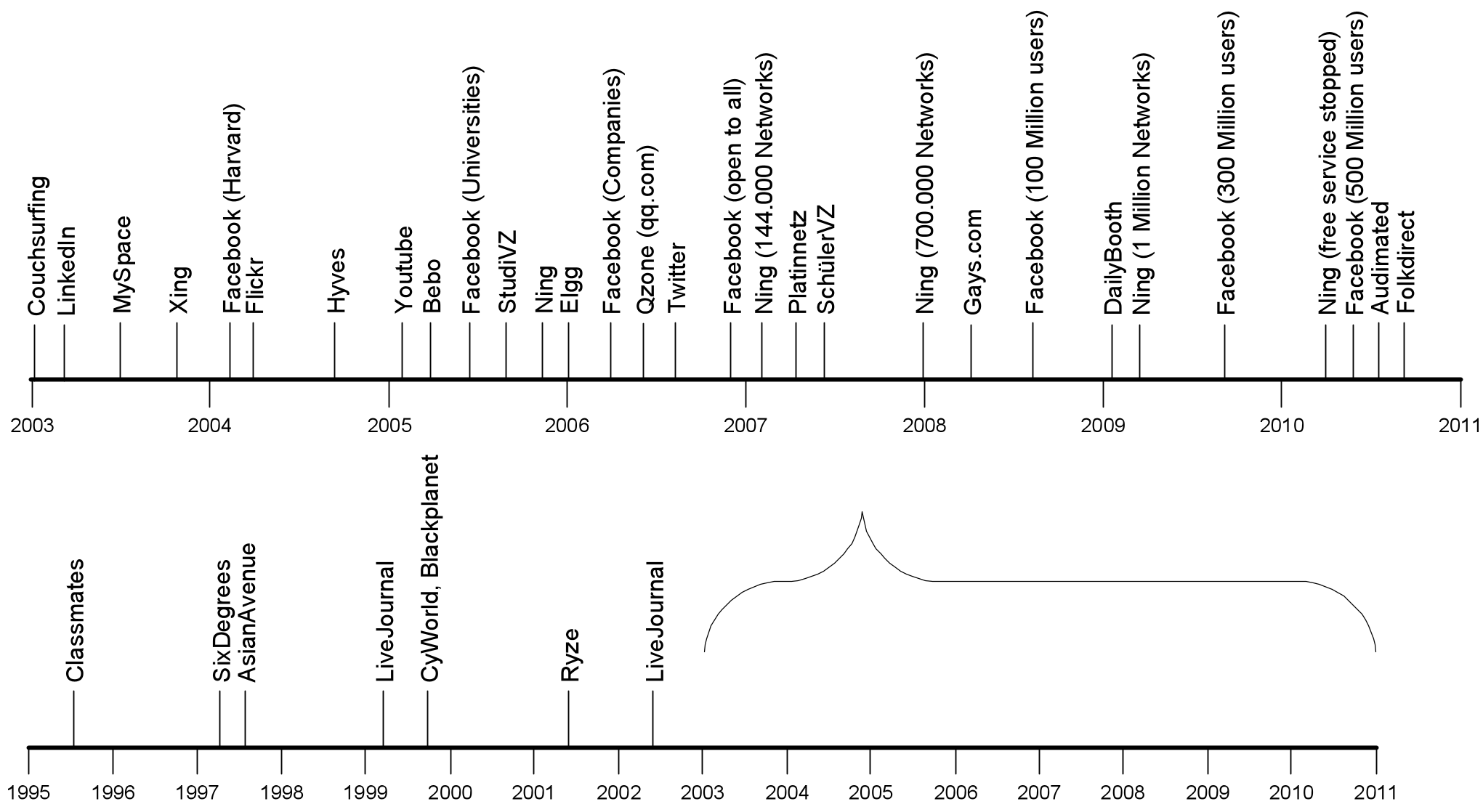 Fig 2: A brief history of the emergence of major SNS platforms.
Critical Insight: The "Yet-Another-Platform" Problem
A major hurdle identified is employee resistance. The authors note that the most successful enterprise implementations (e.g., at IBM) did not force a new platform on employees. Instead, they used an incremental approach, growing social features within systems that employees were already using.
Conclusion & Future Outlook
The paper concludes that while ISN research was in its infancy in 2011, it laid the groundwork for a participatory corporate culture. The "Digital Divide 2.0" suggests that as the "Facebook generation" enters the workforce, mediated socializing will become the default mode of professional interaction.
Takeaway for Practitioners: Don't just build a "Corporate Facebook." Focus on tools that facilitate Social Searching and help new employees settle into the organization’s social fabric through unobtrusive information sharing.