
Inside a Rural Mesh: Deciphering Internet Usage in Macha, Zambia
Internet usage and performance analysis of a rural wireless network in Macha, Zambia
This paper presents a comprehensive empirical study of Linknet, a rural wireless network in Macha, Zambia. By analyzing 14 days of gateway and mesh network traces, the authors distinguish rural usage patterns from urban ones and identify performance bottlenecks in satellite-backhauled mesh architectures.
TL;DR
This seminal study analyzes the Linknet wireless network in rural Zambia, revealing a digital ecosystem drastically different from its urban counterparts. While urban areas are dominated by P2P traffic, rural users are tethered to the Web—specifically social media. However, severe satellite bottlenecks, inefficient caching of CDNs (like YouTube), and mesh instability (route flapping) create a "digital divide" where standard Western network configurations fail to perform.
The Motivation: Why Urban Models Fail in Rural Zambia
Most networking research assumes high-speed fiber backhauls and "always-on" connectivity. In Macha, Zambia, 300 users share a VSAT satellite link with a committed download speed of just 128 kbps, costing a staggering $1200/month.
The researchers noticed a "black box" in rural networking:
- Inefficient Usage: Are users wasting precious kilobits on background updates or ads?
- Structural Bottlenecks: Does the bottleneck lie in the wireless mesh hops or the satellite uplink?
- Usage Paradox: Do rural users follow urban trends (P2P dominance) or unique local patterns?
Methodology: Tracking Every Packet
To answer these, the team monitored two critical points:
- The Gateway: Capturing pcap traces and Squid proxy logs to see what users were accessing.
- The Mesh nodes: Tracking ETX (Expected Transmission Count) values to see how the wireless links behaved under stress.
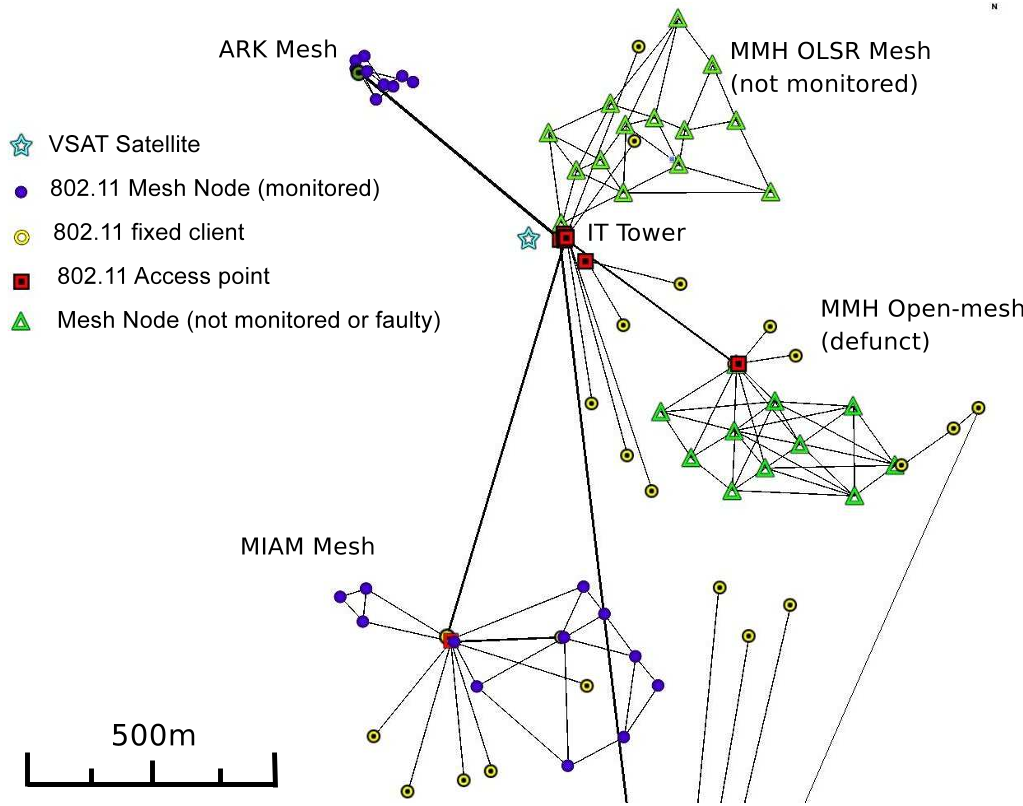 Figure 1: The physical layout of the Macha network, utilizing 802.11 point-to-point links and hotspots.
Key Findings: The "Facebook Effect" and YouTube Cache Misses
The results shattered several assumptions:
1. The Web is King, Facebook is the Queen
In developed nations, Web traffic used to account for ~14-26% of traffic. In Macha, it is 68.45%. Facebook emerged as the dominant platform, with 3x more hits than Google, proving that social connectivity is the primary driver for rural Internet adoption.
2. The YouTube Caching Crisis
YouTube requests were frequent, but the Cache Hit Rate was effectively 0%. Traditional proxies (like Squid) identify content by URL. Since CDNs use dynamic, semi-randomized URLs for the same video, the system downloaded the same data over and over, saturating the link. The authors found that a content-aware cache could have saved 86% of YouTube-related bandwidth.
3. Binary Bloat
While 99.9% of objects were small, the remaining 0.1% (OS updates, binaries) consumed 50% of total bytes. This "heavy tail" and the presence of advertisement traffic (2% of requests) represent a massive waste of expensive satellite time.
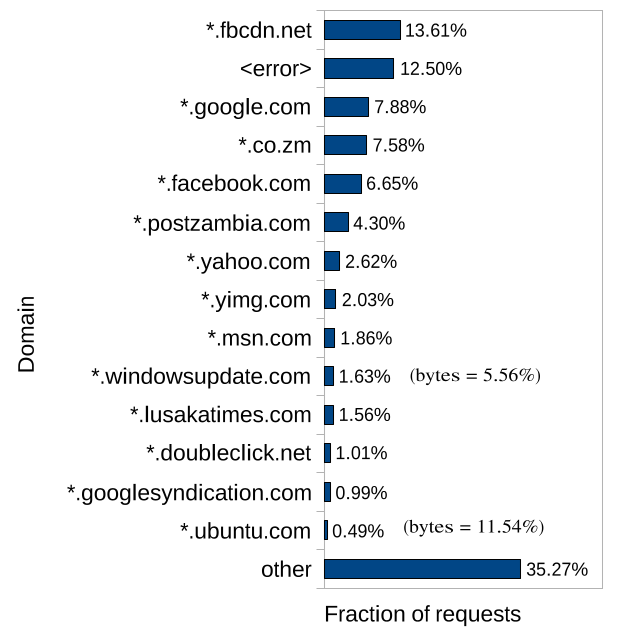 Figure 2: Distribution of Web traffic by site (left) and MIME type by bytes (right).
Network Pathologies: Flapping and Expiration
The "physics" of the network also showed signs of distress:
- Route Flapping: As load increased, the mesh routing protocol (OLSR) became unstable, changing routes up to 2 times per second, decimating TCP throughput.
- TTL Anomalies: Many packets left the mesh with TTL (Time-to-Live) values as low as 3, leading to "TTL Expired" errors at the gateway—essentially burning bandwidth for packets destined to fail.
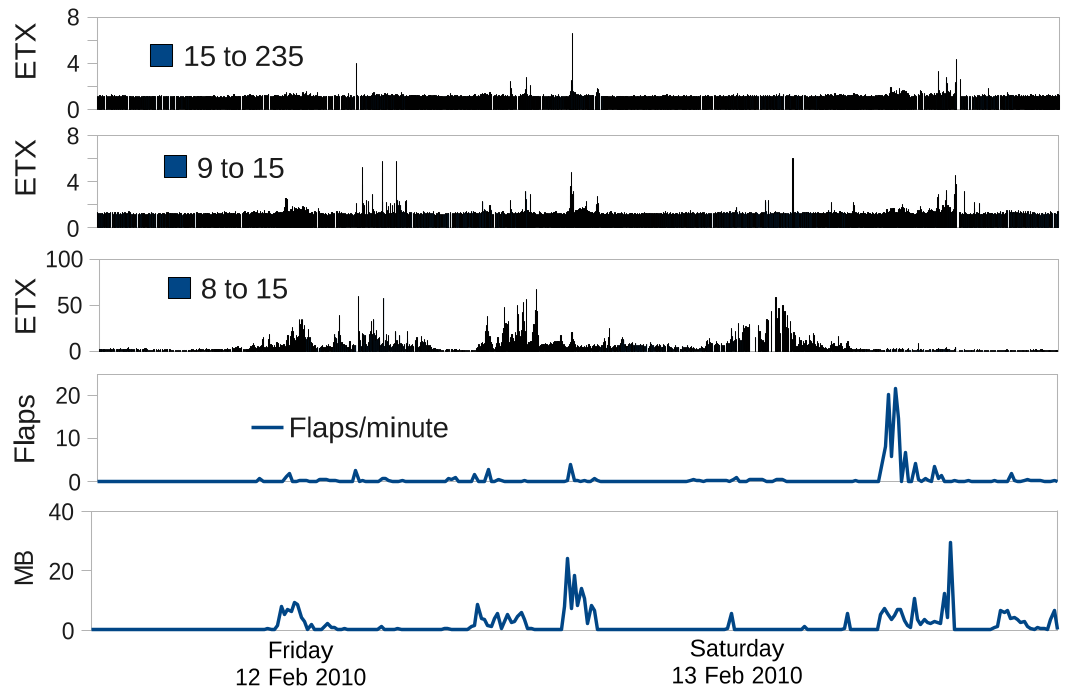 Figure 3: Correlating network load with increased ETX link metrics and detrimental route flapping.
Takeaways and Technical Recommendations
The authors argue that rural networks shouldn't just be "cheaper versions" of urban ones; they need a different design philosophy:
- Intelligent Caching: Use URL rewriting to cache CDN content via unique Video-IDs.
- Time-Shifting: Delay large OS updates to off-peak hours (midnight to 6 AM).
- Data Ferries: Leverage physical travel to cities to "carry" large repositories on hard drives instead of downloading them.
- Advanced Routing: Move from OLSR/ETX to Expected Transmission Time (ETT) or protocols like B.A.T.M.A.N. to handle flaky wireless links more gracefully.
Conclusion
This research highlights a painful irony: as the global Web becomes more media-rich and dynamic, it becomes increasingly inaccessible to the very rural populations that need it most. Bridging the digital divide requires more than just hardware; it requires software and protocols that respect the scarcity of rural bandwidth.