
Social Bonds and Personal Growth: Why We Share Knowledge on Social Media
Exploring Interpersonal Relationship and Growth Need Strength on Knowledge Sharing in Social Media
This study investigates the motivational drivers of Online Knowledge Sharing Behaviour (OKSB) among university applicants using an extended interpersonal relationship model. The research identifies Perceived Online Relationship Commitment (PORC) and Growth Need Strength (GNS) as primary direct predictors of sharing activity on platforms like Facebook and Weibo.
TL;DR
Why do we spend hours sharing insights, news, and advice on social media? This study turns the spotlight on 485 university applicants to find out. It reveals that Online Relationship Commitment and our innate Growth Need Strength—the desire for challenge and personal achievement—are the real engines behind knowledge sharing. Surprisingly, the simple urge to "attach" to others isn't enough; it must be converted into a deep-seated commitment to a relationship first.
Background Positioning
Unlike traditional studies that view the internet as a place for anonymous interaction, this paper treats Social Networking Sites (SNS) as an extension of physical reality. It moves beyond the "what" of interaction (counting posts) to the "why" of commitment, positioning itself as a critical bridge between organizational behavior theories (like the Job Characteristics Model) and modern digital sociology.
Problem & Motivation: The Fragility of Online Connectivities
Existing research often treats knowledge sharing as a transactional process. However, the authors argue that knowledge is "sticky and leaky"—it doesn't flow just because a platform exists. The digital divide between teachers and students, coupled with the "spotlight effect" of sharing buttons, creates a complex psychological landscape. The authors' insight is that users aren't just looking for friends; they are looking for growth and stability within their existing social circles.
Methodology: The Extended Sharing Model
The researchers analyzed four key constructs:
- POAM (Attachment): The need to be around others to feel better or appreciated.
- PORC (Relationship Commitment): The desire to maintain long-term, stable links.
- OKSB (Sharing Behaviour): The actual act of communicating knowledge.
- GNS (Growth Need Strength): The drive for personal challenge and learning.
Model Architecture
The study utilized Structural Equation Modeling (SEM) to map the causal paths between these psychological needs and actual behavior.
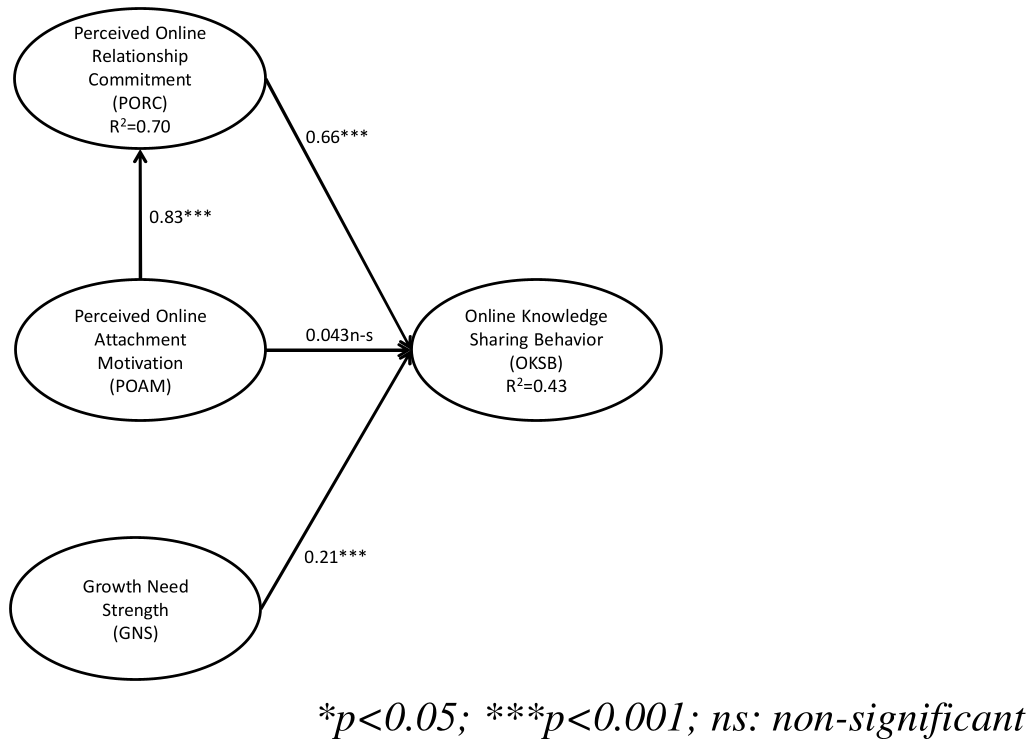 Fig 1: The proposed path where Relationship Commitment and Growth Need act as the twin engines of OKSB.
Experiments & Results: Commitment is King
The findings yielded a significant shift from previous literature:
- The Mediation Effect: Attachment Motivation (POAM) does not lead to sharing unless the user feels a commitment to the relationship (PORC). In the context of Facebook or Weibo, users share because they care about their "known" community, not just because they want attention.
- The Power of Growth: Growth Need Strength (GNS) was a strong predictor. Students who view SNS as a place to challenge themselves and "exercise independent thought" are significantly more likely to share knowledge.
Performance Metrics
The model achieved high goodness-of-fit across various indices (GFI 0.92, CFI 0.97), indicating a robust representation of student behavior.
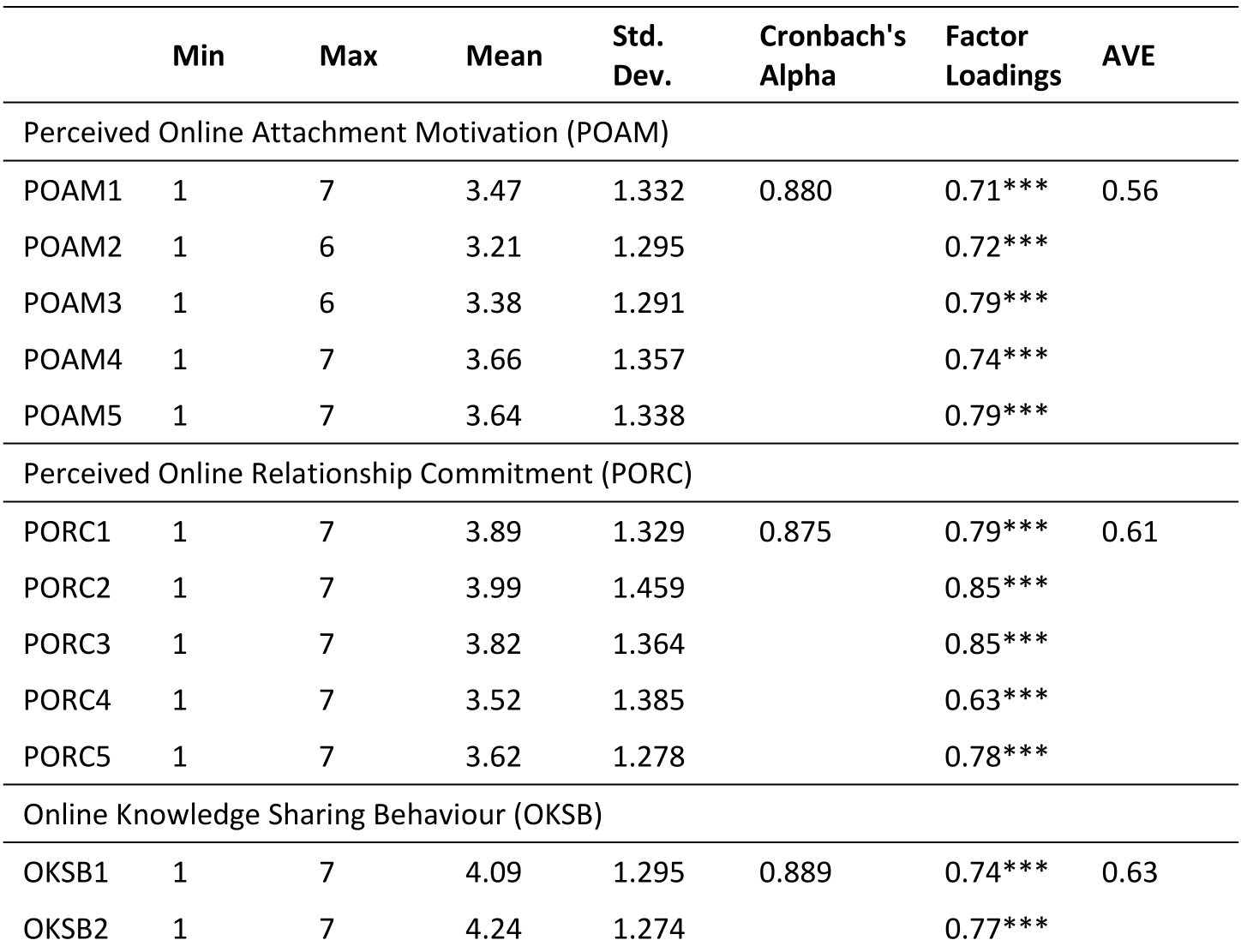 Table 1: Factor loadings confirm that the measurement items for OKSB and Growth Needs were highly reliable (Alpha > 0.88).
Critical Analysis & Conclusion
Takeaway
Knowledge sharing is not merely a social act; it is a growth act. If you want a community to share knowledge, don't just give them a "share" button—give them a sense of future-oriented relationship and tasks that challenge their intellect.
Limitations
The study is focused on a specific demographic: HKDSE graduates in Hong Kong. Their high GNS might be tied to their transitional life stage (entering university). Furthermore, the model does not account for "privacy concerns" or "information authenticity," which are increasingly critical in the age of misinformation.
Future Outlook
As SNS platforms evolve toward more algorithmic content, the "Relationship Commitment" might shift from human-to-human to human-to-community. Future research should explore "Digital Literacy" as a moderator—will users still share if they can't trust the integrity of the knowledge they find?