
Interplay of Intelligence: Bridging Human Therapy and Robotics for Autism
Interplay between Natural and Artificial Intelligence in Training Autistic Children with Robots
This paper explores a multi-disciplinary framework for training children with Autism Spectrum Disorder (ASD) using humanoid robots (NAO) through Applied Behavior Analysis (ABA). It introduces "Social Computing" as a bridge between clinical therapy and robotics to standardize training scenarios, achieving a shift from faked robot intelligence to truly autonomous social interaction.
TL;DR
Researchers have developed a multidisciplinary framework that combines Applied Behavior Analysis (ABA) with Humanoid Robotics (NAO) to treat children with Autism Spectrum Disorder (ASD). By leveraging social computing, they aim to empower therapists to program robots intuitively while evolving robot behaviors from "perceived intelligence" (manual control) to "true autonomy" using bio-inspired algorithms.
Background Positioning
This work stands at the intersection of Social Assistive Robotics (SAR) and Behavioral Psychology. It moves beyond the "one-off" experimental setup by proposing a standardized ecosystem where clinical expertise directly informs robotic development, addressing the scalability gap in robot-led clinical interventions.
The Problem: The "Dual User" Bottleneck
Robot-led therapy faces a significant hurdle: the Dual User Problem.
- Therapists need tools to augment their practice without being programmers.
- Patients (Children with ASD) require natural, engaging, and robust interactions.
Most prior work fails because the robots are either too simple to be effective or too complex for therapists to operate. Furthermore, current systems often rely on "Wizard-of-Oz" techniques (the therapist secretly controlling the robot), which prevents the technology from scaling or providing consistent data.
Methodology: The Core Architecture
The authors propose a system based on three pillars: Empowerment, Personalization, and Translation.
1. Standardization of Scenarios
Instead of building robot behaviors from scratch (low-level primitives), the researchers developed complete ABA-based scripts. These scripts are standardized yet editable, allowing therapists to change dialogue or goals "on the fly" via the Wikitherapist platform.
2. Bio-Inspired Vision & Speech
To achieve autonomy, the robot must "see" and "hear" like a human.
- Vision: The team used bio-inspired operators mimicking the primary visual cortex (center-surround cells) to detect objects like dice or skin tones.
- Speech: Integration of Nuance ASR and Acapela TTS allows the robot to handle turn-taking, although the paper notes the challenges of noise interference from the robot's own cooling fans.
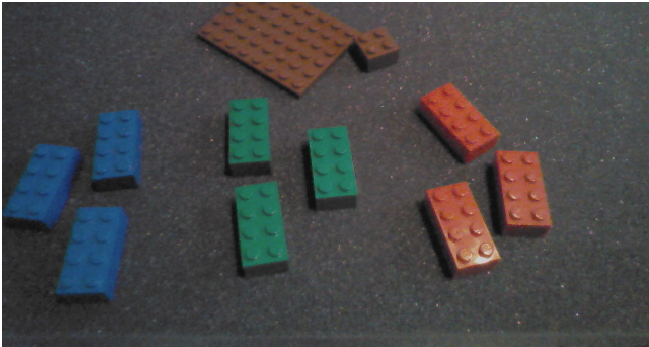 Figure 1: Visual processing pipeline using skin detection, color segregation, and gaze following to facilitate joint attention.
Experiments & Results: Real-World Interaction
The intervention targeted high-functioning children, focusing on self-initiation, question-asking, and problem-solving.
- Robot Capability: The NAO robot used Haar-like features for robust real-time face detection, which functions effectively within a 3-meter range.
- Task Performance: In a dice-based game context, the robots achieved a 99% recognition rate for identifying dice pips using bio-inspired operators (Fig 1c, d).
- Therapist Integration: The use of a unified software platform allowed clinicians to transition from remote control to supervising autonomous robot sequences, bridging the gap between "perceived" and "actual" robot intelligence.
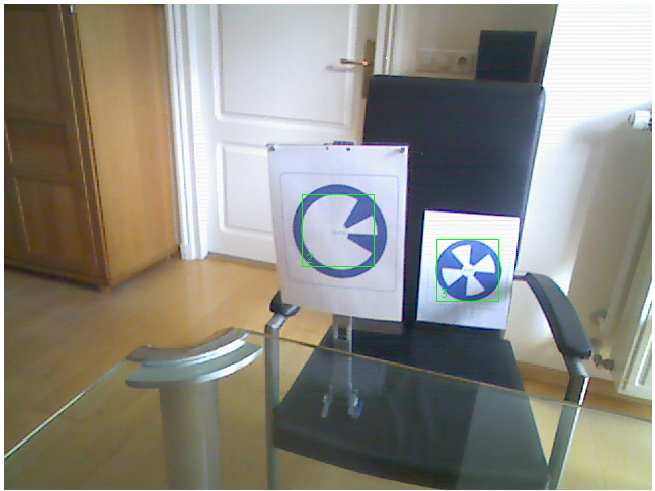 Figure 2: Examples of object recognition and gaze tracking used to maintain engagement during therapy sessions.
Critical Analysis & Conclusion
Strategic Takeaway
The shift toward a community-driven (Social Computing) approach for scenario development is the paper’s most significant insight. It suggests that robot intelligence shouldn't just be "hard-coded" by engineers but "crowdsourced" and refined by clinical domain experts.
Limitations
- Technical Noise: Robot hardware noise (fans near microphones) remains a significant barrier to accurate speech recognition in natural settings.
- Risk Aversion: As the authors note, learning algorithms still carry a risk of "mistakes" (approx. 2%), which is difficult to tolerate in high-stakes clinical environments.
Future Outlook
The standardization on platforms like NAO and the development of reusable script clusters set a new trend. We are moving toward a future where "Socially Assistive Robots" are as common in clinics as tablets are in schools today—not as replacements for therapists, but as highly specialized, autonomous extensions of their expertise.