
Silent Ties: Why Intimacy is the Secret Engine of Online Participation
Relationship between the level of intimacy and lurking in online social network services
This study investigates the psychological drivers of "lurking" in Social Network Services (SNSs), moving beyond traditional information-seeking models. Using data from Microsoft’s Wallop, the authors demonstrate that interpersonal intimacy—categorized into verbal and affective dimensions—is a primary determinant of whether a user actively posts or remains a silent observer.
TL;DR
Why do most people on social media watch but never post? While early internet research suggested we lurk because we’ve already found the information we need, this paper argues the real reason is far more personal: Intimacy. In Social Network Services (SNSs), your decision to share a photo or update a status depends directly on your "Verbal" and "Affective" closeness to your network. If you don't feel emotionally safe or understood, you stay silent.
The Motivation: Moving Beyond "Information Seeking"
In the early days of the web, online communities were libraries. If you wanted to know how to fix a car, you went to a forum, read the answer, and left. Lurking was "vicarious learning."
However, SNSs (like the now-defunct Microsoft Wallop studied here) changed the game. They aren't about facts; they are about social-emotional gratification. The authors realized that the old reasons for lurking didn't fit. In a space where "connections come before content," the barrier to posting isn't a lack of information—it's a lack of intimacy.
Methodology: Measuring the Unseen
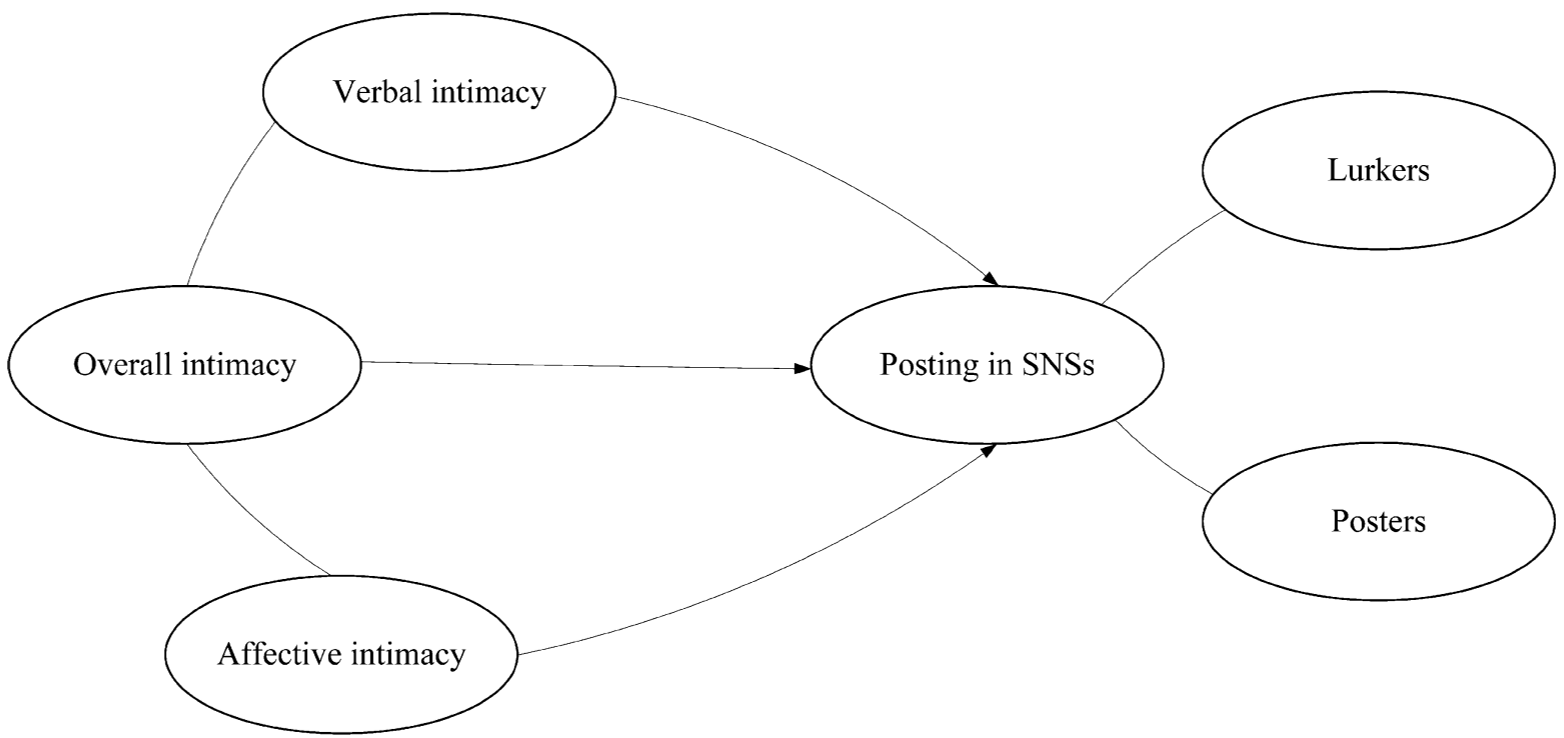
The researchers focused on two distinct types of intimacy:
- Verbal Intimacy: The breadth (how many topics you discuss) and depth (how risky or private the info is) of your self-disclosure.
- Affective Intimacy: The perceived emotional bond, including feelings of being understood, cared for, and supported.
Using a snowball sampling method on Wallop, they split users into two camps: Lurkers (rarely post) and Posters (active contributors).
The "Smoking Gun": Results of the Study
The findings were stark. Posters didn't just post more; they inhabited a completely different emotional world than lurkers.
- Correlation: Both Verbal and Affective intimacy levels were positively and significantly correlated with how often someone posted.
- The 90% Accuracy Rule: By looking only at a user's intimacy scores, the researchers could predict whether they were a lurker or a poster with 90% accuracy.
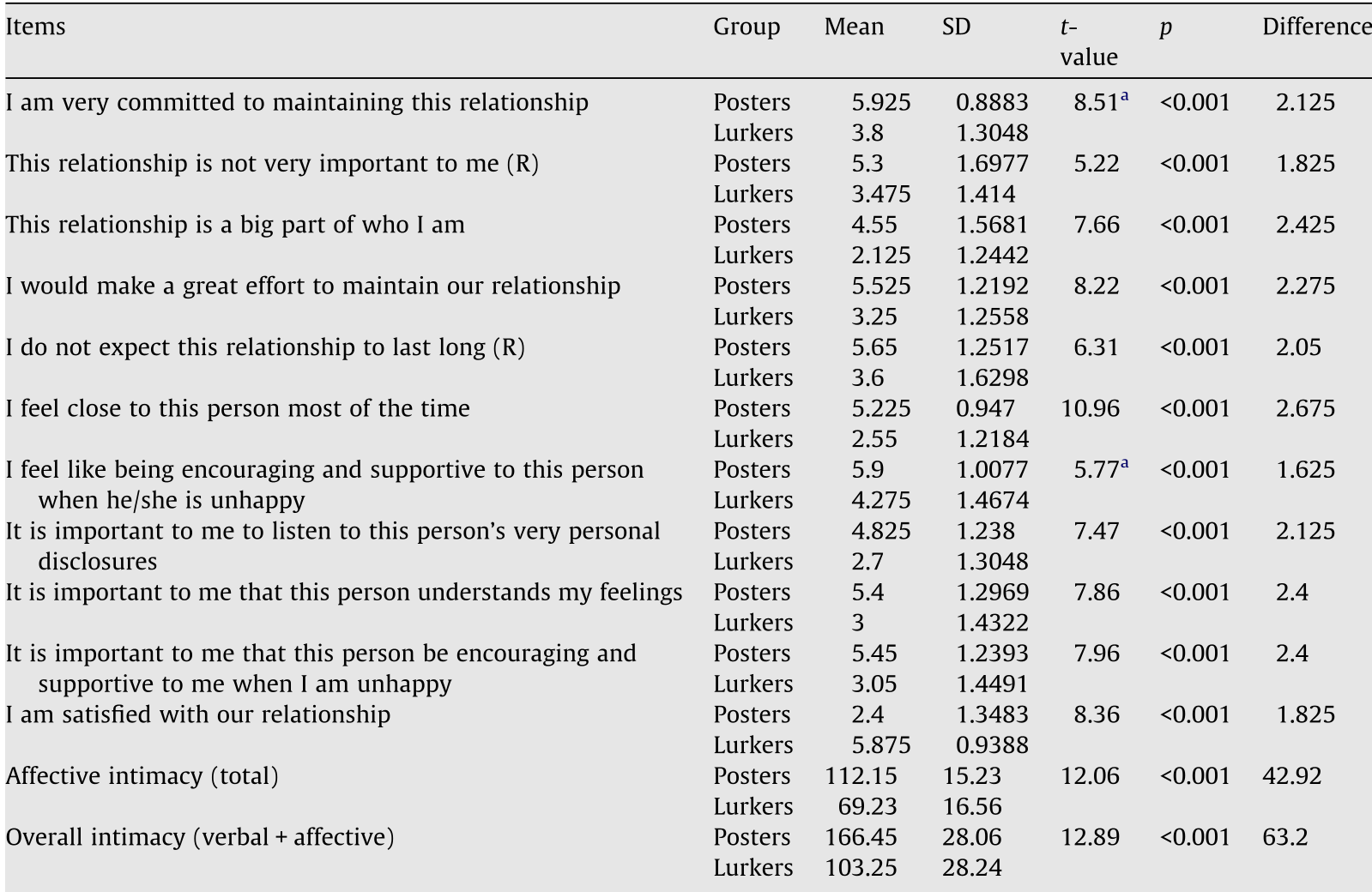
As shown in the data, the "Difference" column highlights a massive gap in overall intimacy (63.2 points). Lurkers stay quiet because they perceive their network as indifferent or incapable of providing the emotional validation they crave.
Why it Works: The "Party" Intuition
The authors provide a powerful analogy:
- Forums are like a Presentation: You speak to a crowd of strangers based on expertise.
- SNSs are like a Private Party: You speak to friends.
If you feel the people at the party don't know you well (Low Verbal Intimacy) or don't actually care about your feelings (Low Affective Intimacy), the "social risk" of speaking up becomes too high. You fear being misunderstood or judged, so you choose the safety of silence.
Critical Analysis & Gender Nuances
The study also found that men posted more frequently and perceived higher intimacy levels than women in this specific context. The authors suggest this might be due to a "male-dominated" online culture that can feel inhospitable to women, highlighting that "de-lurking" isn't just a technical problem—it's a social and cultural one.
Limitations
- Causality: Does posting create intimacy, or does intimacy encourage posting? Most likely, it's a virtuous cycle (or a vicious one for lurkers).
- Demographics: The study focused on highly educated students in 2005. Today's "influencer" culture adds a layer of performative posting that might decouple "intimacy" from "frequency."
Conclusion: The Roadmap for Developers
The takeaway for platform designers is clear: Usability is not enough. You can have the slickest UI in the world, but if users don't feel an emotional "Social Tie" to their audience, they will remain lurkers. To increase engagement, platforms should focus on features that foster trust, reduce the fear of negative evaluation, and celebrate small-group affective support.
Final Takeaway: Posting is an act of vulnerability. If the intimacy isn't there, the silence will be.